Back Exercises for Strength and Better Posture
It is normal for bodies to store fat differently, and there is no exercise or wrap that can selectively remove fat from one area. A more useful goal is to build a stronger back, improve everyday posture, and choose movement habits you can maintain.
Quick answer: Build strength through controlled movements and gradual progression. Back exercises cannot selectively remove back fat; choose a comfortable starting level and leave time for recovery.
Why a strength-first approach helps
Back and shoulder exercises support the muscles that help you pull, lift, carry, and sit comfortably. Combined with regular walking or other activity, balanced meals, sleep, and time, strength training can help you feel fitter without chasing quick fixes.
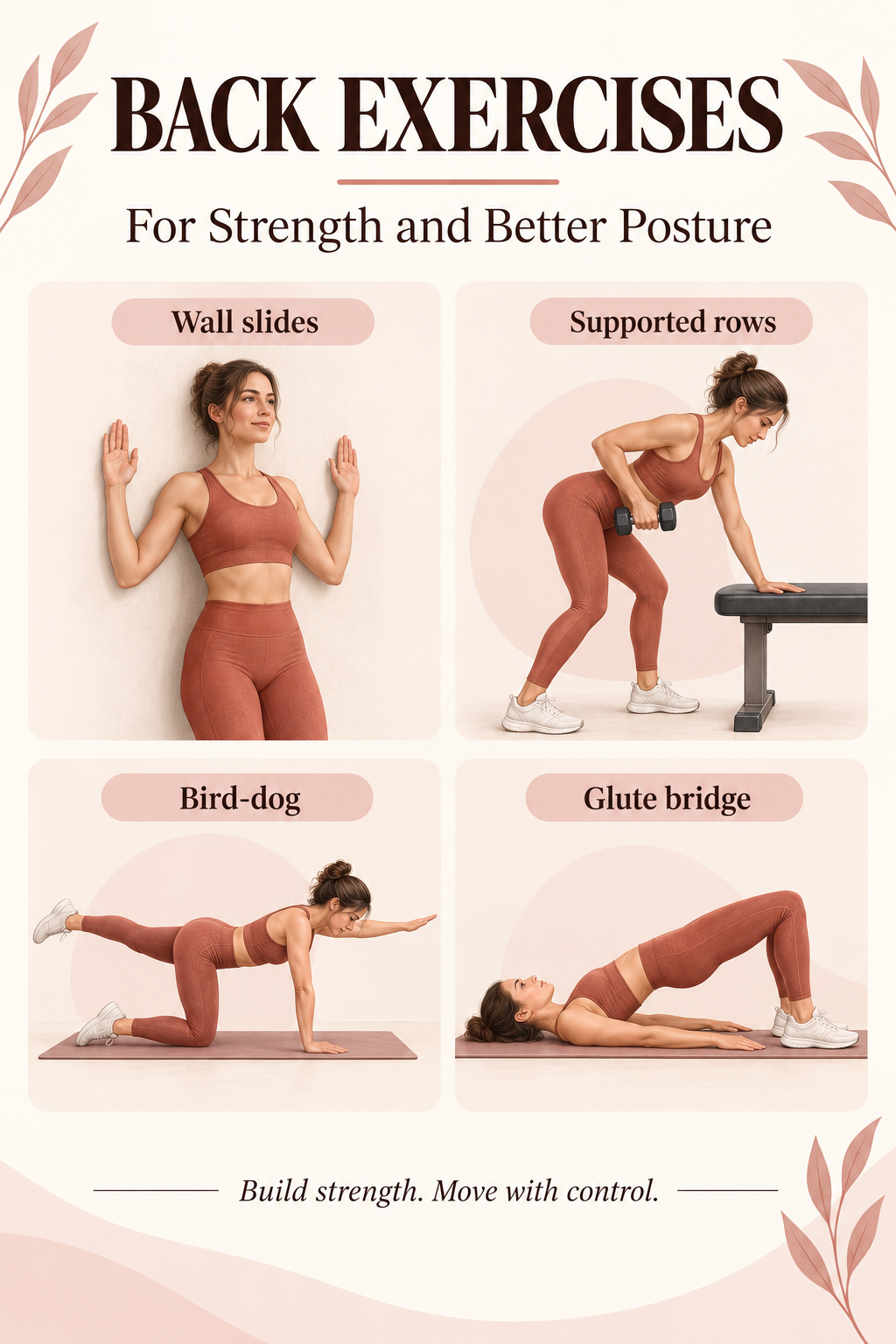
1. Wall slides
Stand with your back near a wall, feet a short step forward. Bend your elbows and gently slide your arms upward and downward while keeping your ribs relaxed. Move only as far as feels comfortable. Try 8 slow repetitions.
2. Supported rows
Use a light resistance band secured at chest height with an anchor designed for it, following the equipment instructions. Check the band and attachment before use; skip this movement if you cannot secure it safely. Keep your chest tall, draw your elbows back alongside your body, pause, and return with control. Start with 2 sets of 8–12 repetitions.
3. Bird-dog
Begin on hands and knees with a neutral spine. Extend one arm and the opposite leg, keeping your hips level. Pause for a breath, then switch sides. Do 6–8 controlled repetitions per side.
4. Glute bridge
Lie on your back with knees bent and feet flat. Press through your feet to lift your hips until your body feels comfortably long from shoulders to knees. Lower slowly. This helps train the hips and back of the body together.
5. Everyday posture breaks
Long stretches of sitting can make the upper body feel stiff. Every hour or so, stand up, roll your shoulders, look away from the screen, and take a short walk. Small, repeatable breaks are often more helpful than an intense routine done once.
A safe weekly rhythm
Two or three strength sessions each week is a realistic starting point for many beginners. Rest between sessions, increase resistance gradually, and focus on form. If an exercise causes sharp pain, numbness, dizziness, or pain that does not settle, stop and speak with a qualified clinician or physiotherapist.
Skip the quick fixes
Plastic body wraps, sweat-inducing creams, and promises of “fat burning” do not create lasting targeted fat loss. Comfortable movement, adequate food, and a routine you can repeat are the better long-term investment.
When to seek urgent care
These strengthening moves are not a treatment for a new or severe back problem. Seek immediate medical help for back pain with new weakness, tingling or numbness in both legs, loss of feeling around the genitals or anus, new bladder or bowel problems, chest pain, or pain after a serious accident. Contact a clinician if pain is getting worse quickly or is not improving after a few weeks. The NHS lists these warning signs and back-care advice.
Frequently asked questions
Will these exercises remove back fat?
They cannot selectively remove fat from the back. Strength, movement confidence and a sustainable routine are more useful goals.
Do I need to finish every repetition?
No. Keep control and stop before your form deteriorates. Use fewer repetitions or a simpler version when needed; pain is a reason to stop.
Can I use this routine for new back pain?
Do not assume a general workout is suitable for a new or severe back problem. Follow the warning signs above and get individual advice when appropriate.
Complement suitable back training with our beginner core guide and simple arm workout.
Editorial review: 21 October 2026.