How to Care for Lashes So They Look Fuller and Healthier
Longer-looking lashes are usually the result of gentle daily care, not a miracle product. Lashes follow a natural growth cycle, so the most useful goal is to protect the ones you have from unnecessary breakage, dryness, and tugging.
Start with gentle makeup removal
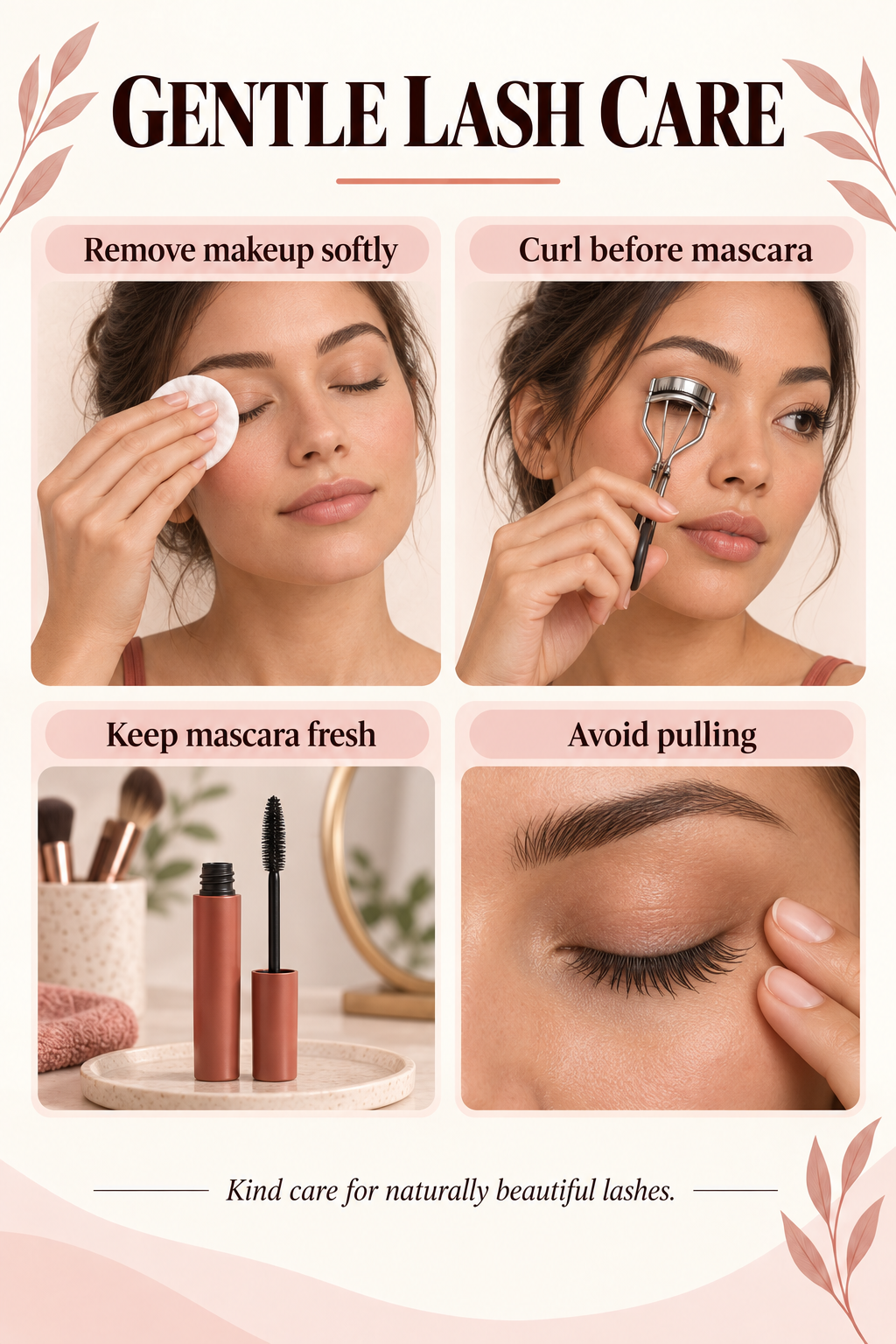
Rubbing the eye area is one of the easiest ways to pull out lashes. Hold a soft cotton pad with a gentle eye-makeup remover over closed eyes for a few seconds, then wipe downward with light pressure. Waterproof mascara can be especially stubborn, so give the remover time to loosen it instead of scrubbing.
Be thoughtful with mascara and curlers
Follow the manufacturer’s replacement schedule, and discard mascara sooner if it dries out or changes smell. Never share eye makeup, and avoid pumping the wand into the tube, which dries the formula faster. If you use a lash curler, use it on clean, dry lashes before mascara. Press lightly; pulling or clamping too hard can cause breakage.
Choose comfort over irritation
A lash serum or conditioning product can make lashes feel softer, but stop using anything that stings, causes redness, or leaves your eyes watery. Oils and DIY mixtures are not necessary and can irritate the eyes if they migrate into them. For sensitive eyes, a simple fragrance-free remover and a break from heavy makeup are often the better choice.
Support healthy hair growth overall
Lashes are hair, so basic habits matter: eat a varied diet with enough protein, iron-rich foods, and healthy fats; sleep well; and avoid harsh beauty routines. Supplements are not a shortcut for everyone. If you are worried about hair or lash loss, ask a qualified clinician before starting supplements.
Give extensions and false lashes a break when needed
False lashes and extensions can look great, but adhesive, removal, and repeated friction may be hard on delicate natural lashes. Take breaks if your lash line feels sore, itchy, or looks sparse. Avoid pulling strips off at the end of the day—use a suitable remover and take your time.
When to get advice
Sudden patchy lash loss, persistent itching, swelling, crusting, or pain deserves professional advice. These symptoms may have causes that a cosmetic routine cannot address.
A simple lash-care routine
- Remove eye makeup gently every evening.
- Use clean, fresh mascara and avoid sharing it.
- Curl lashes before mascara, using minimal pressure.
- Stop products that irritate your eyes.
- Let lashes rest from extensions or heavy false lashes when they need it.
The best lash routine is a patient one: less pulling, less irritation, and consistent gentle care.
Make your makeup bag easier to manage
- Write down opening dates. Follow the manufacturer’s replacement advice rather than waiting for a tube to smell unusual.
- Keep the wand clean. Close the cap after use and never add water or saliva to revive a dry formula.
- Plan removal before application. Have a remover suitable for your mascara ready, especially if the formula is waterproof.
- Pause when eyes are irritated. A makeup-free day is more useful than layering another product over discomfort.
The FDA eye-cosmetic safety guide advises against sharing eye products and recommends discarding cosmetics used during an eye infection. Its guidance notes that manufacturers commonly recommend replacing mascara after two to four months.
Read growth claims carefully
A product that coats lashes or reduces a dry feel does not necessarily change their growth cycle. Avoid treating every serum as interchangeable. If you want a treatment for thinning lashes, discuss options and side effects with a qualified clinician rather than applying DIY mixtures close to your eyes.
If puffiness or rubbing is your main concern, see our gentle under-eye care guide.
Common questions
Will castor oil make my lashes grow longer?
Do not rely on a household oil for lash growth. Oils may move into the eye and cause discomfort, and a glossy appearance is not proof of new growth.
Can I wear mascara with extensions?
Follow the extension provider’s aftercare instructions. Avoid products or removal methods that require tugging. If the lash line becomes sore or irritated, seek advice rather than covering the symptoms.
When is lash loss worth checking?
Arrange an assessment for sudden gaps, repeated loss or persistent crusting and itching. Seek prompt eye care for pain, significant swelling or changes in vision.
Updated October 15, 2026. General information; individual health concerns need advice from a qualified professional.