Upper-Lip Hair Removal: Choosing a Gentle Method for Your Skin
Facial hair is completely normal, and how—or whether—you remove it is a personal choice. The upper-lip area can be sensitive, so the best method is one that fits your skin, your budget, and the amount of maintenance you are comfortable with. Avoid abrasive kitchen DIYs: they can cause irritation, burns, or dark marks.
Shaving and dermaplaning tools
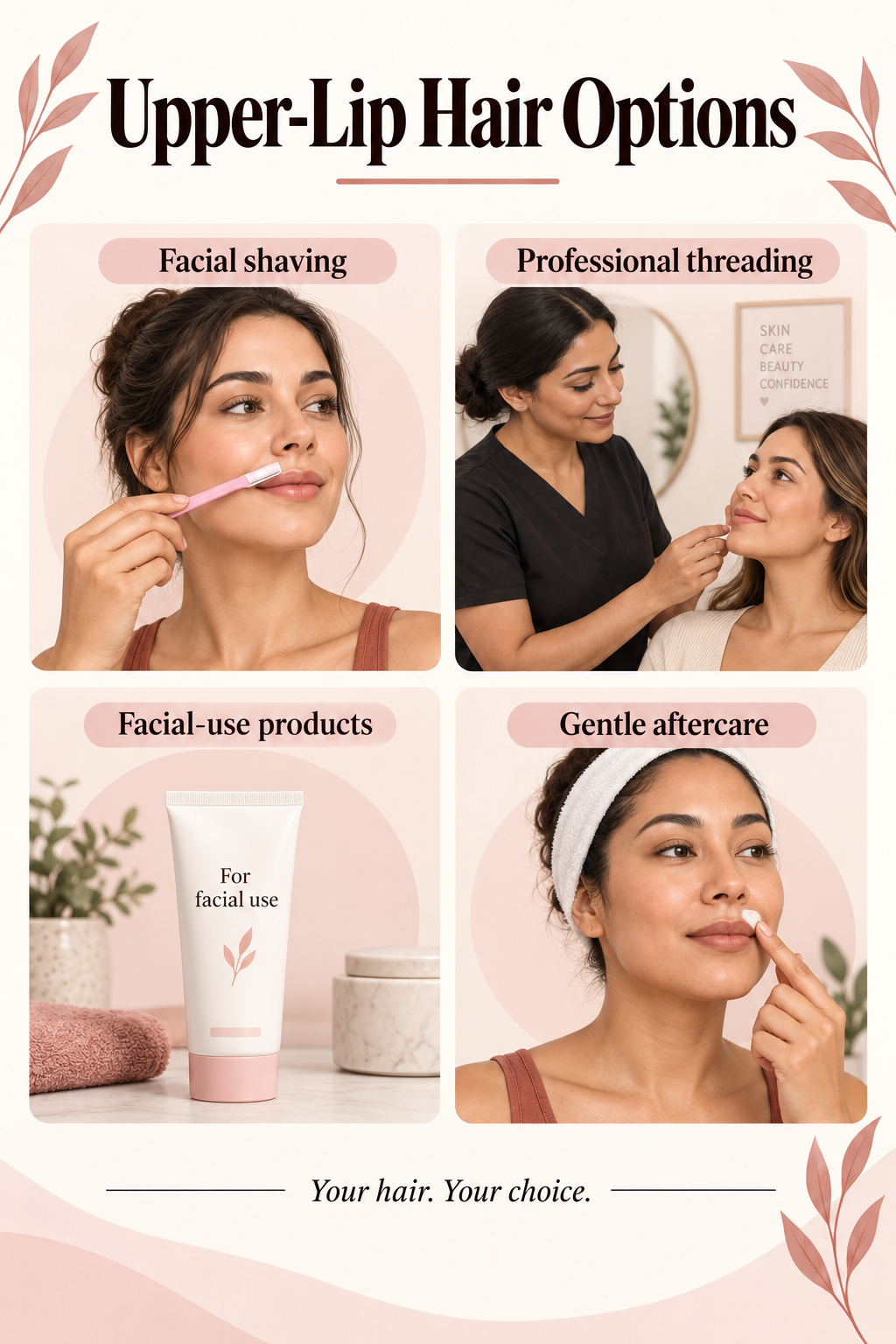
A clean facial razor is a quick, low-cost option. Follow the tool instructions; for a conventional wet shave, soften the hair with water and use shaving gel, move lightly in the direction of hair growth, and avoid passing over the same spot repeatedly. Hair does not grow back thicker after shaving; the blunt tip can simply feel more noticeable as it grows in.
Threading
Threading removes hair from the root and can give a longer-lasting result than shaving. It is often a good choice for small, precise areas, but it can leave temporary redness. Choose an experienced technician, and skip threading if your skin is irritated, sunburned, or using strong exfoliating products.
Waxing or sugaring
These methods also remove hair from the root. Always patch test first and use a product designed for the face. Do not wax skin that is broken, inflamed, or recently treated with retinoids or strong acids; those combinations can increase the risk of lifting or irritation. Afterward, keep the area clean, cool, and free from fragranced products for a day.
Important: Do not wax while taking isotretinoin or for six months after stopping it. If you use topical retinol or a prescribed retinoid, check with your prescriber before facial waxing; a patch test does not remove the risk of skin lifting. See the AAD isotretinoin safety advice.
Hair-removal creams
Only use creams specifically labelled for facial use, and follow the timing exactly. Test a small area first and wait for the period specified on the label before a full application; repeat testing as instructed. If you notice stinging or burning, remove the cream immediately with plenty of cool water.
Professional options
Laser hair reduction and electrolysis may suit people who want a longer-term approach. Results, cost, and suitability vary by hair and skin type, so book a consultation with a qualified professional before committing.
After any hair-removal method, use a simple fragrance-free moisturizer and daily sunscreen. If facial hair changes suddenly or comes with other symptoms that concern you, speak with a clinician for personalised advice.
A simple way to choose a method
| Method | Main consideration |
|---|---|
| Facial shaving | Quick maintenance; use a clean tool and a light touch. |
| Threading | Precision in a small area; practitioner skill matters. |
| Waxing or sugaring | Check skin condition and retinoid precautions first. |
| Facial removal cream | Use only a facial formula and follow test and timing instructions. |
| Professional treatment | Discuss suitability, likely sessions, risks and full cost before committing. |
Trying several methods in one session makes irritation harder to predict. Choose one, use good lighting, and leave enough time to follow every step without rushing. If you are planning treatment before an event, avoid experimenting with a new method at the last minute.
The AAD comparison of hair-removal methods explains the options and their precautions.
Common questions
Does shaving make facial hair thicker?
Shaving cuts the hair at the surface. The blunt tip can feel different as it grows, but shaving does not make the follicle produce thicker hair.
Is natural wax automatically gentler?
No. A natural label does not remove the risk of irritation, burns or skin lifting. Your skin condition, technique and medication history still matter.
Can I wax while using retinol?
Check with your prescriber or dermatologist first. Retinoids can make waxing risky; a small test does not override medication precautions. Avoid waxing during isotretinoin treatment and for six months afterwards.
Updated October 15, 2026. General information; this article does not replace individual medical advice.