Bad Breath: A Practical Routine and When to See a Dentist
Occasional bad breath after a strong-smelling meal is common. Persistent bad breath deserves more than a stronger mint. Teeth, gums, the tongue and dry mouth can all be relevant, so begin with a routine you can repeat and seek advice if the problem continues.
Give mouth care a clear sequence
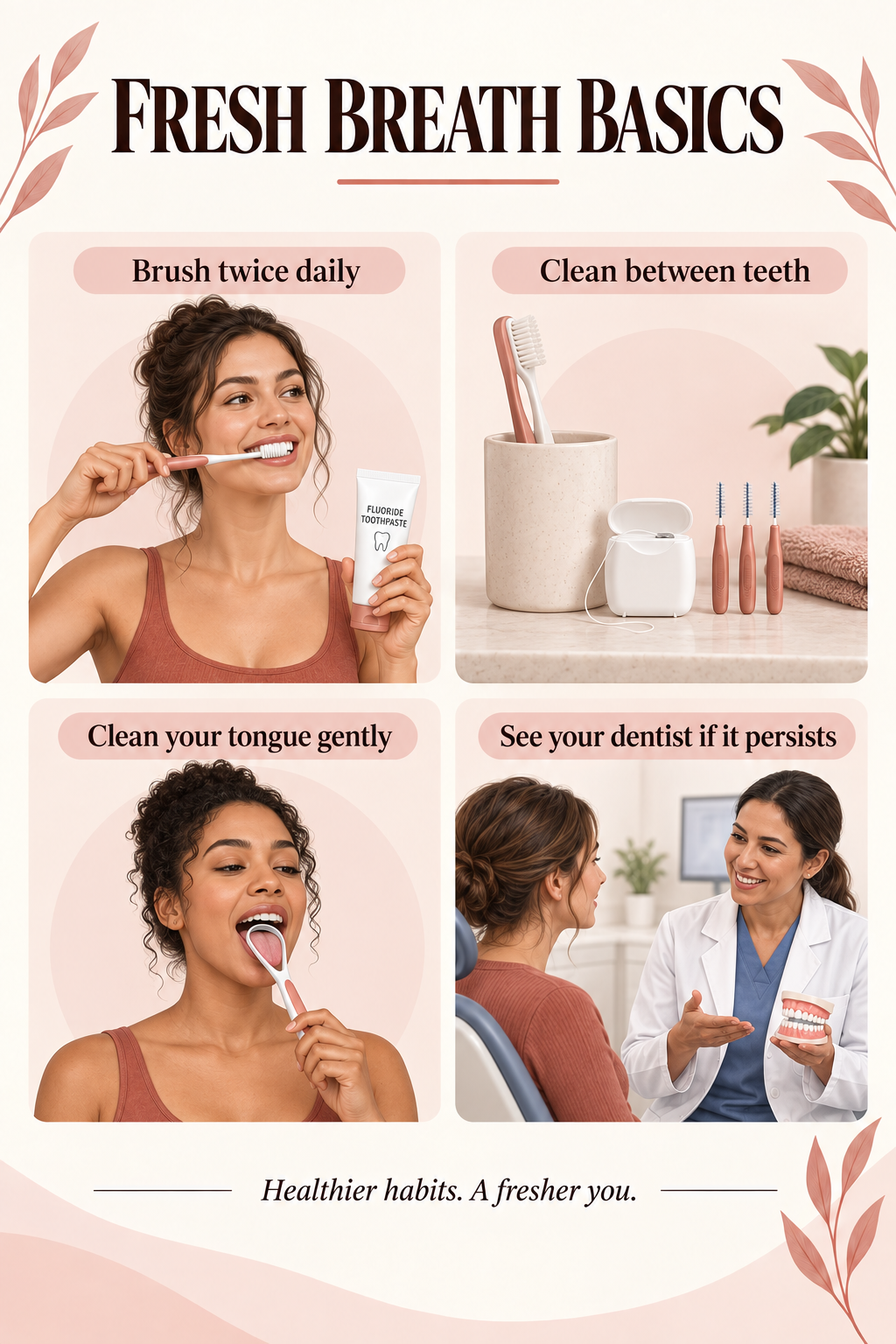
Brush for two minutes twice daily with fluoride toothpaste. Clean between the teeth daily and gently clean the tongue once a day. Spit out toothpaste without rinsing with water straight afterwards. Keep regular dental appointments. The NHS bad-breath guidance recommends these steps and advises dental assessment when the problem persists despite self-care.
Put your interdental cleaning tool beside the toothbrush rather than somewhere you rarely look. If you are unsure which tool fits, ask the dental team to show you. Technique that is comfortable and manageable matters more than an elaborate collection of products.
Notice dryness and triggers
Keep a short note of when the problem occurs—on waking, after particular meals or throughout the day. Mention a dry mouth and any regular medicines at your appointment. Do not change prescribed medication on your own.
Sugar-free gum can be a temporary option after food, but it is not a treatment for gum disease. Repeated home smell tests are also not a dependable diagnosis.
Leave essential oils out of the experiment
Do not put tea tree oil or concentrated peppermint oil into your mouthwash. Avoid replacing fluoride toothpaste with aloe gel or abrasive kitchen mixtures. Use oral-care products as labelled and ask about mouthwash if you think it would be useful.
Book help rather than masking it indefinitely
Book a dentist if bad breath remains after a few weeks of consistent self-care. Do not wait that long if you have painful, bleeding or swollen gums, toothache or loose adult teeth. Gum disease can cause bad breath and other oral symptoms. Severe swelling or trouble breathing or swallowing requires urgent help.
Bring a simple account of your symptoms and routine. You do not need to apologise for the problem; finding the cause is part of dental care. Our plaque-and-tartar guide explains another reason daily cleaning and professional care serve different roles.
Make the routine easy to remember
- Set up: keep your fluoride toothpaste, toothbrush and interdental tool together.
- Clean gently: choose a time you can repeat without rushing. Ask the dental team to demonstrate the right size of interdental brush or how to floss.
- Finish without overdoing it: spit out toothpaste rather than rinsing immediately. Tongue cleaning should be gentle, not an attempt to scrape the surface raw.
- Review symptoms: if breath remains unpleasant after a few weeks, book an appointment. Pain, bleeding or loose teeth warrant earlier advice.
Make a simple note of symptoms you want to discuss. A dentist can check areas you cannot assess yourself, so repeated home smell tests are not a substitute for an examination.
Common questions
Will mouthwash replace brushing and flossing?
No. Think of a suitable mouthwash as an optional addition advised by your dental team, not the main cleaning step. Follow its label and ask when to use it.
Why does the smell keep returning after a mint?
A mint can temporarily change what you notice without addressing a dental problem or dry mouth. A recurring problem is a reason to look for the cause.
Should I brush harder?
No. Brushing or scraping until tissues bleed can injure them. Ask for a technique check rather than adding pressure.
Updated October 15, 2026. General information; this article does not replace individual medical advice.