Freckles and Sun Spots: Safer Care for Uneven Pigmentation
Freckles and sun spots may both look brown, but not every brown mark is the same. Before trying to lighten an unfamiliar patch, make sure you know what it is. Cosmetic treatment should not be the first response to a changing skin lesion.
Start with the marks that need checking
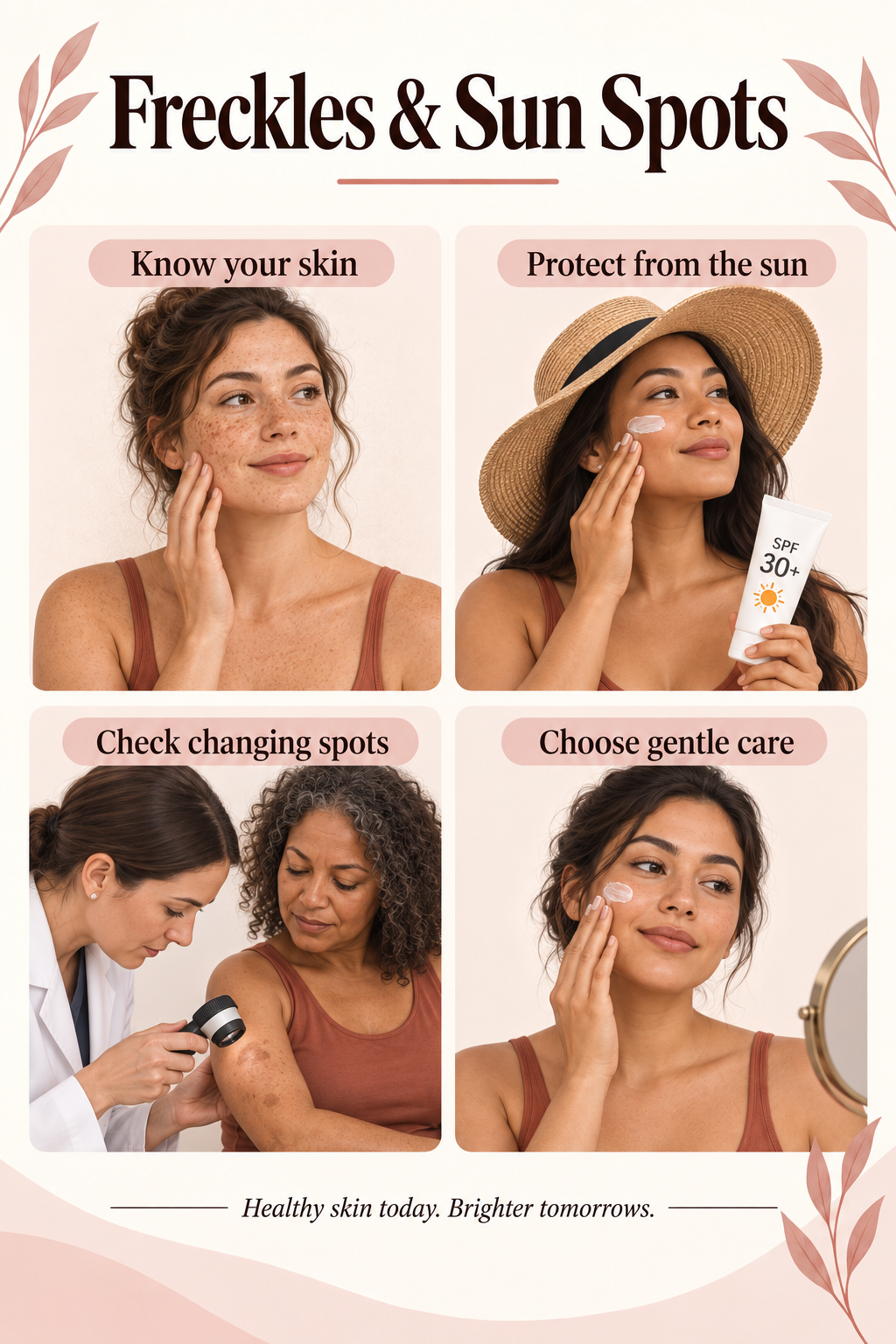
Arrange an assessment for a new, changing, bleeding or unusual spot. Do not try to fade it first with a strong product. The AAD warns that skin cancer can be mistaken for an age spot, which is why diagnosis matters before treatment.
If you have photographs showing when a mark appeared or changed, bring them to the appointment. Also note which products you have applied, including homemade mixtures.
Make sun protection practical
Use broad-spectrum SPF 30 or higher on exposed skin, reapply according to the label and combine it with shade and protective clothing. Keep sunscreen where it fits your day, rather than saving it for a beach trip. Protection remains important if you decide to have pigmentation treatment.
You do not have to aim for completely uniform skin. If you like your freckles, there is no reason to treat them simply because they are visible.
Avoid strong kitchen ingredients
Lemon-and-yeast masks, onion juice and plant sap are not a reliable treatment for pigmentation. Do not continue an experiment that stings or leaves redness. Using an ingredient several times a day does not turn an untested recipe into an effective plan.
If a mark is confirmed to be benign and you want it less noticeable, a dermatologist can discuss creams or procedures. Ask about time, cost and risks of darker or lighter patches, especially for your skin tone.
Keep expectations specific
Choose one concern to discuss rather than asking a product to remove every kind of mark. For a temporary cosmetic option, try a small amount of coverage where you want it; our light-coverage makeup guide explains how to avoid an unnecessarily heavy base.
Prepare a useful skin-care history
A simple list makes a consultation more productive. Note when you first noticed the mark, whether it has changed, and the names of products you currently use. Include the strength printed on any treatment packaging rather than trying to remember it later.
Think about your goal separately from the diagnosis. You might want to understand one unfamiliar patch, reduce the appearance of a confirmed benign spot, or simply find sunscreen that feels comfortable. Saying which matters most helps keep the discussion focused.
Ask about the whole treatment plan
- What kind of mark is being treated?
- What improvement is realistic for my skin tone and this particular patch?
- How will the treatment fit with the products I already use?
- What aftercare and follow-up will I need?
- What would make you recommend stopping or changing the plan?
Before paying for a course, ask for the total cost and an explanation of the alternatives, including leaving a benign mark alone. A photograph of someone else is not a personalised prediction.
At home, place your sunscreen near your morning essentials and keep a hat where you will remember it. Making protection convenient is more useful than owning several products that stay in a drawer.
Common questions
Do freckles have to be removed?
No. You can enjoy their appearance and still protect your skin from the sun. Seek advice about unfamiliar or changing marks rather than treating every freckle as a flaw.
Can I judge a spot from an online photograph?
A photograph cannot reliably establish what your own mark is. Arrange an assessment when you are uncertain, especially if the spot is changing, bleeding or unusual.
How quickly will a spot fade?
There is no single timetable for all marks and treatments. Ask the clinician what progress to expect and when to review it before adding more products.
Updated October 15, 2026. General information; individual health concerns need advice from a qualified professional.