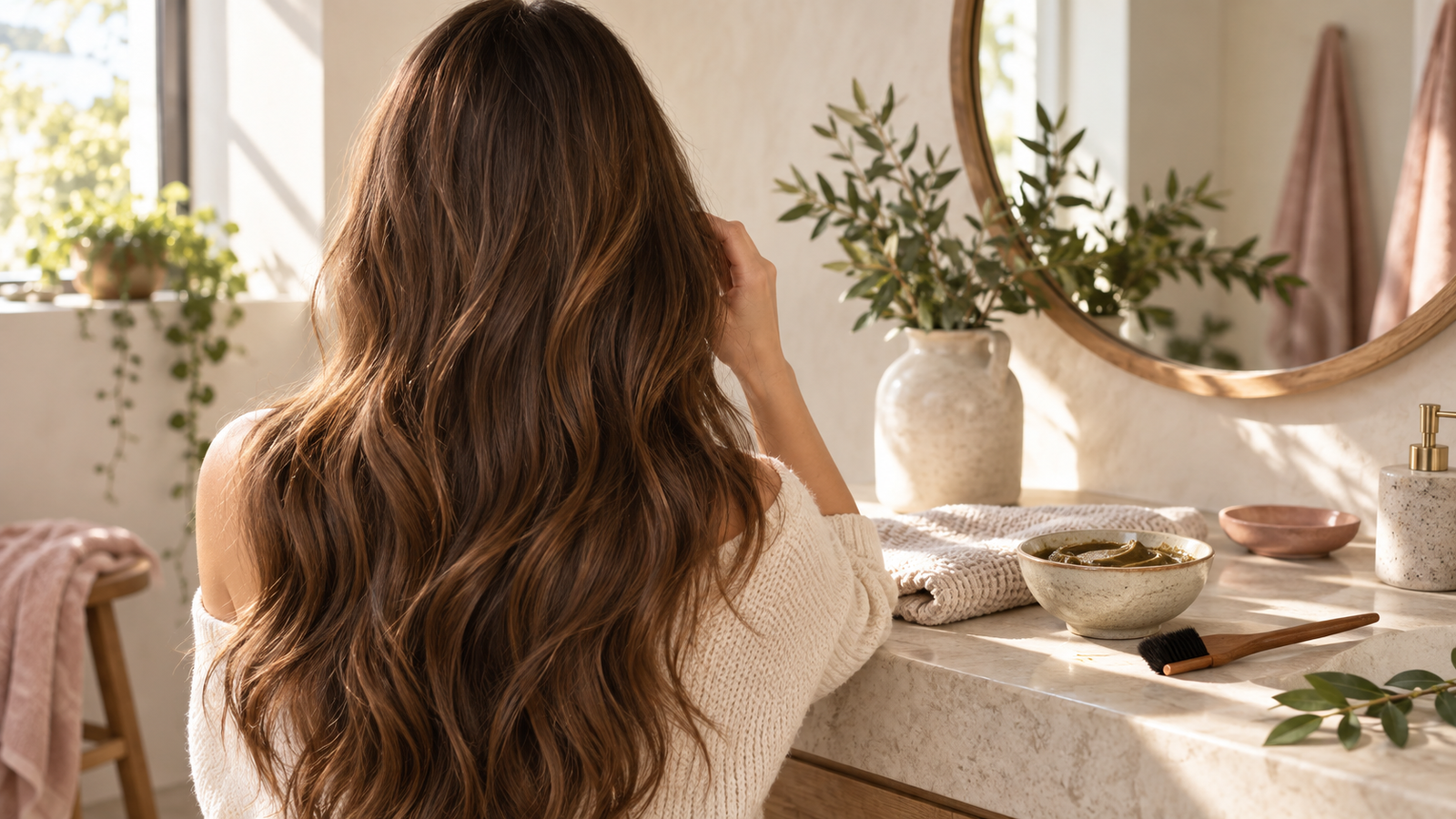
Natural-Looking Hair Colour at Home: A Safer, More Realistic Guide

Changing your hair colour at home can feel like a small reset. The best result is rarely a dramatic overnight change: it is a shade that suits your starting colour, respects the condition of your hair and is applied with care.
This guide is for choosing a more natural-looking result—not for promising a risk-free DIY formula. “Natural” on a label does not automatically mean irritation-free, and plant-based or conventional colour products still need a careful approach.
Start with a realistic colour goal
At-home colour is most predictable when you stay close to your current base. A tonal refresh, subtle warmth or slightly deeper shade is usually easier to manage than a large jump from dark to light.
- Want more depth? Choose a shade close to your natural level or use a colour-depositing product made for refreshes.
- Want more warmth? Look for a soft golden, copper or chestnut reflect that complements your base colour.
- Want to go lighter? Be conservative. Lightening often needs a different process and can be harder on hair; a salon consultation may be the better call for a major lift or colour correction.
Choose the type of colour for the result you want
Temporary and wash-out colours are useful for a low-commitment change. Semi-permanent and demi-permanent options are often chosen for shine and tone, while permanent colour is designed for a longer-lasting change and may be appropriate for root coverage. Read the individual product’s instructions—formulas and timing vary.
Safety comes before shade
Do the skin (patch) test exactly as the product directs before every use—even if you have used colour before without a problem. Sensitivities can develop over time and formulations can change.
- Wear gloves and protect your clothing.
- Keep colour away from the eyes. Do not use hair dye on eyelashes or eyebrows.
- Do not colour hair when the scalp is irritated, sunburned or damaged.
- Do not leave product on longer than the package directs. Use a timer.
- Rinse the scalp thoroughly after use.
- After bleaching, relaxing or perming, give hair time to recover; product directions and FDA safety guidance advise waiting at least 14 days before dyeing.
If you experience burning, swelling, a rash or trouble breathing, rinse off the product and seek medical help promptly.
What about henna and other plant-based options?
Henna can create warm copper-to-auburn tones, depending on the starting colour and formula. It is not a universal shortcut: results can be less predictable on previously coloured or chemically treated hair, and product quality varies. Treat it like any other colour product: read the full ingredient list, follow the instructions and patch-test first. Avoid products marketed as “black henna” for skin or hair if the ingredients are unclear; these may involve sensitising dyes such as PPD.
Prepare for an even result
Read the leaflet before mixing anything. Gather the supplied gloves, timer, clips and an old towel. Apply to dry hair only if the product directs it, and use enough product for your hair length and density. For an all-over colour, work in sections and avoid repeatedly dragging fresh colour through already-processed ends unless the instructions call for it.
Make the colour last
Once you have rinsed and conditioned as directed, keep the routine simple: use gentle shampoo, wash with lukewarm rather than hot water, and add heat protection before hot tools. When a shade begins to fade, a colour-depositing conditioner or gloss can be a lower-commitment way to refresh tone between full applications.
When a salon is the smarter choice
Skip the at-home experiment if you are correcting a strong band, moving from very dark to much lighter hair, dealing with breakage, or have reacted to hair colour before. A professional can assess the hair’s history and recommend a safer path.
The takeaway
A beautiful at-home colour result begins with a modest goal, the right formula and unhurried prep. Take the patch test seriously, follow the label, and choose hair health over a dramatic shortcut.
Safety reference: FDA hair dye safety guidance.
Editor’s note: This article was refreshed in September 2026 with safety-focused guidance. It is general beauty information, not medical advice.


2 Comments