How to Reduce Frizz: A Gentle, Effective Hair-Care Routine
If your hair looks fluffy again as soon as it dries, changing how you wash, detangle and dry it may help more than adding another styling product. Here is how to reduce frizz with five practical habits you can adapt to your texture. The aim is easier-to-manage hair, not perfectly smooth strands every day.
1. Start with a gentler wash day
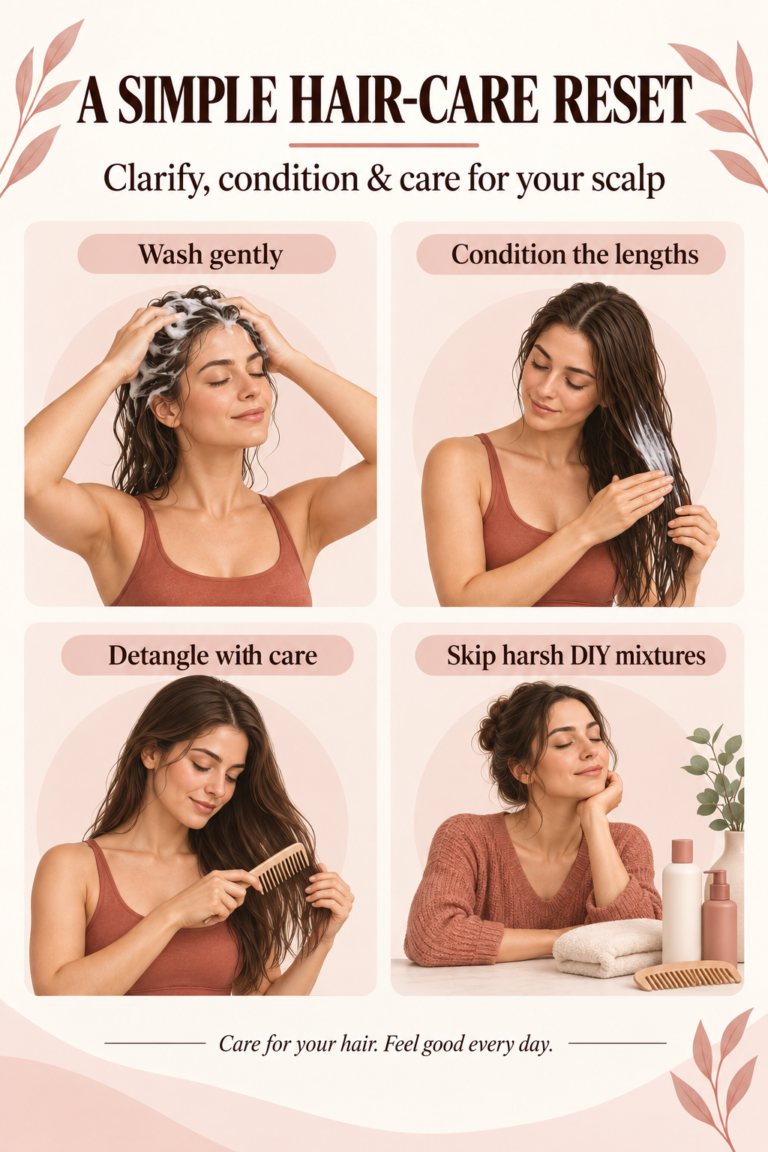
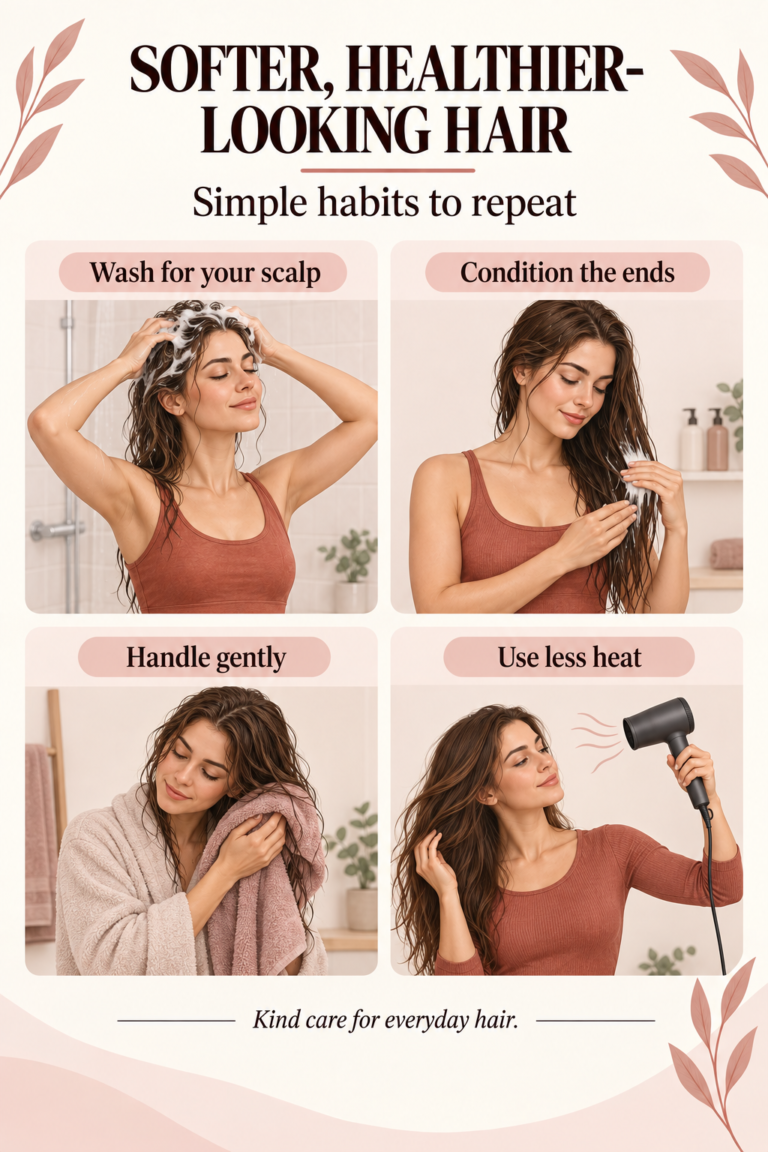
For many people, the anti-frizz routine begins in the shower. Apply shampoo mainly to the scalp, then let the lather rinse through the lengths instead of scrubbing them. Follow with a conditioner suited to your hair type. Fine or straight hair may prefer conditioner mainly on the ends; dry, thick, curly or textured hair often benefits from applying it through more of the length.
Wash when your scalp and hair need it rather than following a fixed anti-frizz schedule. Rinse conditioner as directed on the label.
2. Detangle and dry with less friction
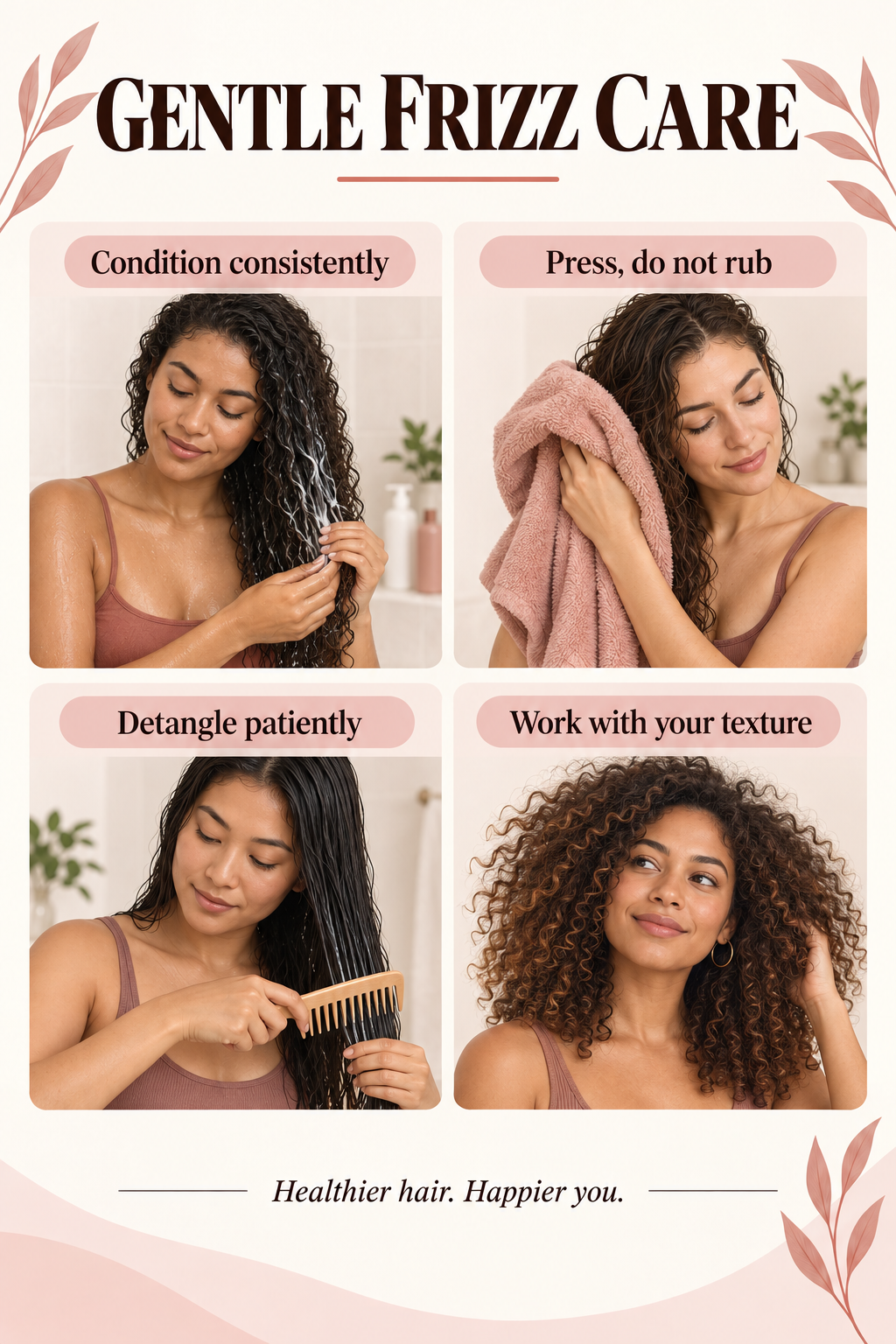
Rough towel-drying can make the surface of the hair look less smooth. After washing, gently press out excess water with a soft microfibre towel or cotton T-shirt rather than rubbing back and forth. Handle wet hair carefully: it is more prone to breakage when pulled or aggressively brushed.
- For straight hair, let it dry a little before gently combing. Start at the ends and work upward without pulling through knots.
- For thick curls and coils, detangle in sections while wet and conditioned, before rinsing. Use your fingers or a wide-tooth comb. Avoid dry brushing if it breaks up your curls.
- Choose a low-friction hair tie and avoid pulling the same area tightly every day.
3. Choose a leave-in for the dry areas
A small amount of leave-in conditioner or detangling spray can make hair easier to comb and help reduce the dry, flyaway look. Start with less than you think you need and apply from the mid-lengths to the ends—not directly onto the scalp. Follow the leave-in label for application and quantity. A rinse-out conditioner is not a substitute: use a product designed to stay in your hair. The best product is the one that gives your hair slip without leaving it heavy or greasy.
4. Turn down the heat
Heat styling can make frizz look worse when it leaves hair dry or brittle. When you blow-dry, use a heat-protecting product if the label says it is designed for heat styling, keep the setting low or medium, and avoid concentrating heat on one section for too long. Flat irons and curling irons should be used on dry hair, at the lowest effective setting, and less often when possible.
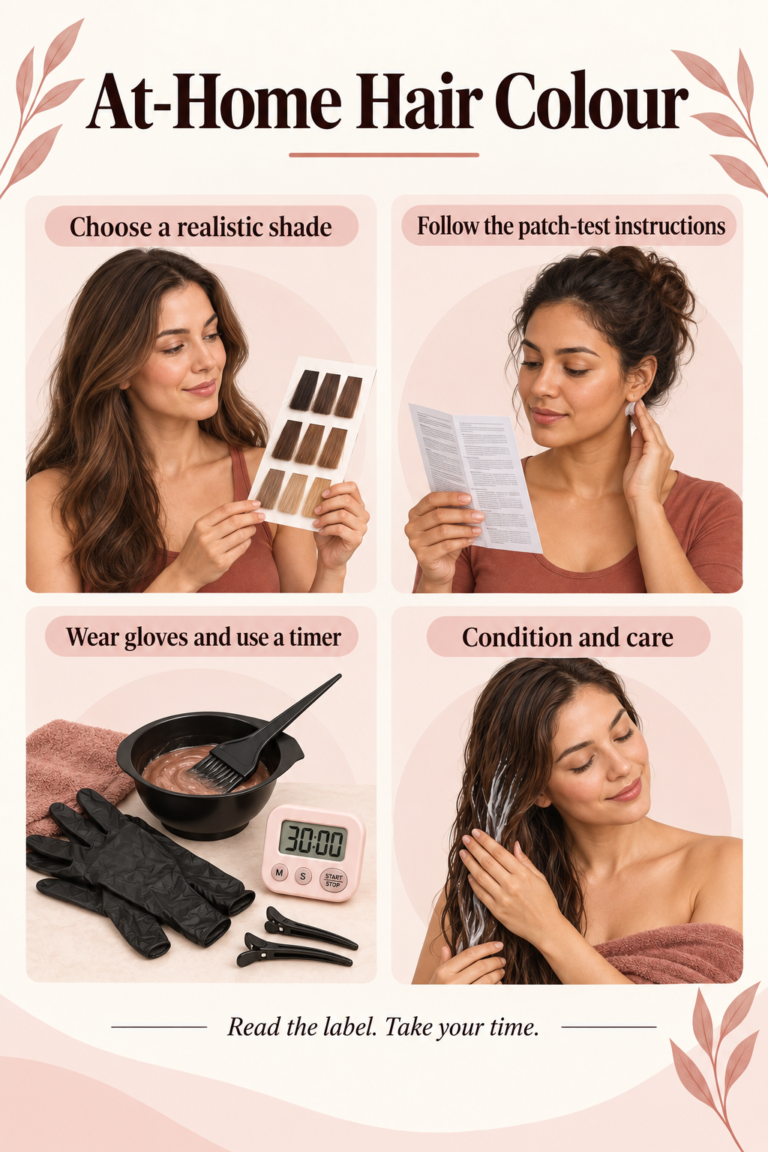
If you colour your hair, give it a little extra care: colour-treated lengths often appreciate a gentle conditioner and less frequent high-heat styling. See our guide to natural-looking hair colour at home for a safety-first approach to colour changes.
5. Match the routine to your texture
There is no single “anti-frizz” routine. Wavy and curly hair may look its best when it is styled with minimal brushing after it dries. Fine hair may need lighter products and less layering. Coily and textured hair can benefit from working in sections and prioritising moisture and gentle handling. A little experimentation is normal—change one thing at a time and give it several wash days before deciding whether it helps.
When it is worth asking for help
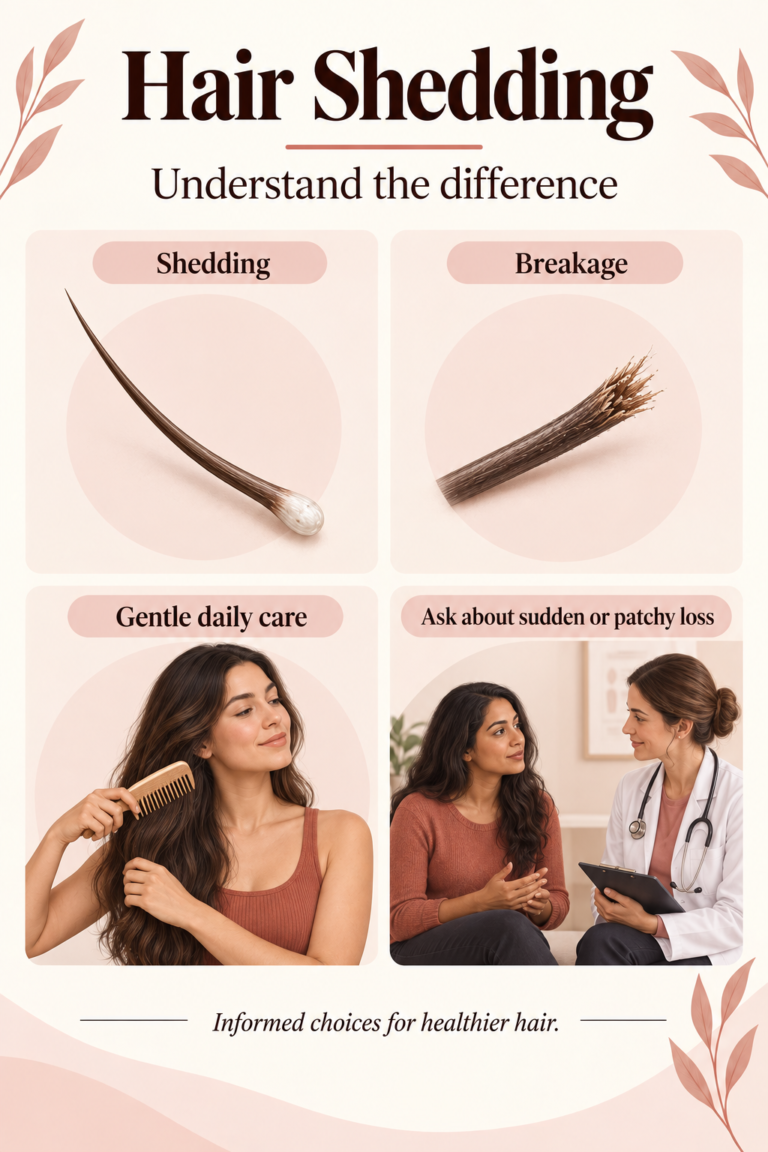
If frizz comes with persistent scalp irritation, sudden breakage, patches of hair loss or a major change in your hair, book an appointment with a dermatologist. Everyday care can improve manageability, but it should not replace advice for a scalp or hair concern that feels new or worrying.
A simple routine to try next wash day
Start with shampoo and conditioner suited to your hair. Adjust your detangling method, blot instead of rubbing, and try a small amount of leave-in only if needed. Change one habit at a time so you can tell what helps. If a product makes your hair feel coated or limp, try less before adding another layer.
Further reading: American Academy of Dermatology: tips for healthy hair and dermatologists’ tips for leave-in conditioner.
Editor’s note: Updated October 14, 2026. It offers general beauty information, not medical advice.