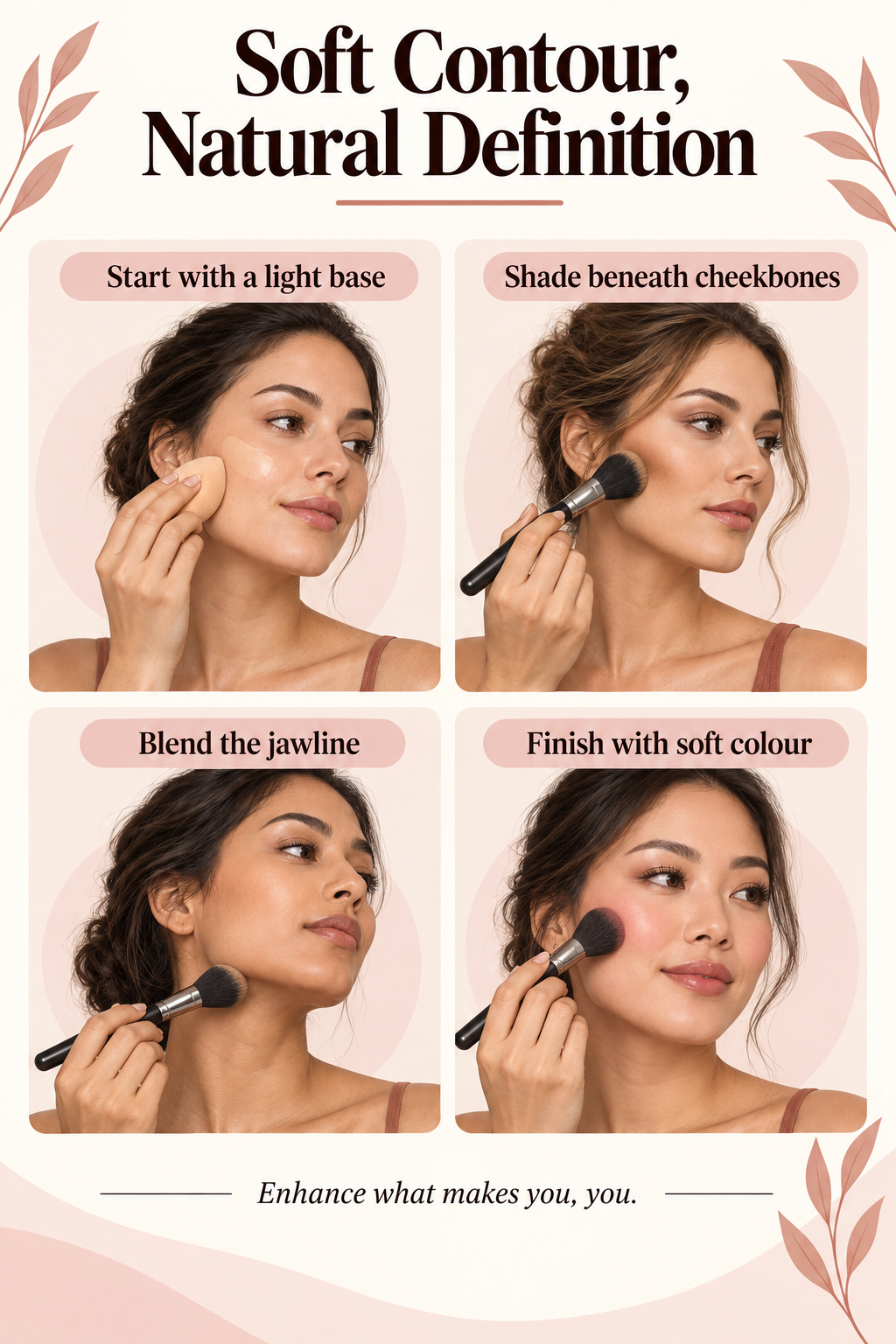
Makeup Contouring Tips for a More Defined Look
Makeup cannot change the structure of your face, but placement, contrast, and blending can make your features look more defined in photographs or everyday light. The most flattering result is usually subtle: think soft shadows, a little brightness, and a finish that still looks like skin.
Quick answer: Use small amounts of contour, blush and highlight, then blend and check in daylight. Makeup changes the appearance of light and shadow; it does not change facial structure.
Start with a natural-looking base
Apply a light layer of complexion product only where you want coverage, then blend it well into the hairline, jaw, and neck. A heavy base can make contour products harder to blend. If your skin gets shiny through the day, press a small amount of translucent powder onto the centre of the face rather than powdering everything.
Use soft shadow under the cheekbones
Choose a matte contour shade that is only a little deeper than your natural skin tone. With a fluffy angled brush, place it just below the cheekbone, beginning near the ear and stopping before the centre of the cheek. Blend upward and outward until there is no obvious stripe. A light touch gives you far more control than adding too much product at once.
Define the jawline with restraint
A small amount of soft shadow beneath the jaw can add gentle definition in photos. Keep it close to the jaw rather than extending it down the neck, and blend carefully. If the shade looks grey, orange, or visibly separate from your skin, remove a little product with a clean brush and soften the edges.
Bring attention to the eyes and brows
Well-groomed brows and defined lashes often make the whole face look more balanced. Brush brows upward, fill only sparse areas with fine strokes, and use a neutral shadow slightly deeper than your lid for subtle definition. Curling lashes and adding mascara can open the eye area without a dramatic look.
Finish with colour in the right place
Blush brings back warmth after complexion makeup. Sweep a small amount over the high point of the cheeks and blend it toward the temples. For a fresh finish, use a tiny amount of cream or powder highlight only where light naturally lands—such as the tops of the cheekbones. Step back from the mirror, check the result in daylight, and adjust only if needed.
The goal is not a new face. It is a polished version of your own features, with products blended so well that no one can see where they begin or end.
Check the result in ordinary light
Move away from a bright bathroom mirror and look at your face from a normal distance. Turn slightly to each side to check the cheek, jaw and hairline. If a stripe is visible before you notice your overall face, soften it with a clean brush rather than adding a second shade on top.
For photographs, take a quick test in the lighting you expect to use. Keep the camera at a normal distance and avoid a beauty filter when judging the blend. The goal is a finish you enjoy in that setting, not copying the placement from a face with different features.
Frequently asked questions
Can contour makeup make my face permanently slimmer?
No. It creates a temporary visual effect through placement and contrast. It does not change bone structure or remove facial fat.
What if my contour looks too dark?
Remove or soften some product with a clean tool, then blend the edges. Start with less next time rather than trying to balance a dark stripe with more layers.
Do I need both contour and highlight?
No. Use only the steps you enjoy. A light base, a little blush and defined lashes can be enough for a polished result.
Pair these ideas with our natural-looking blush guide and soft eye-definition tips.
Editorial review: 21 October 2026.