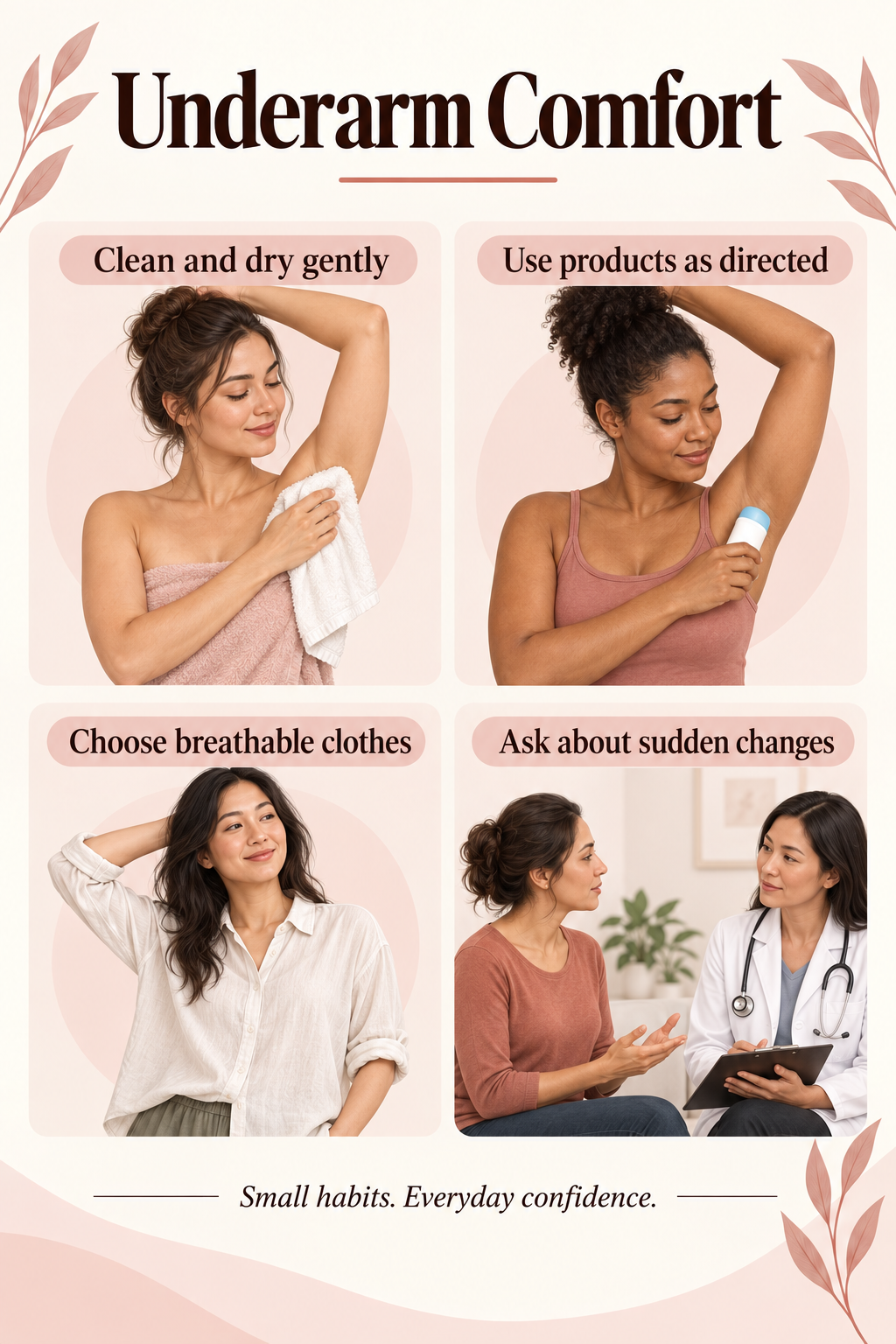
Underarm Sweat and Odor: Everyday Habits That Can Help
Sweating is a normal way for the body to regulate temperature, and underarm sweat can vary with heat, activity, stress and hormones. The practical goal is comfort and odor control—not stopping a healthy body function altogether. A simple routine is usually more useful than harsh home remedies.
Deodorant and antiperspirant do different jobs
Deodorant helps manage odor, while antiperspirant reduces how much you sweat by temporarily blocking sweat ducts. If sweat is your main concern, choose an antiperspirant and apply it to clean, completely dry skin as the label directs—often at night. If skin becomes irritated, pause and try a fragrance-free option.
Everyday habits for freshness
- Wear breathable fabrics and change out of damp workout clothes promptly.
- Wash gently and dry the underarm area well before applying product.
- Keep a spare top on hand if damp clothes make you uncomfortable.
- Choose loose layers when the weather is warm.
Be careful with DIY mixtures
Baking soda, lemon juice, vinegar and concentrated essential oils can irritate delicate underarm skin, especially after shaving. They may make discomfort or dark marks worse. A product formulated for underarms is usually the safer place to start.
When to speak with a clinician
If sweating suddenly changes, soaks through clothing regularly, happens at night without an obvious reason, or significantly affects daily life, a clinician can help. Excessive sweating can have several causes and there are effective treatments beyond standard antiperspirant.
Make the routine easier to follow
Keep track of whether wetness, odor or irritation bothers you most. That helps you choose a suitable product and explain what has not worked. Ask a pharmacist about a stronger antiperspirant if ordinary products are not enough.
For further guidance, see the NHS advice on excessive sweating.
A practical morning-to-evening routine
- Before getting dressed: wash gently when needed and dry thoroughly. Choose a clean, breathable top that does not rub your underarms.
- During the day: change a damp layer when possible. Notice whether heat, stress or a particular drink repeatedly coincides with heavier sweating.
- At the next application: check the antiperspirant label. Many products work best on fully dry skin before bed; prescription products need the schedule your clinician gives you.
- If irritation appears: stop adding products. Let the skin settle and ask a pharmacist about an appropriate alternative.
The AAD tips for managing excessive sweating explain product choice, breathable clothes and tracking personal triggers.
Common questions
Why do I still sweat after using deodorant?
Deodorant addresses smell; it does not necessarily reduce wetness. Read the label for an antiperspirant ingredient or ask a pharmacist which product matches your concern.
Should I use more if it is not working?
Extra applications can irritate skin. First check the directions, whether your skin was dry, and how long you have used the product. Ask for advice if the recommended routine is not enough.
What should I take to an appointment?
Note when the sweating started, where it occurs, whether it happens at night, and any medicines or products you use. Explain how it affects clothing, work or sleep.
Updated October 15, 2026. General information; this article does not replace individual medical advice.