A 15-Minute Beginner Core Workout for Everyday Strength
A beginner core workout is a chance to practise steady movement and comfortable breathing. You do not need to chase a burning sensation or a particular waist shape. This short session uses simple positions and built-in rest, with room to make the work easier as needed.
Quick answer: Use three minutes to warm up, two five-minute rounds for gentle practice and two minutes to finish. Move slowly and rest within each minute. Stop for pain or feeling unwell; this general routine is not a rehabilitation programme.
Check the starting point
Choose a clear space, a comfortable mat and a solid wall. Keep a stable chair nearby if it helps you change positions safely. Read the sequence before starting so the timer does not make you rush from the floor to standing.
If you are pregnant, recently postpartum, recovering from surgery or managing back pain or another relevant condition, get individual advice first. The NHS exercise safety information advises checking suitability and stopping when exercise causes pain or you feel unwell.
Minutes 0–3: warm up gently
Walk or march at an easy pace, let the shoulders move comfortably and practise a few controlled sit-to-stands if appropriate for you. Keep breathing naturally. The warm-up should make the transition to movement easier, not leave you exhausted before the main session.
Check how you feel. If ordinary warm-up movement produces unusual breathlessness, dizziness or pain, stop and seek appropriate advice. You can also choose a shorter session on a day when your usual amount feels too demanding.
Minutes 3–8: practise the first round
Give each item one minute, including setup and rest. You do not have to move continuously for the entire minute. A few smooth repetitions are enough to begin.
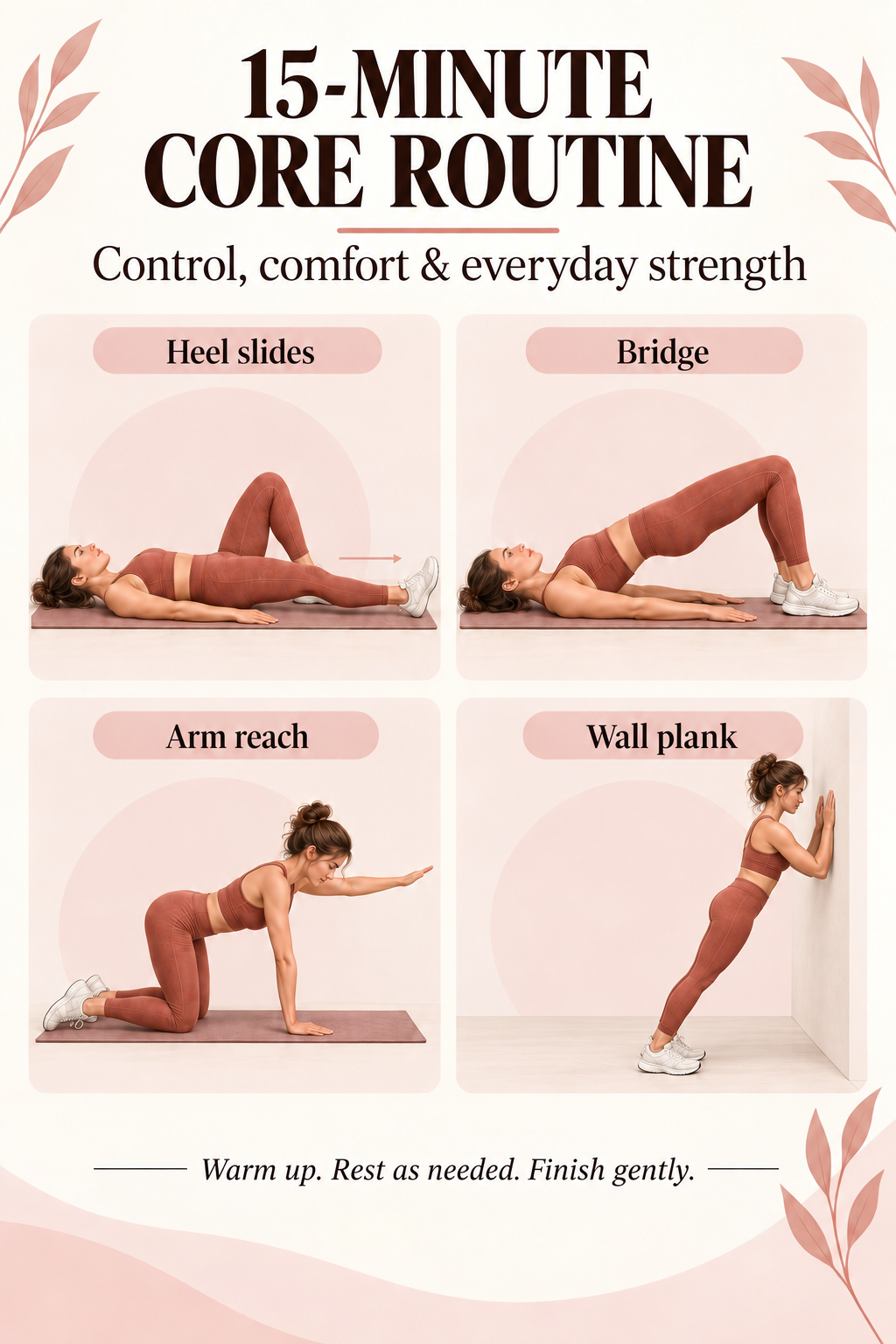
- Heel slide: lie on your back with knees bent and feet supported. Slide one heel a short distance away, then bring it back. Alternate sides while keeping your trunk comfortable.
- Small bridge: from the same position, gently raise your hips within a comfortable range, pause briefly and lower slowly. Do not force your back into a large arch.
- Supported arm reach: on hands and knees, reach one arm forward while the other hand and both knees remain supported. Keep the movement small enough to avoid twisting, then change sides.
- Wall plank: place your forearms against a wall and step back a little. Hold a comfortable, steady position briefly while breathing, then release and rest.
- Recovery: walk slowly or rest in a comfortable position and prepare for the next round.
Minutes 8–13: repeat with control
Repeat the same sequence only if it still feels manageable. Keep the range small and give yourself more rest if technique becomes less steady. If wrists or knees dislike a position, leave that movement out and ask for a suitable alternative rather than forcing it.
Notice whether you hold your breath as the movement becomes harder. Make the exercise easier so breathing remains comfortable. The clock is an organising tool, not a demand to finish a repetition when your control has already gone.
Minutes 13–15: finish and record
Walk gently and allow breathing to settle. Write down which movements felt comfortable, which needed adjustment and whether the session length suited you. At the next session, repeat a manageable version before adding difficulty.
Balance this practice with other activity appropriate for you. Our beginner leg workout and arm-strength routine provide separate starting ideas. No single short workout covers every aspect of fitness.
Frequently asked questions
Will this give me a flat stomach?
It can help you practise strength and control, but it cannot choose where body fat changes or guarantee a waist shape. Judge progress by movement quality and everyday capability.
Can I do only one round?
Yes. Shorten the session when that better matches your ability. Consistent comfortable practice is more useful than completing a timetable by rushing or ignoring pain.
Which symptoms mean I should stop?
Stop for sharp pain, dizziness or unusual breathlessness. Chest pain, fainting or severe breathing difficulty needs urgent medical help. Recurrent discomfort deserves individual assessment before repeating the movement.
Editorial update: 21 October 2026.