A Beginner-Friendly Leg Workout for Strength and Stability
A good leg workout is not about chasing one body shape. It is about building strength, balance, and confidence for the activities you enjoy—walking, climbing stairs, dancing, running errands, or training for something bigger.
This short routine uses bodyweight movements and can be adjusted to your level. Move slowly, keep a comfortable range of motion, and stop if you feel sharp pain or dizziness. If you are returning after an injury or have a health condition, check with a qualified professional first.
Warm up for a few minutes
Walk around the room, march in place, or do easy hip circles and ankle rolls. The aim is simply to feel warmer and more mobile before the working sets.
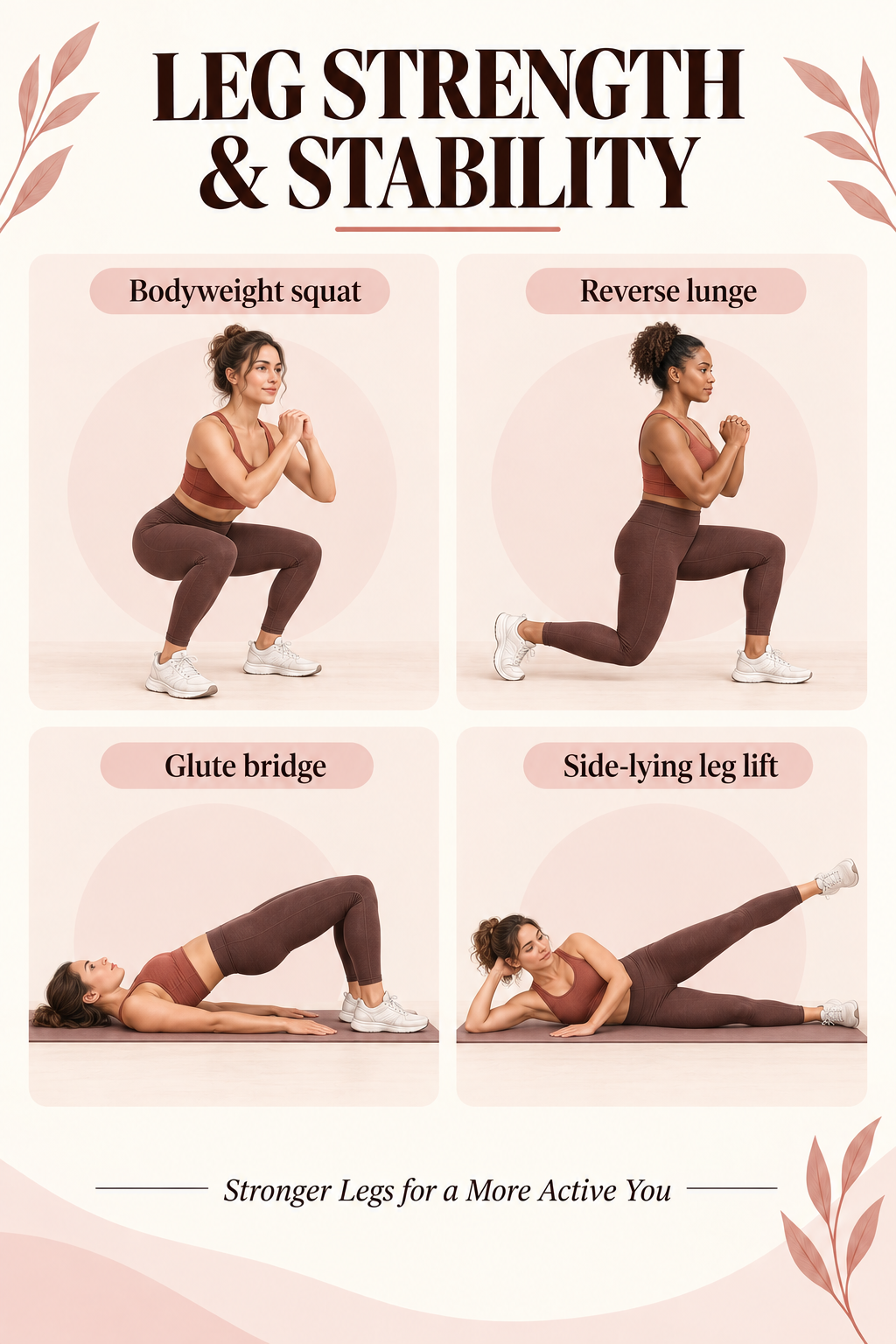
1. Bodyweight squats
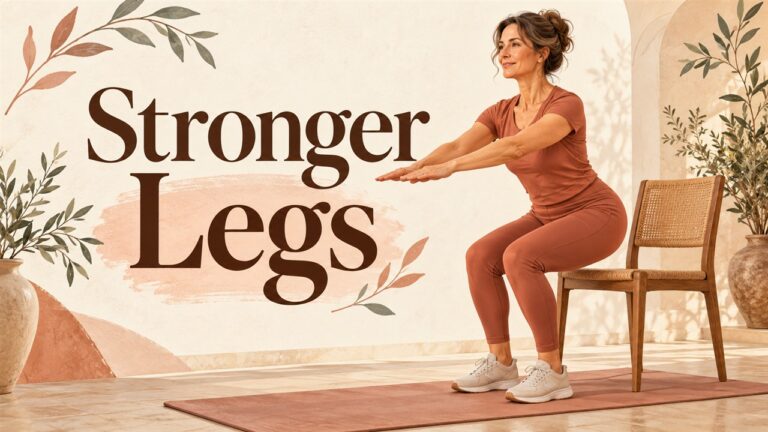
Stand with feet about hip-width apart. Sit your hips back as if reaching for a chair, keep your chest comfortably lifted, then press through your feet to stand. Use a chair behind you as a depth guide if that feels more secure. Try 8–12 controlled repetitions.
2. Reverse lunges
From standing, step one foot back and gently lower until both knees bend within a comfortable range. Push through the front foot to return to standing, then switch sides. Holding a wall or chair for balance is completely fine. Try 6–10 repetitions per side.
3. Glute bridges
Lie on your back with knees bent and feet on the floor. Press through your heels to lift your hips, pause briefly, then lower with control. Keep your ribs relaxed rather than over-arching the lower back. Try 10–15 repetitions.
4. Side-lying leg lifts
Lie on one side with hips stacked. Lift the top leg slowly, pause, then lower without swinging. This is a simple way to work the outer hip and improve control. Try 10–15 repetitions per side.
Put it together
- Complete 1–3 rounds, resting when you need to.
- Start with two sessions a week and build gradually.
- Increase repetitions, range of motion, or resistance only when the routine feels steady.
Consistency matters more than intensity. A routine you can repeat comfortably is a far better foundation than a punishing workout you do once and avoid forever.
Make the routine fit your starting point
The repetition ranges are suggestions, not a test you must pass. If you can do only a few steady repetitions, start there. A stable chair placed against a wall can give you a clear target for a shallow squat; avoid wheeled or folding furniture that could move unexpectedly.
If stepping backwards makes the lunge awkward, practise a small supported step back and return before adding a deeper bend. Skip a movement that causes pain. If getting to the floor is difficult, ask a qualified trainer or physiotherapist for standing alternatives instead of rushing the transition.
A simple weekly example
Try a short session on Monday and another on Thursday, adjusting the days to your schedule. Between them, choose comfortable everyday movement. You do not need to complete this routine on consecutive days to show commitment.
- Record the exercise, repetitions and whether you used support.
- Notice whether the final repetition stayed as controlled as the first.
- Repeat the same level until it feels reliable.
- Change one thing at a time, then reassess.
The NHS strength exercises offer additional gentle starting options. For an upper-body session to complement leg work, see our wall press-up guide.
Common questions
Do I need to reach the listed repetitions?
No. Stop before technique becomes rushed or unstable. Fewer controlled repetitions are a useful starting point, and you can build from there.
Should I continue through knee pain?
No. Stop the painful movement and seek individual advice if pain persists or returns. A smaller range or another exercise may be more appropriate, but pain is not a progress target.
How can I tell whether I am improving?
Look for steadier balance, smoother repetitions and everyday movements feeling easier. You do not need a change in leg size or shape to have made progress.
Updated October 15, 2026. General information; individual health concerns need advice from a qualified professional.