Milia: Why Tiny White Bumps Need Gentle Handling
Small white bumps can look as though they should squeeze out like a pimple. If they are milia, that approach is unlikely to help and can injure the skin. The first step is identifying the bump rather than choosing an extraction tool.
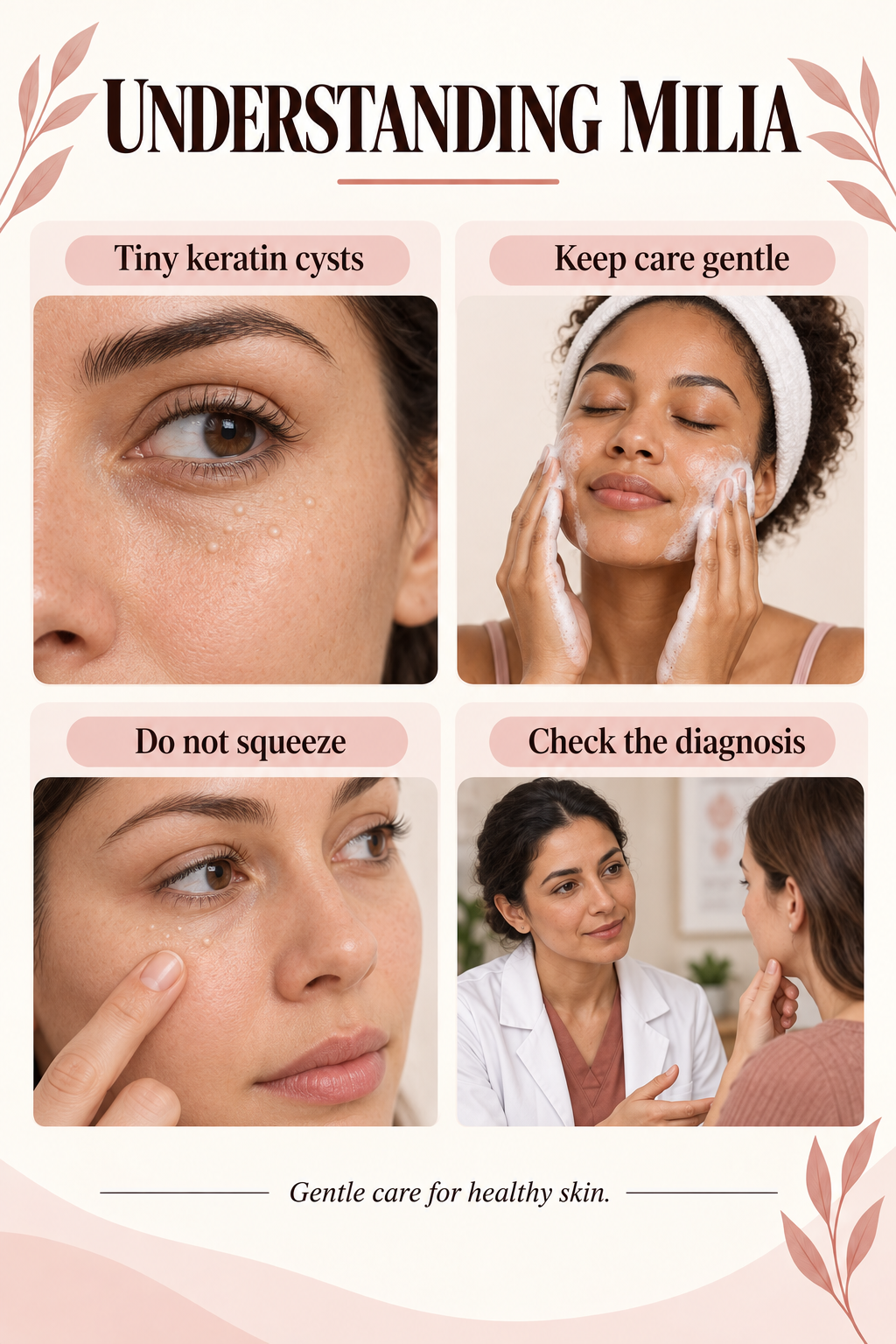
DermNet describes milia as small cysts containing keratin. They commonly occur around the cheeks and eyelids, can affect different ages and may settle without treatment. Not every white bump is a milium, so ask for advice if you are unsure.
Do milia need to be removed?
Confirmed milia are benign and do not always need treatment. Some clear within weeks; others last for months or longer. There is no dependable overnight home remedy. If you want removal, discuss the diagnosis and options with a qualified clinician, particularly for bumps close to an eye.
Keep home care gentle
Cleanse gently and use a routine your skin already tolerates. Avoid repeatedly rubbing the same area to see whether the bump will loosen. If a product seems to irritate the surrounding skin, set it aside instead of adding more exfoliation.
It can help to stop examining the area in a magnifying mirror every day. Take an occasional photograph if you want to track change, keeping the light and distance similar.
Do not try to burn or puncture the bumps
Lemon juice, vinegar, alcohol tinctures and baking-soda mixtures are not a reliable milia-removal method. Do not use a needle at home, especially near an eye. A small cosmetic concern should not become a wound because a video made extraction look simple.
Professional removal is an option when a confirmed milium bothers you. DermNet describes procedures used by clinicians, but that does not make them suitable for home use. Ask about the expected result and possible marks afterwards.
Know when to get the diagnosis checked
Seek advice for a bump that is painful, inflamed, changing or affecting the eyelid, or if many bumps appear suddenly. Mention recent skin procedures and products. Do not stop prescribed creams without discussing them first.
If the bumps are actually blackheads, the approach is different; our blackhead-care article covers that concern. Keeping the diagnosis clear prevents a cycle of treating every small bump as acne and irritating the skin around it.
What to do while you decide about treatment
- Keep the routine comfortable. Continue gentle cleansing and products your skin tolerates; avoid repeated scrubbing over the bump.
- Leave extraction tools alone. A needle, sharp tweezer or home peel creates risks that a small cosmetic concern does not justify.
- Record useful context. Note when the bumps appeared, any recent procedures, and products or prescribed creams used nearby.
- Choose the right appointment. Ask for diagnosis first, then discuss whether observation or professional removal fits your situation.
Before a procedure, ask who will perform it, how the area is cared for afterwards and what marks or recurrence are possible. You do not need to decide on removal simply because a bump is visible in a close-up photograph.
Common questions
Are milia the same as whiteheads?
No. Milia contain keratin and are not simply acne that needs squeezing. Several conditions can look similar, so avoid diagnosing every white bump from a photograph.
How long will they last?
Some settle within weeks; others persist for months or longer. There is no dependable overnight home treatment or fixed timetable for every person.
Can I use an acid near my eyelid?
Do not improvise with acids or removal products near your eyes. Ask a clinician about diagnosis and location-specific options rather than adapting a facial acne routine.
Updated October 15, 2026. General information; this article does not replace individual medical advice.