Acne Marks and Scars: What Home Care Can—and Cannot—Improve
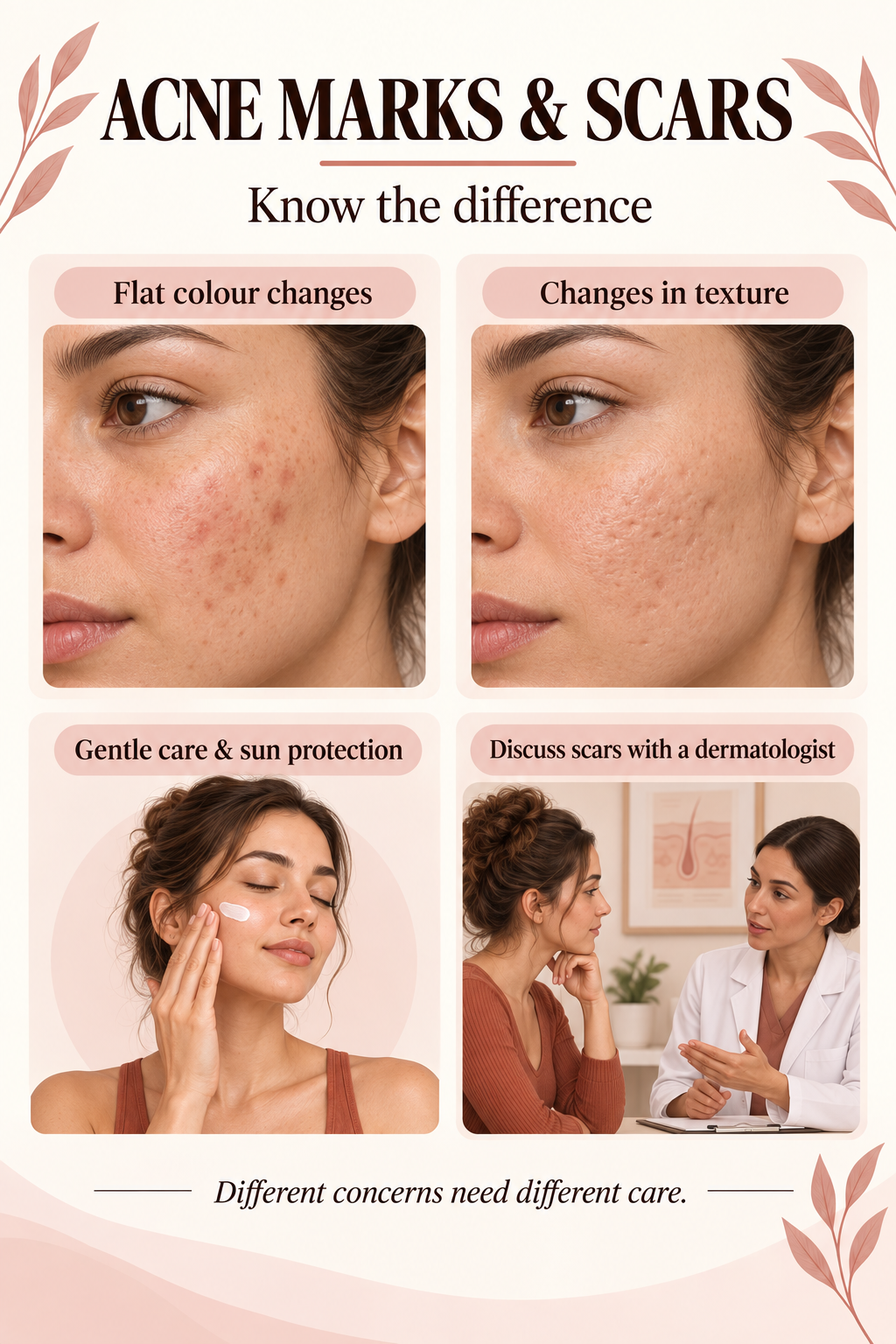
A spot can leave a mark after the breakout has settled, but not every mark is a scar. Flat changes in colour and changes in the skin's texture need different expectations. Identifying which one you are looking at is more useful than trying another homemade mask.
Look at colour and texture separately
Make a note of whether the area is flat, indented or raised. Avoid making a diagnosis from a magnifying mirror alone. Bring your questions to a dermatologist if the distinction is unclear, especially before paying for an intensive treatment.
True acne scars can require procedures selected for the scar type and skin tone. Controlling ongoing acne helps prevent additional scarring. The AAD overview of scar treatment explains why one treatment does not fit every scar.
Use home care to support your skin
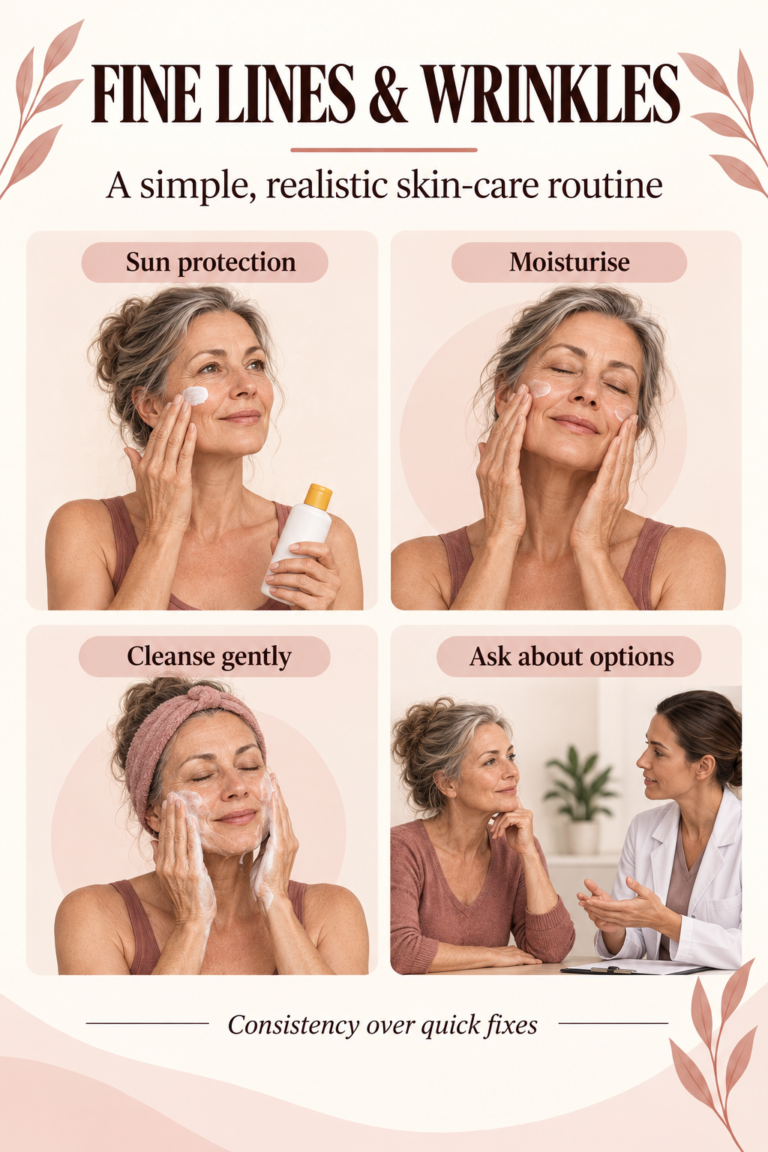
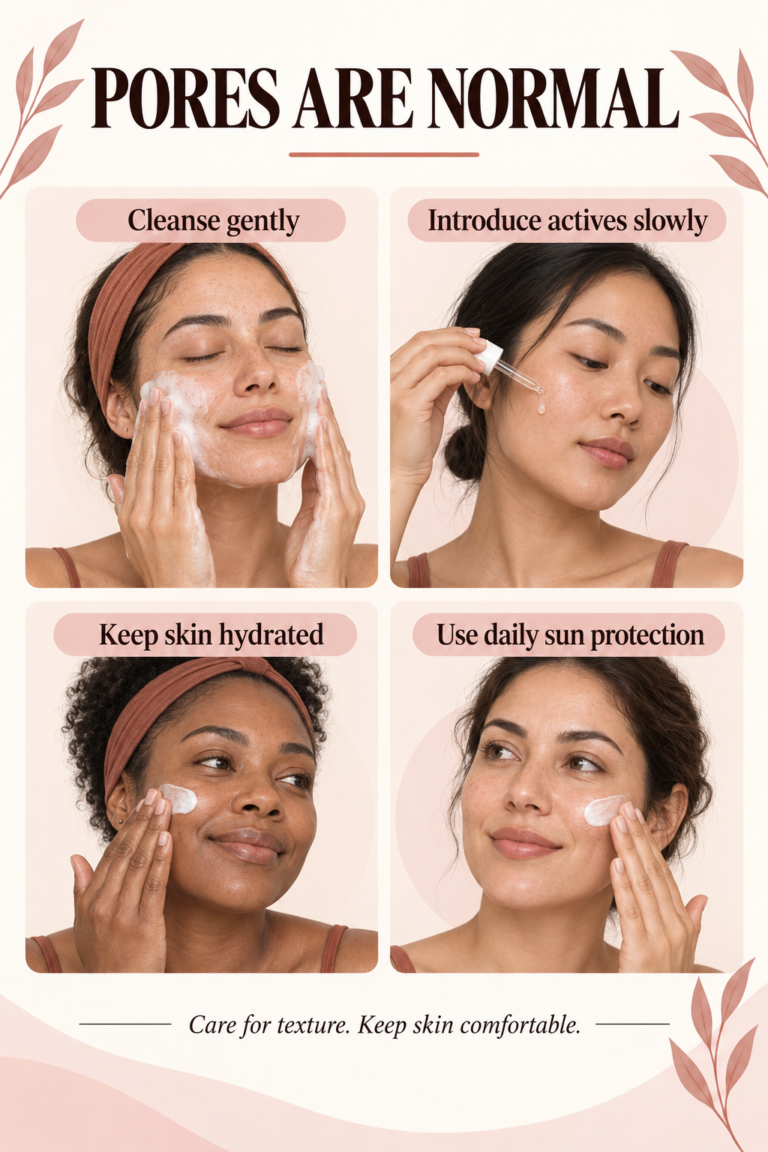
Keep cleansing gentle, use a comfortable moisturiser and protect exposed skin from the sun. Do not pick active spots. If you are still breaking out, start with a manageable acne-care routine rather than trying to treat every old mark and new spot at once.
Take any comparison photographs in similar light and at a similar distance. Daily close-ups can exaggerate small differences and make gradual changes hard to judge. A short product log can also help you explain what you have already tried at an appointment.
Avoid improvised resurfacing
Lemon juice, cinnamon mixtures and coarse scrubs are not substitutes for a scar-treatment plan. Do not attempt deep peels or needle your skin at home. A recipe's vitamin content does not establish that it can repair an indentation.
At a consultation, ask which features treatment can improve, the likely number of sessions, the downtime and the full cost. Discuss pigmentation risks and your current acne medicines. The decision to treat is yours; a useful plan should offer realistic improvement, not a promise of flawless skin.