Pimples, Blackheads and Oily Skin: Build a Gentler Routine
Oily skin can feel like a problem that needs constant cleaning, especially when blackheads and pimples appear together. But removing every trace of shine is not the same as treating acne, and an overly harsh routine can add irritation to the mix.
Quick answer: Start with gentle cleansing, suitable moisturiser and sun protection. Add acne care thoughtfully, follow its directions and give it time instead of scrubbing harder or combining several new treatments.
Separate shine from breakouts
Skin oil is normal. Blackheads are not simply dirt that needs to be scrubbed away, and visible pores do not mean you have failed at cleansing. Decide which concern matters most: uncomfortable greasiness, recurring spots or congestion. That makes it easier to judge whether a change is actually helping.
Look at the whole routine before buying anything. A cleanser, toner, scrub, mask and spot treatment may all contain ingredients that irritate when layered. Write down what you already use and how often. Product names alone do not tell you whether you are repeating the same type of treatment.
Build a comfortable daily base
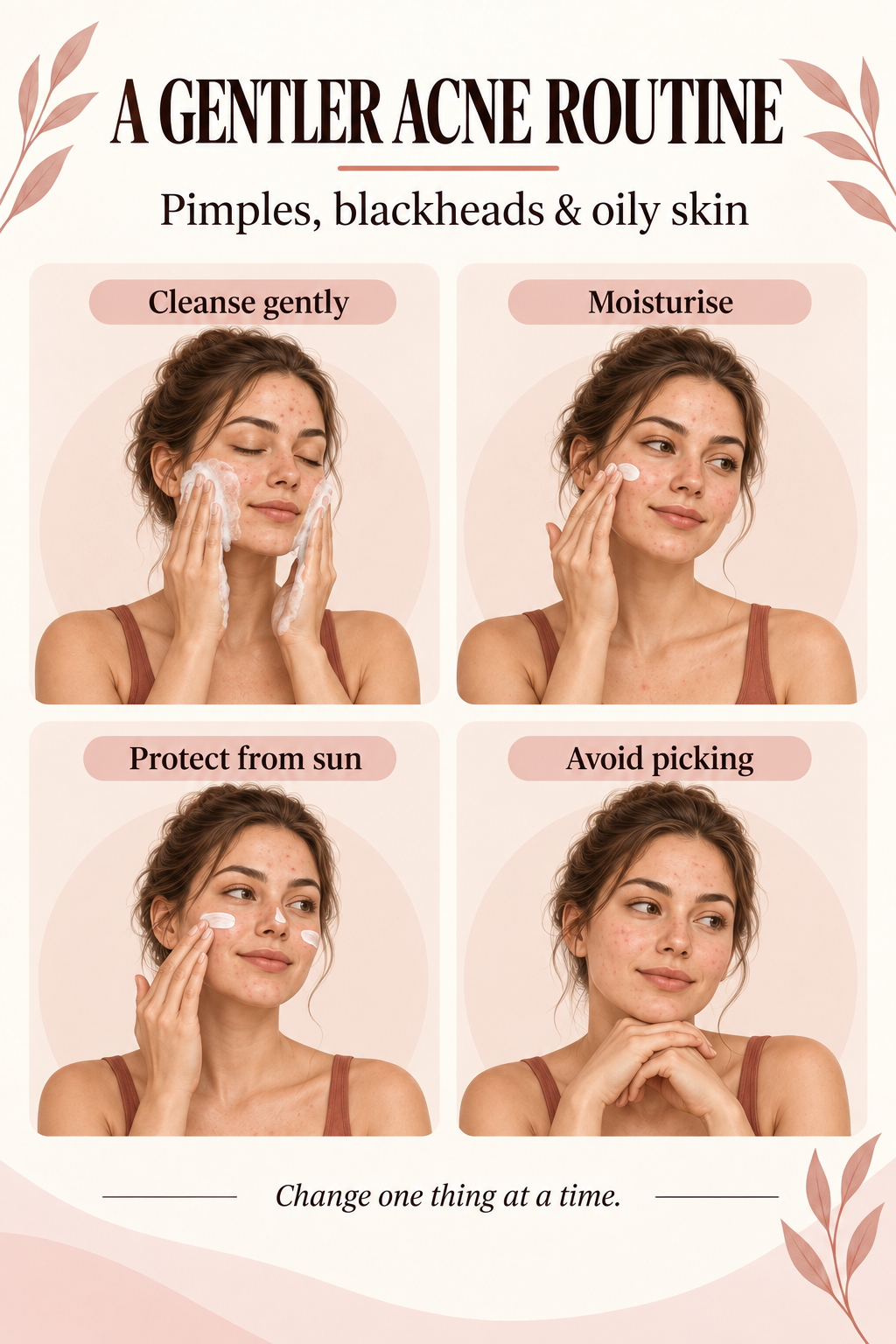
Cleanse gently rather than repeatedly washing whenever you see shine. Use lukewarm water and your fingertips, then pat dry. Avoid abrasive brushes and rough face cloths on irritated areas. After sweating, clean up gently rather than leaving heavy residue or rubbing your face with a used towel.
Choose a moisturiser that feels comfortable and is labelled non-comedogenic when possible. Oily skin can still become dry or irritated from treatment. Finish daytime care with a suitable broad-spectrum SPF 30 or higher, following its label. A lighter texture may be easier to use consistently than a product you dislike.
Make one treatment decision at a time
If you want an over-the-counter acne treatment, ask a pharmacist which option fits your symptoms and current products. Follow the directions and introduce changes cautiously. If you have a prescription, use it according to your clinician’s plan rather than adding extra products to accelerate the result.
Acne usually needs weeks of consistent care, not a succession of overnight tests. Strong stinging, substantial peeling or a rash are reasons to stop an irritating new product and seek advice. If you are pregnant, planning pregnancy or breastfeeding, check treatment suitability with a healthcare professional before starting an active acne product.
Handle daytime shine without punishment
Blot excess oil gently with a clean tissue or blotting paper instead of rubbing. If you use powder, apply a small amount only where you want it. Repeatedly adding thick layers can make makeup feel heavy even when the skin underneath is comfortable.
Keep makeup tools clean and avoid sharing them. Remove makeup gently in the evening. Choose a simple routine you can repeat on busy days; consistency is more useful than an elaborate weekly facial followed by several nights of skipped care.
Leave extraction to a safer setting
Squeezing spots or digging at blackheads can injure skin and leave marks. Avoid using nails, improvised tools or aggressive pore-clearing sessions. The American Academy of Dermatology’s acne skin-care advice emphasises gentle habits alongside appropriate treatment.
Seek help for deep painful spots, scarring, persistent acne or a routine that keeps causing irritation. Bring a list of your products to the appointment. Our guide to acne marks and scars explains lingering changes, while our pre-event acne plan helps with short-term expectations.
Frequently asked questions
Should I skip moisturiser if my skin is oily?
Not automatically. A comfortable, suitable moisturiser can support skin that feels dry or irritated, including during acne treatment. Choose the texture according to how your skin feels.
Can I scrub blackheads away?
Scrubbing is not a reliable solution and can irritate the surface. Ask about appropriate acne care instead of using more pressure.
When is a routine not enough?
If acne is painful, scarring, persistent or affecting your confidence, seek professional advice. You do not have to keep experimenting alone.
Editorial update: 21 October 2026.