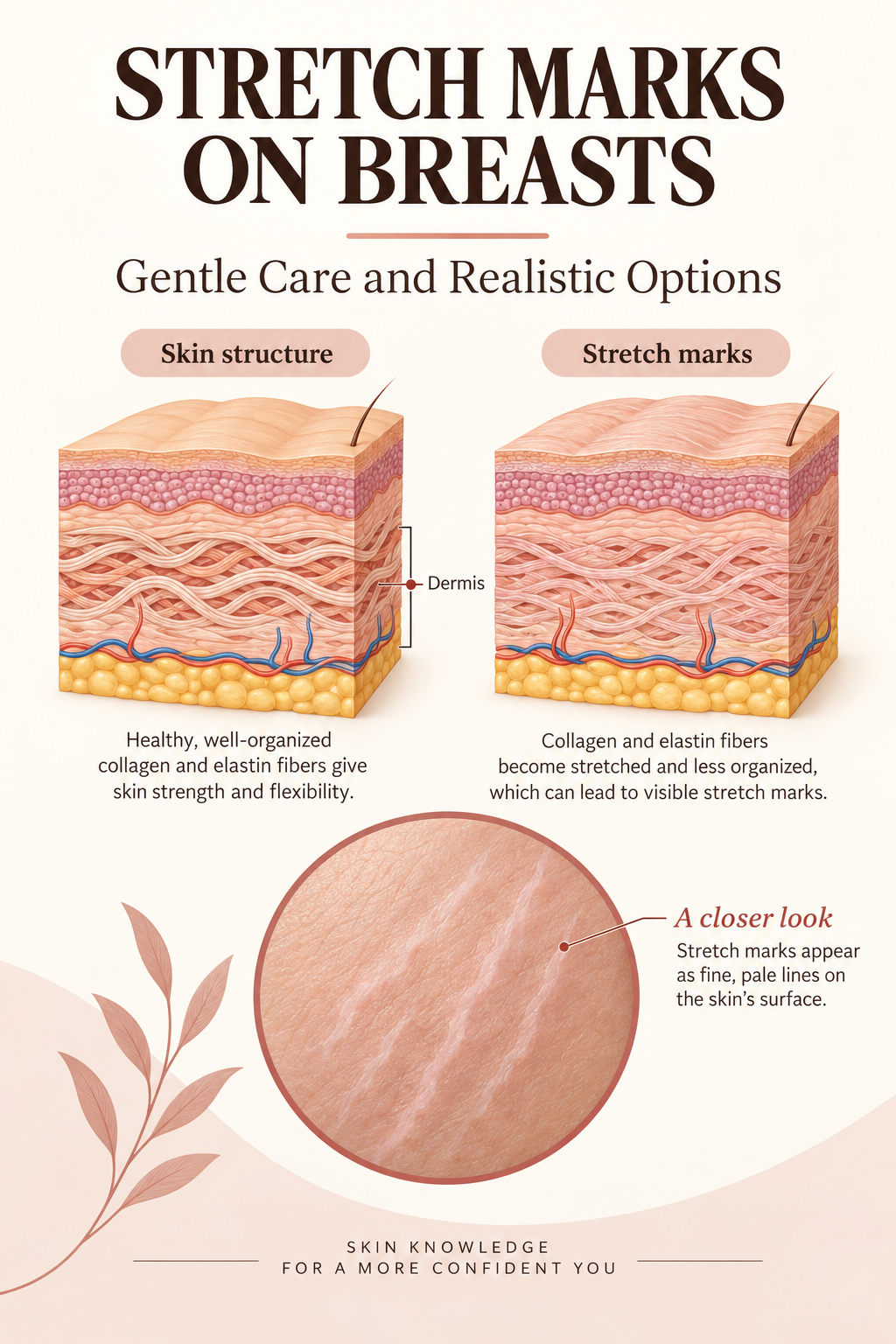
Stretch Marks on Breasts: Gentle Care and Realistic Options
Stretch marks can appear as breasts change during puberty, pregnancy or other periods of growth. They are a type of scar, not evidence that you failed to moisturise. Choosing to leave them alone is as reasonable as asking about treatment.
Expect fading, not instant removal
New stretch marks may look more vivid than older ones. They often become less noticeable over time, but no cream can guarantee complete removal. The AAD explains the evidence for stretch-mark treatments, including the limited results of many popular home remedies.
If you want to compare changes, do so occasionally in similar light rather than inspecting the area every day. A camera flash or stretched skin can make the same marks look very different.
Keep everyday care gentle
Choose a comfortable moisturiser if the skin feels dry and avoid rubbing it hard. Lemon juice, raw egg, potato slices and abrasive sugar scrubs do not provide a reliable treatment plan. Do not keep using something that burns because the label calls it natural.
Comfortable clothing may make the area feel less irritated. If a bra seam rubs a particular patch, try adjusting the fit or choosing a softer design rather than layering products over the friction.
Discuss treatments in context
A dermatologist can assess whether a topical treatment or procedure is appropriate. Results depend on factors such as how established the marks are, and treatment has costs and possible side effects. Ask what degree of improvement is realistic before committing.
During pregnancy or breastfeeding, discuss any treatment first; do not start retinoids yourself. Keep products away from areas that an infant could ingest unless your healthcare professional says they are suitable.
Do not label every breast change a stretch mark
A new lump, persistent rash, nipple change or unexplained dimpling needs assessment. Bring new changes to a clinician instead of trying to manage them as a cosmetic concern.
For exercise ideas, our chest-strength guide focuses on what training can actually do without promising to remove stretch marks or lift breast tissue.
Separate comfort goals from cosmetic goals
Before choosing a product, decide what you want it to do. Relieving a dry feeling, making a bra more comfortable and changing the appearance of a scar are different goals. A moisturiser that makes skin feel nicer has not necessarily changed the stretch mark itself.
Keep the routine uncomplicated. Choose one comfortable product you tolerate and avoid buying several treatments at once. Write down its name and how the skin feels after use. If something irritates the area, stop instead of assuming that stronger sensations mean better results.
Questions to ask before paying for treatment
- What improvement is realistic for these particular marks?
- How does my skin tone affect the options and risks?
- What is the total cost, including repeat visits and aftercare?
- How will we decide whether the treatment is helping?
- Does pregnancy, breastfeeding or another part of my health history change the advice?
You can take time to think after the consultation. A treatment plan should leave room for questions and a decision not to proceed. If you choose to track appearance, use occasional photographs in similar lighting and keep them private if you prefer. Day-to-day comparisons can be distracting because light, camera angle and posture change what you see.
Common questions
Did I cause stretch marks by not moisturising enough?
No. Their presence is not a personal failure. Moisturising for comfort is reasonable, but it cannot guarantee that stretch marks will be prevented.
Will older pale marks disappear with a cream?
Complete removal is not a realistic promise. Ask about the likely benefit for established marks before committing money or time to a product.
Can I use a treatment while breastfeeding?
Check the specific product and application area with a qualified healthcare professional first. Do not assume that a general body-care label makes it suitable near an infant’s mouth.
Updated October 15, 2026. General information; individual health concerns need advice from a qualified professional.