How to Support Healthy, Stronger-Looking Nails
Healthy nail growth is mostly a matter of patience and protecting what has already grown. If your nails keep catching, peeling or snapping, a gentler routine can help you keep their length without relying on a miracle serum or an aggressive manicure.
Quick answer: Focus on moisturising, reducing repeated soaking and keeping the free edge smooth. Nail oil can improve comfort and appearance, but it does not make nails grow overnight. New or unexplained nail changes deserve an assessment.
Start with a realistic goal
Choose a length that works for your daily life. A short, even manicure often looks more polished than long nails with several splits. If you type frequently, work with your hands or look after young children, a little free edge may be easier to maintain than a dramatic shape.
Take one photograph at the beginning, in ordinary daylight, and compare it with a later photograph rather than checking several times a day. Look for fewer snags and less peeling as well as extra length. These practical improvements matter even before the nails look noticeably longer.
Build a routine around things you already do
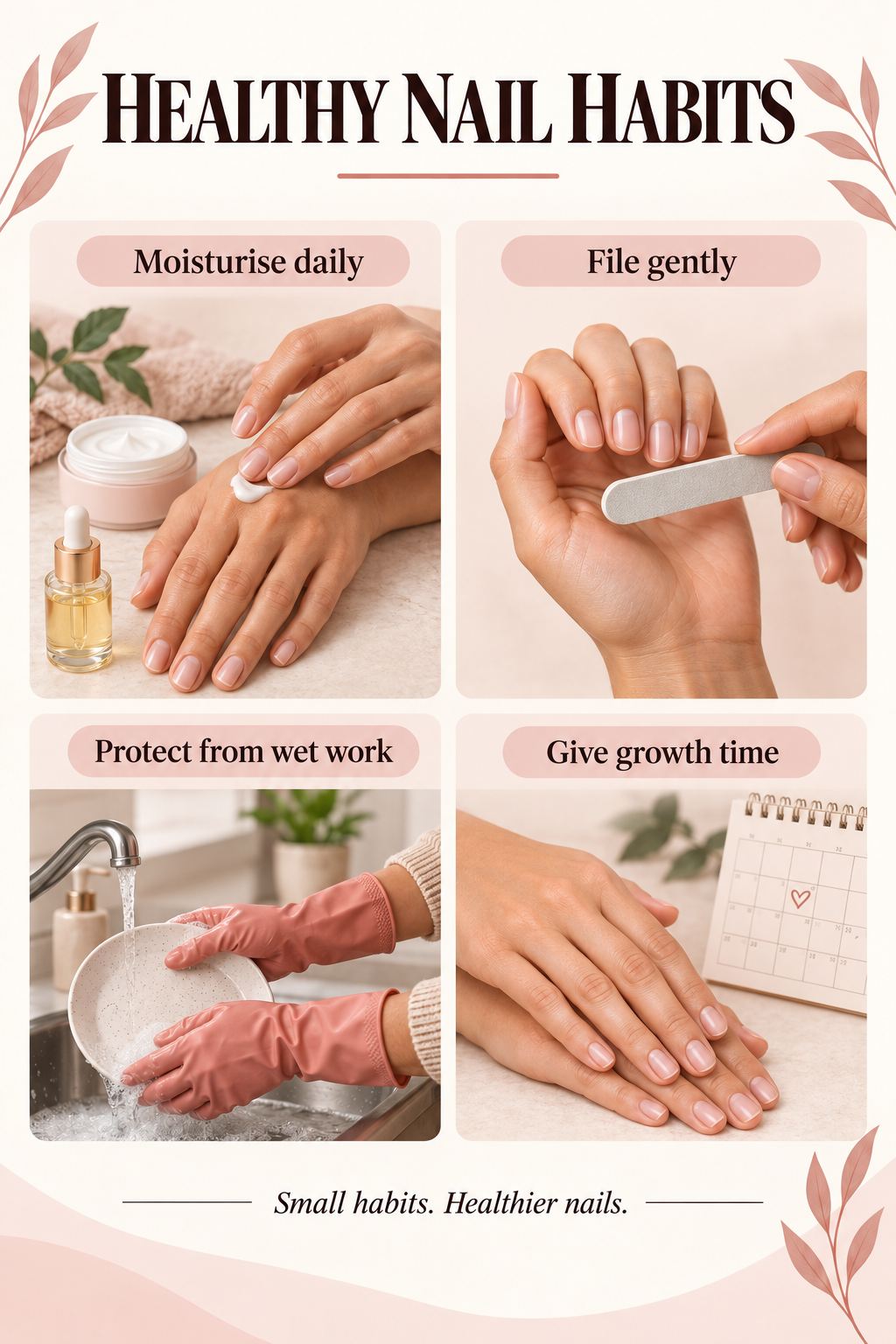
- After washing: dry your hands and work a little cream over the fingertips and around the nails.
- Before dishes or cleaning: put on suitable protective gloves; replace them if the inside becomes wet.
- When you notice a snag: smooth the rough edge gently rather than pulling it away.
- At bedtime: reapply cream and leave the cuticles alone.
Keep the products where you will use them: a small tube by the sink and a file in your bag. You do not need a separate product for every step. A comfortable hand cream is a sensible starting point, especially if heavily fragranced oils bother your skin.
Shape gently and protect the cuticle
Use a fine file with light pressure. Avoid repeatedly thinning the top surface to make the nail shiny. The skin at the base helps protect the growing nail, so do not cut or aggressively push it back. The AAD’s healthy nail guidance explains the importance of gentle grooming and avoiding damage.
If your polish has chipped, resist the temptation to peel it off during a meeting or while watching television. Schedule removal when you can use the product as directed. For a straightforward finish, follow our at-home manicure guide.
Do less when the nails feel fragile
Back-to-back extensions, repeated filing and forceful removal can make it harder to keep an intact edge. If your nails feel thin or tender, pause the treatments that seem to aggravate them and keep the next manicure simple. Do not cover painful or inflamed skin with glue or another enhancement.
Everyday actions matter too. Open packaging with scissors, lift a ring pull with an appropriate tool and use a scraper rather than a fingernail for dried labels. One small change repeated many times can remove a source of wear.
Be realistic about supplements
A balanced diet is more useful than buying several hair-and-nail supplements without a reason. The AAD notes that biotin can interfere with some blood tests. Discuss suspected deficiencies with a clinician, and tell them about supplements you already take. More is not automatically better.
Frequently asked questions
Can oil make nails grow faster?
Oil may soften dry surrounding skin and improve the look of the manicure. Treat it as a grooming option, not proof of faster growth. Choose a product you tolerate and stop if it causes irritation.
Should I keep filing a peeling nail?
Gently shorten a catching edge if you can do so comfortably. Do not strip away layers or file into the attached nail. Repeated peeling despite careful grooming is a reason to seek individual advice.
When should I get a nail checked?
Arrange advice for unexplained colour or shape changes, lifting, persistent fragility or soreness. Redness, warmth and swelling around a nail may need treatment. See our guide to yellow nails before trying to hide a new colour change.
Editorial update: 21 October 2026.