Hair Shedding: What Is Normal and When to Speak With a Clinician
Hair shedding can feel alarming when you notice it in the shower or on a brush. Some shedding belongs to the normal growth cycle, but a change in amount or pattern deserves attention. Gentle care can protect the hair you have while you work out whether you need an assessment.
Quick answer: Notice the pattern, timing and any scalp symptoms rather than trying to diagnose yourself from a few hairs. Avoid harsh home remedies and unnecessary supplements. Sudden patches, scalp pain, inflammation or progressive thinning should be assessed.
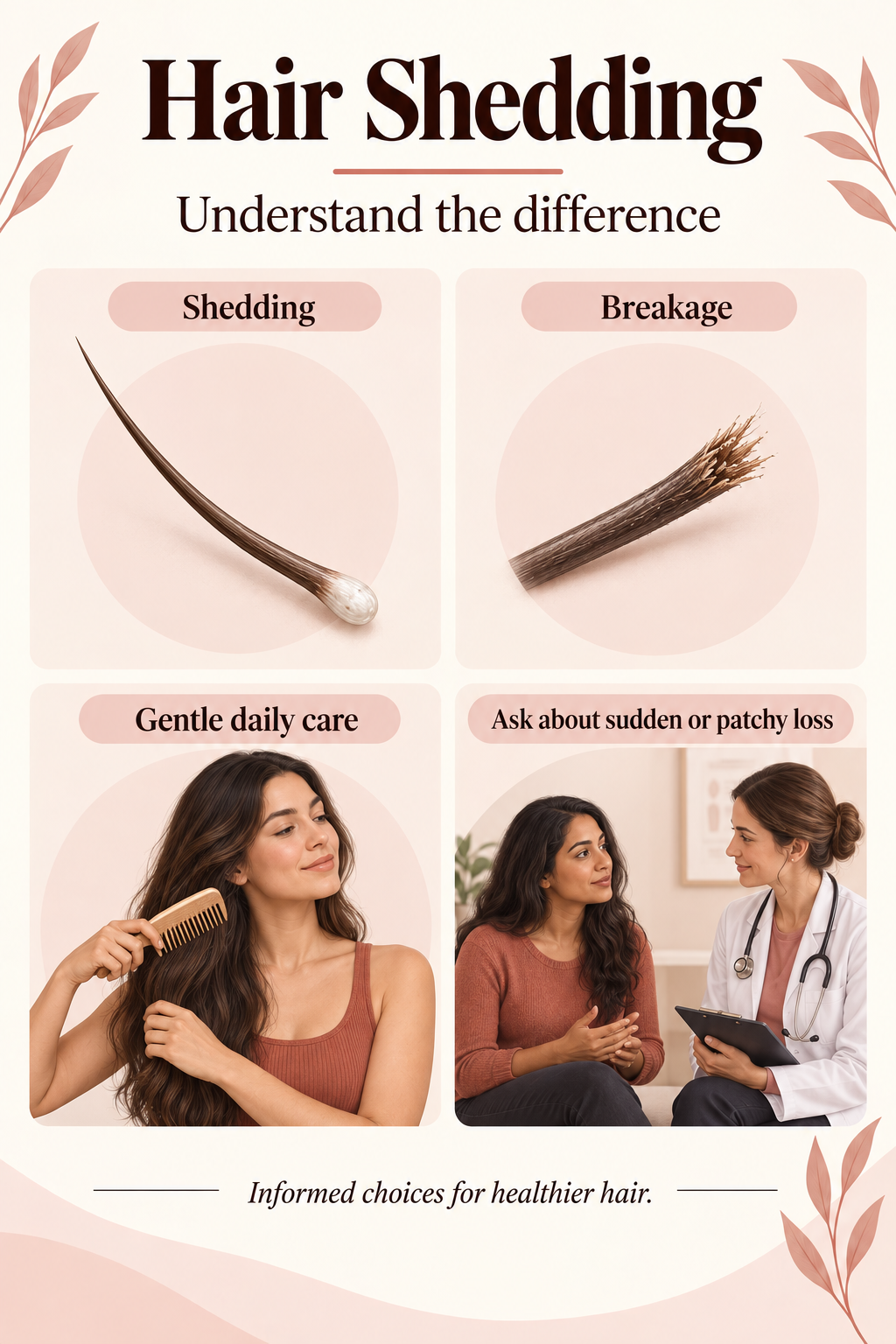
Separate shedding from breakage
Shedding releases a hair from the follicle, while breakage happens along a strand. Short pieces of different lengths may suggest breakage, but looking at one hair or its end is not a reliable home diagnosis. Both problems can happen at the same time.
The AAD explains that increased shedding may follow illness, childbirth or significant stress, sometimes with a delay of several months. Other forms of hair loss have different causes and may need treatment. A dermatologist can distinguish them.
Make a useful record, not a daily hair count
Write down when you first noticed the change and whether the parting, temples or a particular patch looks different. A photograph in consistent lighting can make the pattern easier to discuss. Avoid changing the angle or pulling the hair much tighter between photographs.
- Note recent illness, childbirth, major weight changes or stressful events.
- List new medicines and supplements.
- Record scalp pain, itching, scaling or redness.
- Include bleaching, relaxing, extensions and tight hairstyles.
You do not need to collect every loose hair. Wash frequency, hair length and styling can alter how dramatic the amount looks. A concise timeline is often easier to use than a bag of hairs and a growing list of guesses.
Reduce unnecessary handling
Choose a washing routine that keeps the scalp comfortable and detangle patiently. Use conditioner where the lengths need slip, and avoid forcing a brush through a knot. Make heat styling less frequent and loosen styles that feel tight or pull at the hairline.
Keep the routine simple enough that you can tell whether a product irritates you. If the ends are the main problem, our split-end guide addresses grooming and mechanical wear. It does not replace an assessment for thinning at the scalp.
Be cautious with home remedies
Onion juice, strong essential oils, lemon and abrasive scrubs can cause irritation and are not reliable solutions for every cause of hair loss. A burning sensation does not show that follicles are being stimulated. Stop a product that makes the scalp sore or inflamed.
Before trying another treatment, ask what problem it is supposed to address. An ingredient that makes a strand feel smooth is not automatically a treatment for a condition affecting hair growth. Keep these goals separate when comparing claims.
Discuss nutrition and treatment individually
Eat regularly and aim for a varied diet rather than restricting food while searching for a supplement. Testing for deficiencies should be guided by your history and symptoms. The AAD advises caution with beauty supplements; biotin can interfere with some laboratory results. Tell your clinician what you take.
If you think a medicine is involved, ask the prescriber before changing it. Do not stop treatment on your own. At an appointment, ask what diagnosis is being considered, whether tests are useful and what improvement would look like over time.
When to book an assessment
Arrange advice for sudden patches, progressive thinning, persistent increased shedding or scalp symptoms such as pain, redness or scaling. You do not have to wait until the change is severe. Take the timeline and photographs you have gathered, plus a list of products and treatments.
For styling between appointments, our gentle frizz-care guide can help with manageable lengths. Styling changes should support comfort rather than conceal a problem indefinitely.
Frequently asked questions
Does seeing hair after washing mean shampoo caused it?
Not necessarily. Washing can release hairs that were already ready to shed. A product that causes irritation should still be stopped and reviewed, but the timing alone does not establish the cause.
Will oil regrow my hair?
An oil may change softness or shine, but it cannot reliably treat every cause of hair loss. Choose treatment after identifying the problem rather than relying on before-and-after advertising.
Can stress-related shedding settle?
It can, but not every change is caused by stress. Persistent shedding or a changing pattern deserves assessment so a treatable cause is not missed.
Editorial update: 21 October 2026.