Acne Marks and Scars: What Home Care Can—and Cannot—Improve
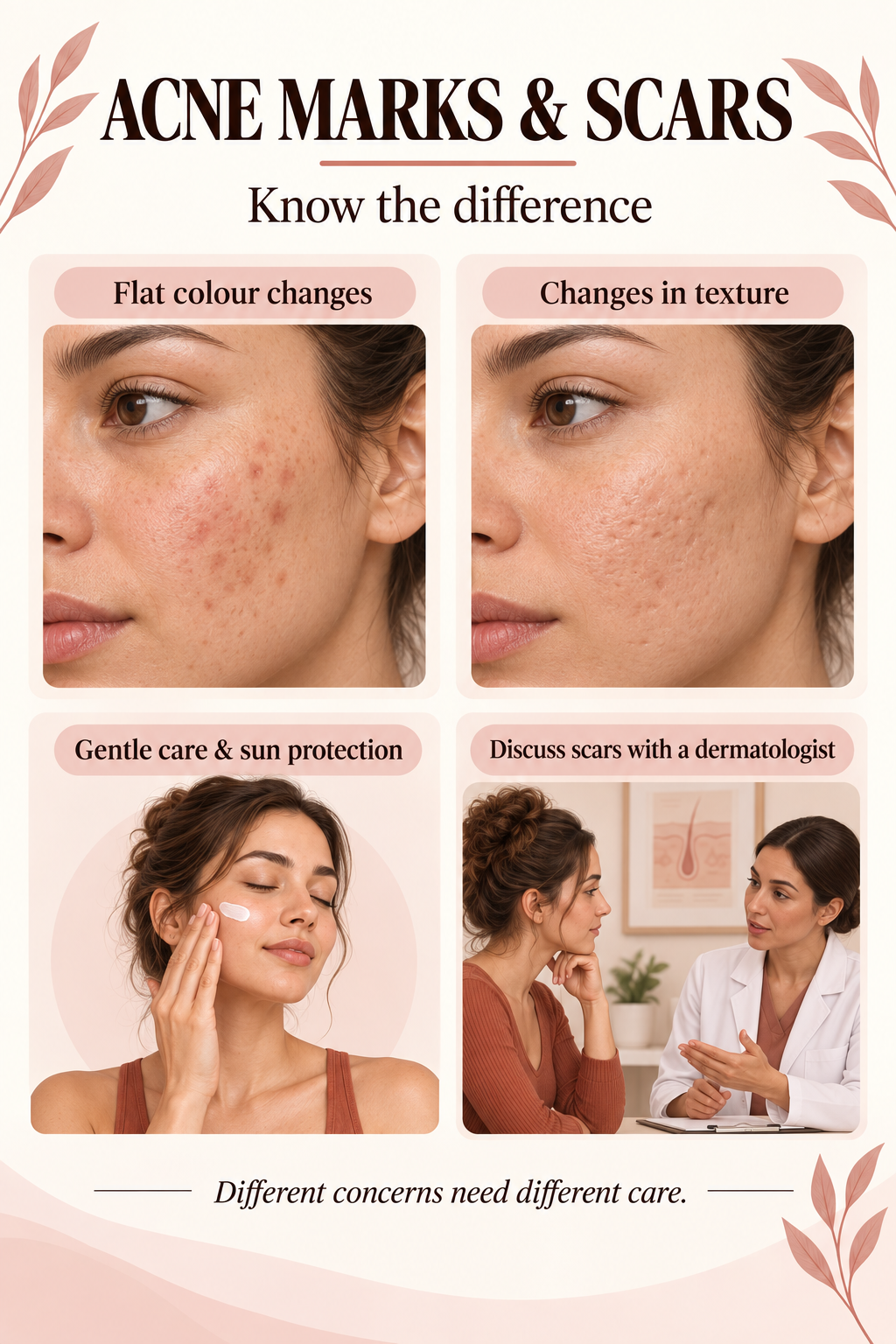
The spot that remains after a breakout is not always a scar. A flat patch of colour and a change in skin texture are different problems, so the first useful step is recognising what you are trying to improve.
Quick answer: Flat acne marks may fade over time, while indented or raised scars usually need professional assessment for meaningful change. Gentle care and sun protection support skin; harsh DIY treatments can make matters worse.
Look at colour and texture separately
In ordinary light, ask whether the area is mainly a colour change or whether its surface is raised or indented. Flat pink, red or darker areas after acne are often described casually as scars, but they do not necessarily involve the same structural changes as a true scar.
This distinction sets expectations. A cream marketed with dramatic before-and-after images may not be addressing the type of mark you have. Avoid judging progress with a magnifying mirror or changing lighting each day. If you want a record, take occasional photographs in similar light without filters.
Control ongoing breakouts first
Repeated acne can create new marks while you are trying to improve older ones. Build a routine you can tolerate and follow any prescribed treatment consistently. Painful, recurring or scarring acne is a good reason to seek medical advice rather than cycling through home remedies.
Our gentler routine for acne and oily skin offers a practical starting point. Avoid picking or squeezing. Even a promising fade product cannot offset the irritation caused by repeatedly disturbing a healing spot.
Keep home care supportive
Use a gentle cleanser, a suitable moisturiser and broad-spectrum SPF 30 or higher on exposed skin, following the sunscreen directions. Sun protection is particularly useful when uneven pigmentation is part of the concern. Choose products you can use comfortably rather than creating a complicated routine that leaves your skin sore.
If you want a treatment for uneven colour, discuss an appropriate option with a pharmacist or dermatologist, especially if you already use acne medication. Introduce changes carefully and follow directions. Do not combine multiple exfoliating or brightening products simply because each label mentions marks.
Understand the limits of creams
A product may help the appearance of some colour changes without filling an indented scar or flattening a raised one. Texture changes deserve an individual assessment. There is no reliable kitchen mask that erases every acne scar, and no single treatment suits all scar types.
The American Academy of Dermatology explains the difference between acne scars and lingering colour changes. Use that distinction when reading a product claim or deciding what to ask at an appointment.
Avoid aggressive DIY procedures
Do not use household acids, lemon juice, abrasive scrubs or at-home needling to chase faster results. Damage and inflammation can create additional problems, including further colour changes. Strong peels and procedures require more judgement than a short online tutorial can provide.
If professional treatment interests you, ask which type of scar is being treated, what improvement is realistic, how many visits may be needed and what recovery involves. Discuss your skin tone, history of pigmentation changes, medicines and budget. An honest consultation should include limits as well as possible benefits.
Give progress a sensible timescale
Colour changes can take time to settle, and the pace varies. Measure success by fewer new breakouts, comfortable skin and gradual change rather than a seven-day deadline. For a short-term event, gentle makeup is an optional cosmetic choice; our event-day acne guide keeps expectations practical.
Frequently asked questions
Is every dark spot an acne scar?
No. A flat colour change after a breakout may be a post-acne mark. A clinician can help identify uncertain or persistent changes.
Can natural remedies remove indented scars?
There is no dependable home remedy that rebuilds every indented scar. Avoid irritating recipes and seek an assessment if texture changes bother you.
When should I ask a dermatologist?
Ask if acne is painful, keeps returning, is leaving scars or is affecting your confidence. You do not need to wait until every home-care experiment has failed.
Editorial update: 21 October 2026.