Facial Hair Removal: Choosing a Method That Suits Your Skin
Facial hair is normal, and removing it is a personal choice. The most useful method is one that suits your skin, the area you want to treat and the amount of upkeep you are comfortable with. A kitchen mixture is not necessary to get started.
Start with the area, not a promise
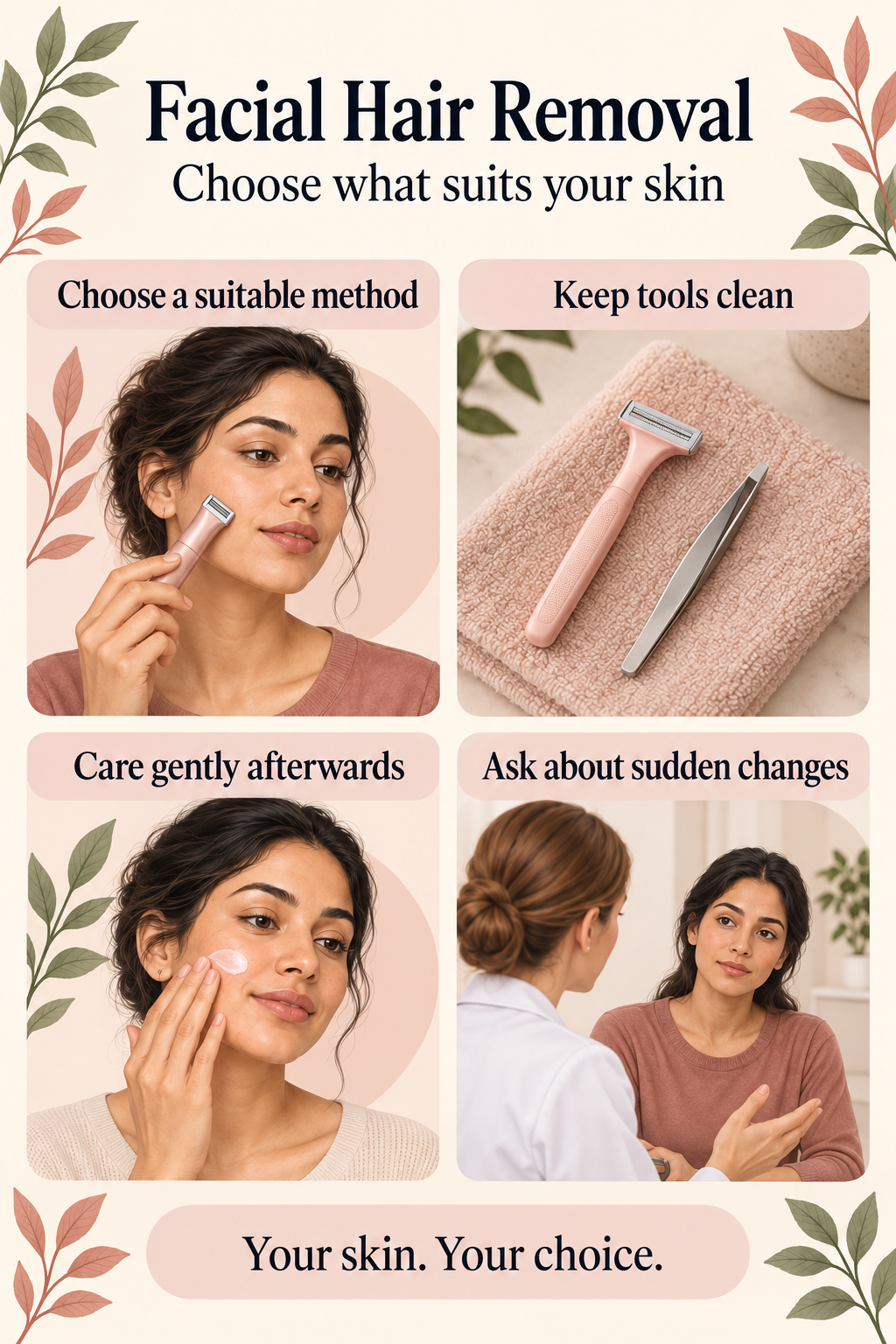
For a few individual hairs, tweezing gives you control. For a wider area, a facial trimmer or razor can be easier to manage. Work in good light and avoid repeatedly passing over the same irritated patch. Keep tools clean and do not share them.
Threading and waxing remove hairs from the root, while shaving cuts them at the surface. Hair-removal creams require particular care: choose one labelled for the face, follow its test instructions and never exceed the stated contact time. The NHS overview of hirsutism explains the available removal and medical options.
Make irritation your stopping point
Avoid removing hair from broken, sunburned or inflamed skin. If you use acne medicines, retinoids or have recently had a skin procedure, check with your clinician before waxing; the AAD explains important medication-related precautions. After removal, keep your routine simple rather than immediately adding a scrub, acid toner or fragranced mask.
Do not rely on chickpea flour, turmeric or mint tea to permanently remove facial hair or correct a hormone problem. For the upper lip specifically, see our guide to choosing a gentle removal method.
When longer-term options make sense
Laser treatment and electrolysis require a qualified practitioner and a discussion of costs, repeat visits and suitability for your skin and hair. Ask what results are realistic before buying a package.
New coarse hair accompanied by irregular periods is worth discussing with a clinician. Seek prompt assessment if thick hair appears suddenly, particularly with voice changes. Hair removal can address appearance, but it does not explain why a new pattern has developed.