How to Shape Your Eyebrows at Home Without Overdoing It
A neat brow does not need to be a thin brow, a perfectly symmetrical brow or a copy of someone else’s shape. The easiest home approach is to preserve what you have and tidy only the hairs that clearly sit outside it.
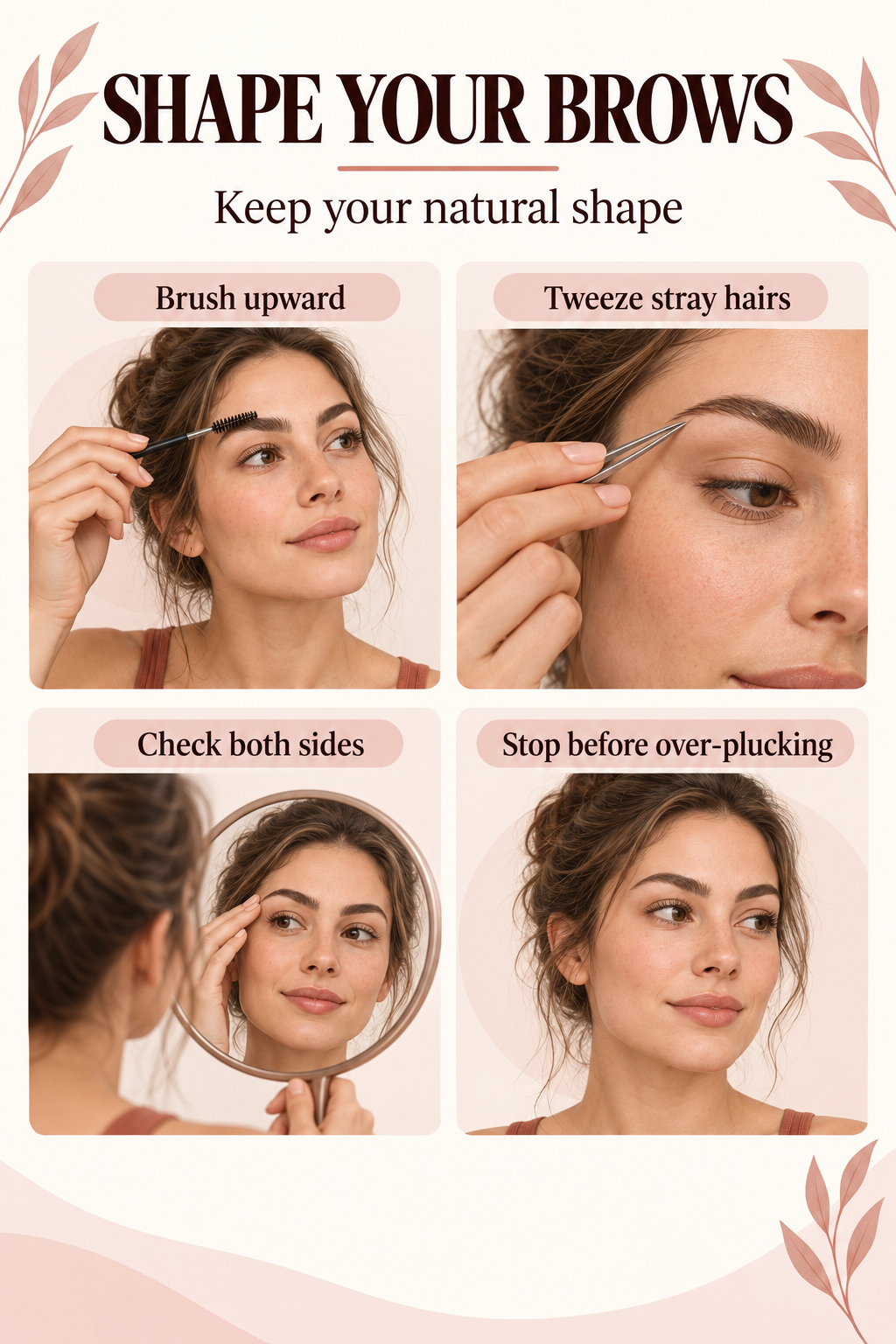
Quick answer: Brush brows into place, work in good light and remove a few obvious strays at a time. Step back often, keep your natural outline and leave uncertain hairs alone.
Decide what you want to tidy
Look at both brows in a normal mirror before reaching for tweezers. Notice their natural thickness, direction and differences. A raised brow or a slight difference in the arch can be part of your expression. Trying to force identical outlines can lead to removing more hair than intended.
If you are unsure, use a brow pencil to lightly fill the shape you already like. This gives you a temporary guide without committing to removal. Ignore rigid rules that promise one ideal shape for every face. A small cleanup is easier to maintain than a major reshape.
Prepare a simple setup
Use good, even light, a clean spoolie and clean tweezers in good condition. Follow the tool maker’s cleaning directions. Wash your hands and work on clean skin. Avoid plucking an area that is broken, inflamed or irritated.
Keep a normal mirror nearby even if you use magnification for a single hair. Magnification can make every fine hair look urgent. Set a small goal, such as tidying a few obvious strays below the brow, instead of planning to remove everything you can see.
Brush before you remove
Brush the hairs gently along their natural direction, then assess the outline again. Some apparent gaps disappear when the hairs lie in place. Others are easier to soften with makeup than to correct by making the surrounding brow thinner.
Our soft eye-definition guide explains how small details work together. Brows do not need a sharply drawn border to make the eye area look finished.
Take only the obvious strays
Hold the surrounding skin gently steady and remove one clearly unwanted hair at a time, drawing it in its direction of growth. Keep tools away from the eye itself. Pause after a few hairs and look at your whole face, not just the magnified brow.
Leave hairs that belong to the main outline if you are uncertain. Avoid repeatedly thinning the top edge or moving the arch because the opposite side looks slightly different. Stop if the skin becomes uncomfortable. Finishing both brows in one sitting is not more important than avoiding irritation.
Be conservative with trimming
Long hairs often contribute useful fullness. Do not cut across a brushed-up brow as though every tip beyond the line must go. If trimming seems necessary but you cannot clearly see what each hair contributes, leave it to a professional.
Scissors near the eyes deserve particular care. A spoolie and a little brow gel may solve the styling problem without cutting anything. If you regularly overtrim or overpluck, taking a break from removal can help you reassess the natural shape.
Finish with light definition
Use small pencil strokes only where you want a little extra density, then soften them with a spoolie. Check the result in ordinary light. A slight difference between brows usually looks more natural than repeatedly altering one side to match the other.
If you are considering waxing instead, review skin-care and medication precautions first. The American Academy of Dermatology’s hair-removal overview explains why method and skin condition matter. Our facial hair-removal guide compares everyday choices.
Frequently asked questions
Will overplucked brows always grow back?
Regrowth varies, and repeated removal can reduce fullness. Give the area time and seek advice if hair loss is unexpected or persistent.
Should both eyebrows match exactly?
No. Natural asymmetry is common. Aim for a balanced overall appearance rather than removing more hair to chase identical shapes.
Can I wax while using a retinoid?
Retinoids can make waxing unsuitable or require specific precautions. Ask your clinician and tell the professional what you use; do not guess a safe interval yourself.
Editorial update: 21 October 2026.