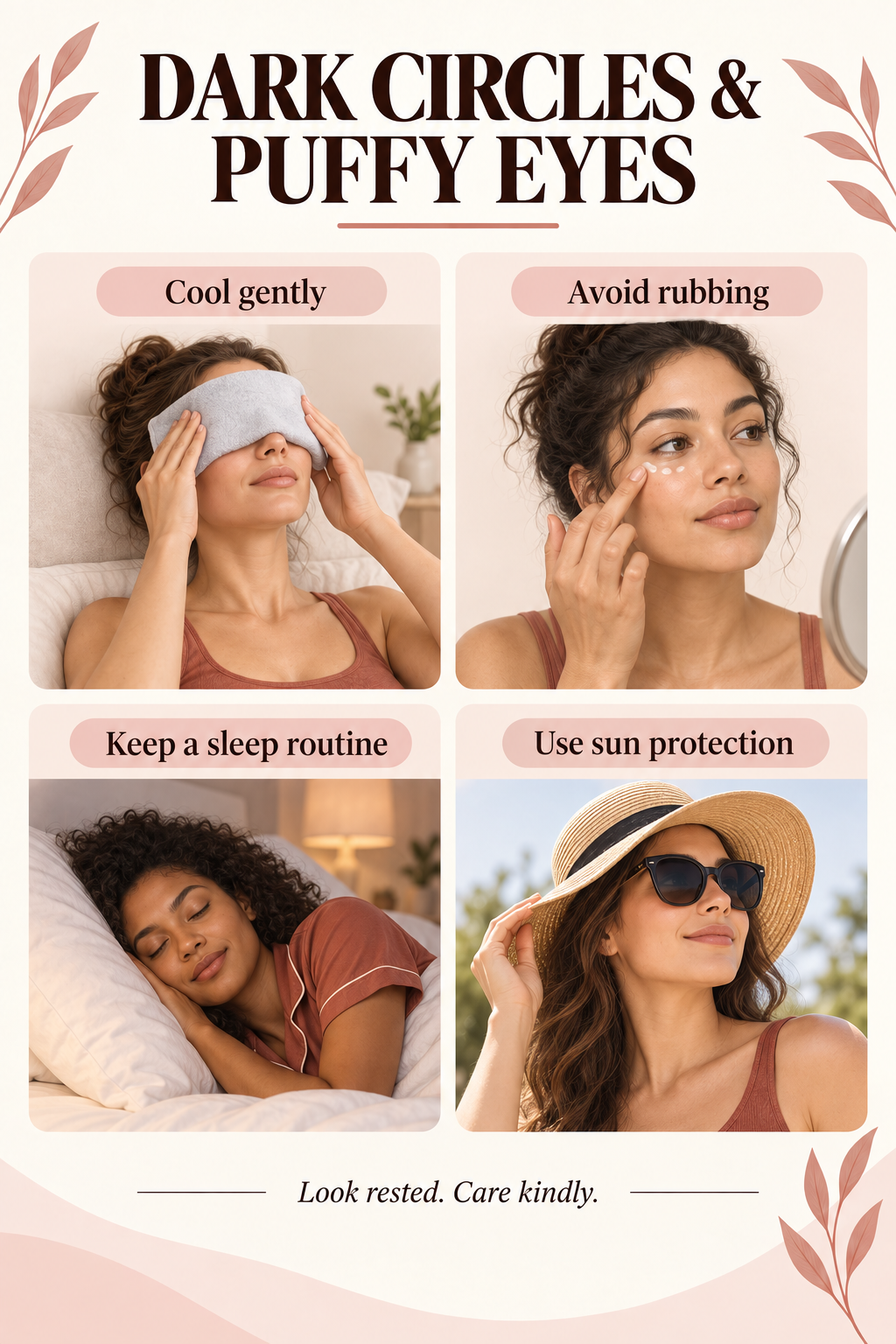
Dark Circles and Puffy Eyes: Small Habits That Can Help
Dark circles and under-eye puffiness are common, and they rarely have one simple cause. Genetics, skin tone, allergies, sleep, fluid retention, and the natural structure of the eye area can all play a role. Skin care cannot erase them completely, but a few gentle habits may help the area look more rested.
Use a cool compress
A clean, cool washcloth over closed eyes for five to ten minutes can temporarily reduce the look of morning puffiness. Keep the temperature comfortable—do not place ice directly on the delicate eye area. Store a simple gel mask in the refrigerator if you like a quick, reusable option.
Keep your routine gentle
The skin around the eyes is thin and easy to irritate. Remove makeup with a gentle product, avoid rubbing, and press on a small amount of fragrance-free moisturizer with your ring finger. If you use an eye product with caffeine or peptides, introduce one product at a time so you can tell how your skin responds.
Support your sleep routine
For some people, a regular sleep schedule makes the eye area look less tired. Try winding down at a similar time each night, keeping your room comfortably cool, and raising your head slightly with an extra pillow if you often wake up puffy. Manage expectations: even excellent sleep will not remove genetically inherited dark circles.
Do not forget sun protection
Daily broad-spectrum sunscreen, sunglasses, and shade help protect the eye area from further uneven tone. Apply sunscreen carefully around—but not into—the eyes, and choose a formula you know does not sting.
When to get advice
Seek prompt medical advice for new one-sided swelling with pain, marked redness or vision changes. Persistent itching or puffiness also deserves an assessment. A clinician can also help if allergies or another health concern appears to be contributing.
A calm routine, a little cooling, and realistic expectations are far kinder to this sensitive area than harsh DIY treatments or aggressive rubbing.
Notice the pattern before buying a treatment
Is the main concern a colour that stays throughout the day, a shadow that changes in different light, or swelling that comes and goes? Those observations cannot diagnose the cause, but they make it easier to explain what you are seeing.
- Compare like with like. Use the same ordinary light rather than judging the area under a harsh overhead bulb one day and a window the next.
- Note symptoms. Itching, watery eyes, a new product or a seasonal pattern may be useful information for a clinician.
- Change one product at a time. A complicated routine makes irritation harder to trace.
A simple morning sequence
Start with a clean cool cloth and light pressure if it feels comfortable. Follow with familiar, non-irritating skin care and appropriate sun protection. If you wear concealer, use a little only where you want coverage and blend gently; do not rub repeatedly to flatten normal texture.
The Mayo Clinic guide to under-eye bags discusses cooling, sleep and assessment options. For a more repeatable evening, see our practical sleep routine.
Common questions
Will more sleep remove inherited dark circles?
It may help you feel better and reduce a tired appearance, but inherited pigmentation and facial structure do not necessarily change with extra sleep.
Do I need an expensive eye cream?
No particular price guarantees a result. Start with a gentle routine you tolerate and seek advice before trying stronger treatments close to the eyes.
When should I seek prompt help?
New swelling with pain, a very red or hot eyelid, fever or changes in vision needs prompt medical assessment. Do not treat those symptoms as an ordinary cosmetic concern.
Updated October 15, 2026. General information; individual health concerns need advice from a qualified professional.