Double Chin Exercises: Gentle Neck Mobility and Posture Tips
A fuller-looking area beneath the chin is common. Genetics, facial anatomy, skin elasticity, age, and changes in body weight can all affect how the area looks. Gentle neck exercises can support comfortable movement and posture, but they cannot target fat beneath the chin or guarantee a cosmetic change. This guide focuses on safe, simple mobility—not quick weight-loss promises.
Quick answer: Gentle neck movements can support mobility and posture. They cannot selectively remove fat beneath the chin. Keep movements comfortable and stop if symptoms appear.
Before you begin
Sit or stand tall and move slowly within a comfortable range. A mild stretch is fine; sharp pain, dizziness, tingling, numbness, or a new headache is a reason to stop. Do not force your head or pull on your neck. If you have a neck condition, a recent injury or surgery, or ongoing symptoms, ask a qualified health professional which movements are appropriate for you.
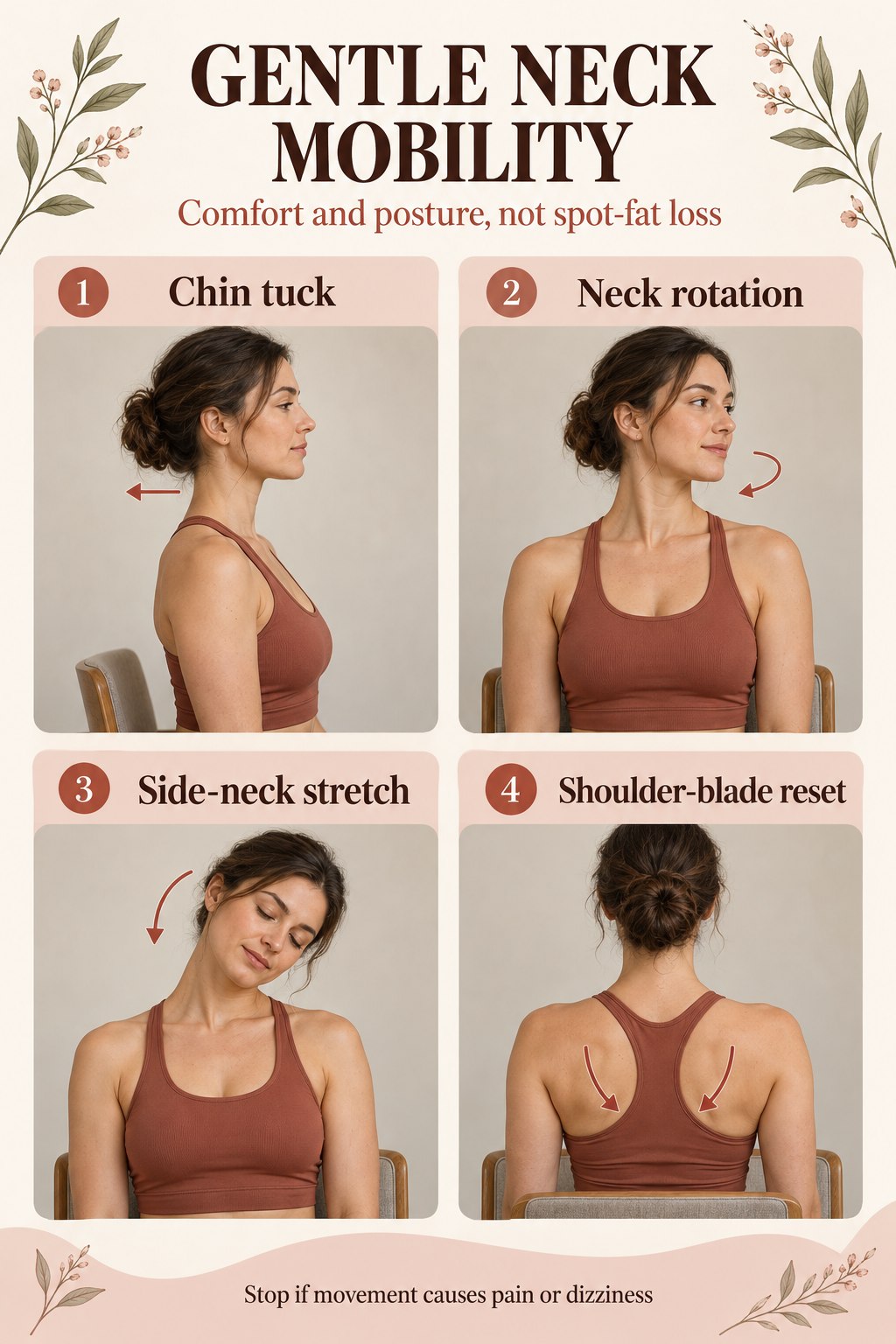
1. Chin tucks (chin retractions)
Sit upright and look straight ahead. Glide your chin gently backward, as if making a small double chin; keep your eyes level and avoid tipping your head down. You may feel a light lengthening at the back of your neck. Hold for 3–5 seconds, relax, and repeat 5–8 times. Keep your teeth unclenched. North Bristol NHS Trust’s neck guidance also recommends gentle chin tucks without forcing the movement.
2. Comfortable neck rotations
Begin facing forward. Slowly turn your head to the right until you reach a comfortable limit, pause briefly, and return to centre. Repeat to the left. Try 5–8 smooth repetitions on each side while keeping your shoulders relaxed. Do not push into pain. The Sherwood Forest Hospitals NHS neck exercise guidance includes gentle turning within a comfortable range.
3. Side-neck stretch
Keep both shoulders relaxed. Slowly bring your right ear toward your right shoulder without turning your face or lifting the shoulder. Stop at a mild stretch, hold for about 5–10 seconds, then return to centre and switch sides. Do not pull your head with your hand. Reduce the range or skip this stretch if it causes discomfort.
4. Shoulder-blade reset
With your arms relaxed by your sides, gently draw your shoulder blades back and slightly down. Keep your shoulders away from your ears and avoid arching your lower back. Hold for 3–5 seconds, release, and repeat 8–10 times. This simple posture cue can help counter a rounded, screen-hunched position; it does not reduce fat under the chin.
How often should you do these exercises?
Start with a few comfortable repetitions and take movement breaks during long periods at a desk or looking down at a phone. You can repeat the routine when it feels comfortable, but more repetitions are not a way to speed up cosmetic results. Stop if symptoms appear, and seek individualized advice if they continue.
What these exercises can—and cannot—change
Chin tucks and gentle stretches are mobility and posture exercises. They may help you move more comfortably, but there is no reliable way to choose where the body loses fat through a specific exercise. A fuller-looking chin is not a personal failure, and this routine should not be treated as a guaranteed facial-sculpting method. If you are considering a treatment for appearance, discuss its benefits and risks with a qualified clinician.
When to seek medical advice
Ask a clinician about a new or growing lump, sudden swelling, persistent pain, or symptoms that do not settle. Trouble breathing or swallowing needs urgent medical attention.
Sources
- North Bristol NHS Trust: Neck injury exercises and advice
- Sherwood Forest Hospitals NHS: Neck and arm pain exercises
Frequently asked questions
Can chin exercises remove fat in this area?
No exercise can guarantee fat loss from a chosen area. Use these movements for comfortable mobility, not as a promise to reshape your face.
Should I pull on my head to stretch farther?
No. Move gently within a comfortable range without forcing the neck. Stop if you develop pain, dizziness or other symptoms.
Are more repetitions better?
Not necessarily. Begin with comfortable movement and avoid chasing cosmetic results through repeated strain. Ask a qualified professional for advice if you have a neck condition or persistent symptoms.
For a wider beginner routine, see our gentle arm-strength exercises.
Editorial review: 21 October 2026.