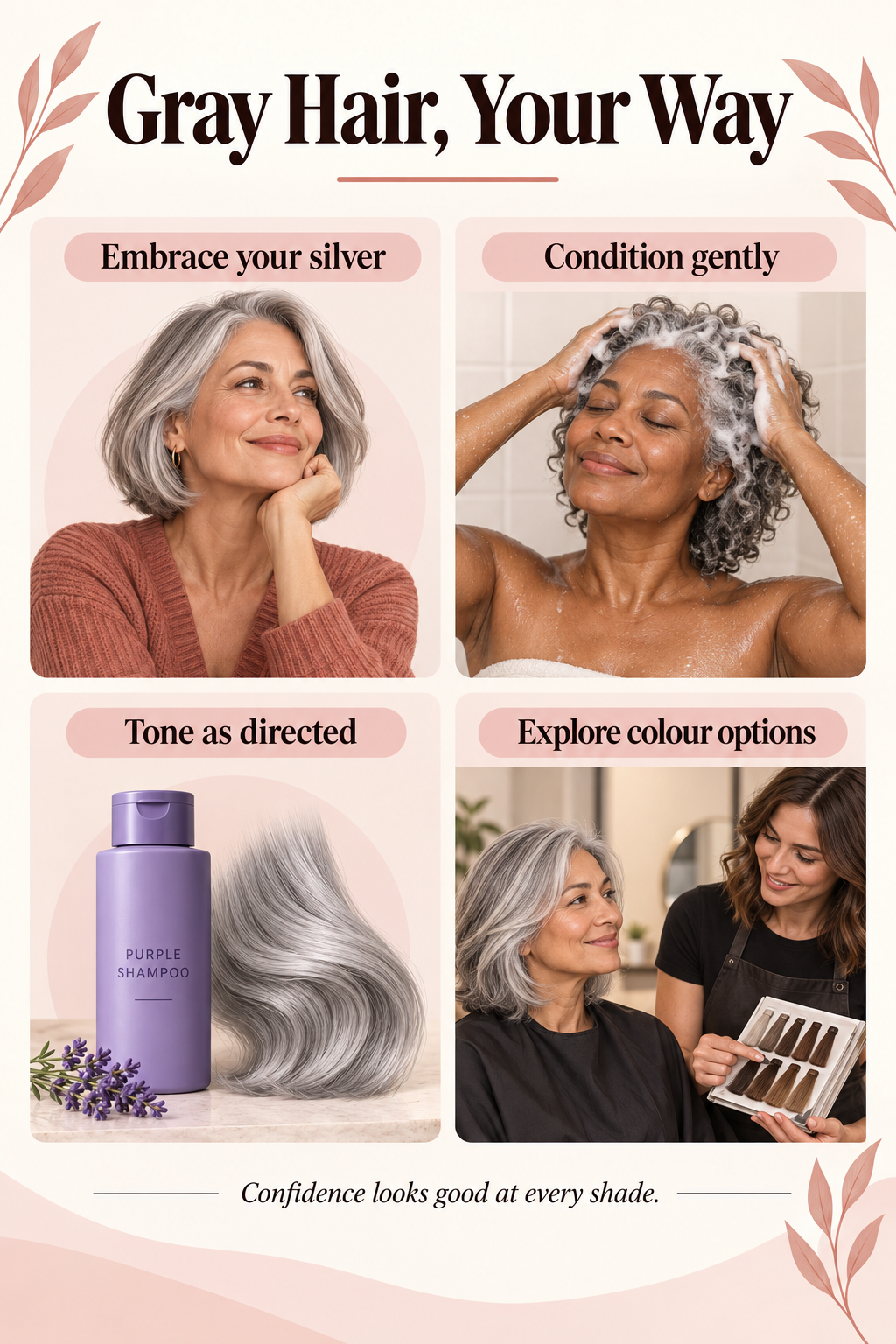
Gray Hair: What Causes It and Easy Ways to Embrace or Cover It
Gray hair is a normal part of aging, and it can appear at very different times for different people. It happens as hair follicles make less pigment over time. There is no reliable home remedy that restores pigment to every gray strand, but there are plenty of gentle ways to care for gray hair or change its appearance if you want to.
Why gray hair appears
Genes play the biggest role in when graying begins. A family pattern of earlier gray hair often explains more than a single beauty habit does. Stress, illness and some nutritional deficiencies may coincide with changes in hair, but they are not a reason to self-diagnose or start supplements without advice.
Care for gray hair’s texture
Gray hair can feel coarser, drier or more wiry because its texture changes along with its colour. Use a gentle shampoo, conditioner on the lengths, a hydrating treatment when needed, and heat protection before styling.
Keeping silver tones bright
Product buildup, minerals in water, smoke and sun exposure can make white or silver hair look yellow. A purple or violet-toning shampoo can temporarily soften warm tones, but it is best used only as directed because overuse can leave hair dry or slightly violet. If discoloration is stubborn, a stylist can suggest a clarifying or toning service.
If you want to cover or blend gray hair
Demi-permanent colour, highlights, lowlights and root-touch-up products can blend the contrast while allowing a softer grow-out. For a major colour change, previous dye, sensitive skin or a history of reactions, a salon consultation is the safer choice. Always follow a product’s patch-test instructions before using at-home colour.
When to check with a clinician
Talk with a clinician if hair colour changes suddenly alongside other symptoms, or if you are concerned about a restrictive diet, fatigue, or unusual shedding. Avoid treating gray hair with high-dose vitamins, minerals or unverified mixtures.
Compare your options before committing
| Your preference | A useful starting point |
|---|---|
| Keep your natural silver | Focus on conditioning, a shape you enjoy and gentle handling. |
| Soften warmth or yellow tones | Discuss an appropriate toning product; follow its timing and avoid repeated extra applications. |
| Reduce contrast while growing colour out | Ask a stylist about blending options and how they will look between appointments. |
| Cover visible roots | Compare temporary touch-ups with longer-lasting colour, including maintenance and skin sensitivity. |
Plan for the grow-out, too
Bring a photo of the result you like and explain how frequently you want to return for colour. Ask what happens when the roots grow, whether your existing colour changes the plan and how to care for the lengths between visits.
The AAD explanation of gray hair discusses pigment loss, inherited timing and why plucking is not a solution. A clinician can assess a possible underlying condition when the change comes with other concerns.
Before an at-home colour application, review our hair-dye preparation and safety guide. Keep the product directions, including allergy testing, as your reference.
The takeaway
Gray hair is not a flaw to fix. Whether you choose to wear it naturally, soften brassiness or cover it with colour, gentle care and realistic expectations are the best foundation.
Common questions
Will plucking a gray hair stop it coming back?
No. The replacement can still be gray, and repeated plucking can contribute to thinning. Trim a bothersome strand rather than repeatedly pulling it out.
Can purple shampoo turn gray hair back to its original colour?
No. Toning changes the appearance of unwanted warmth; it does not restore the follicle’s original pigment. Use the product as directed and stop if it irritates your scalp.
Do I need vitamins for gray hair?
Do not start high-dose supplements solely because your hair is gray. If a deficiency or another health issue is suspected, a clinician can decide what assessment and treatment make sense.
Updated October 15, 2026. General information; individual health concerns need advice from a qualified professional.