Fine Lines and Wrinkles: A Simple, Realistic Skin-Care Routine
Fine lines and wrinkles are normal changes in skin, and caring for them does not need to become a complicated project. A comfortable routine can improve how your skin feels while helping you make sensible decisions about any extra products.
Quick answer: Make moisturiser and daily sun protection the foundation. Choose optional treatments carefully, introduce one change at a time and avoid promises that a cream can erase every line.
Choose a goal you can actually assess
Dryness, uneven texture and expression lines are different concerns. Start with the one that bothers you most instead of buying a product for every sign of ageing. If your face feels tight after washing, improving comfort may be a more useful first step than choosing a stronger active ingredient.
Look at your skin in ordinary light. Magnifying mirrors and heavily filtered photographs can make normal texture seem like a defect. Your aim might be softer-feeling skin or a routine that sits well under makeup; it does not have to be a completely line-free face.
Build the daily foundation
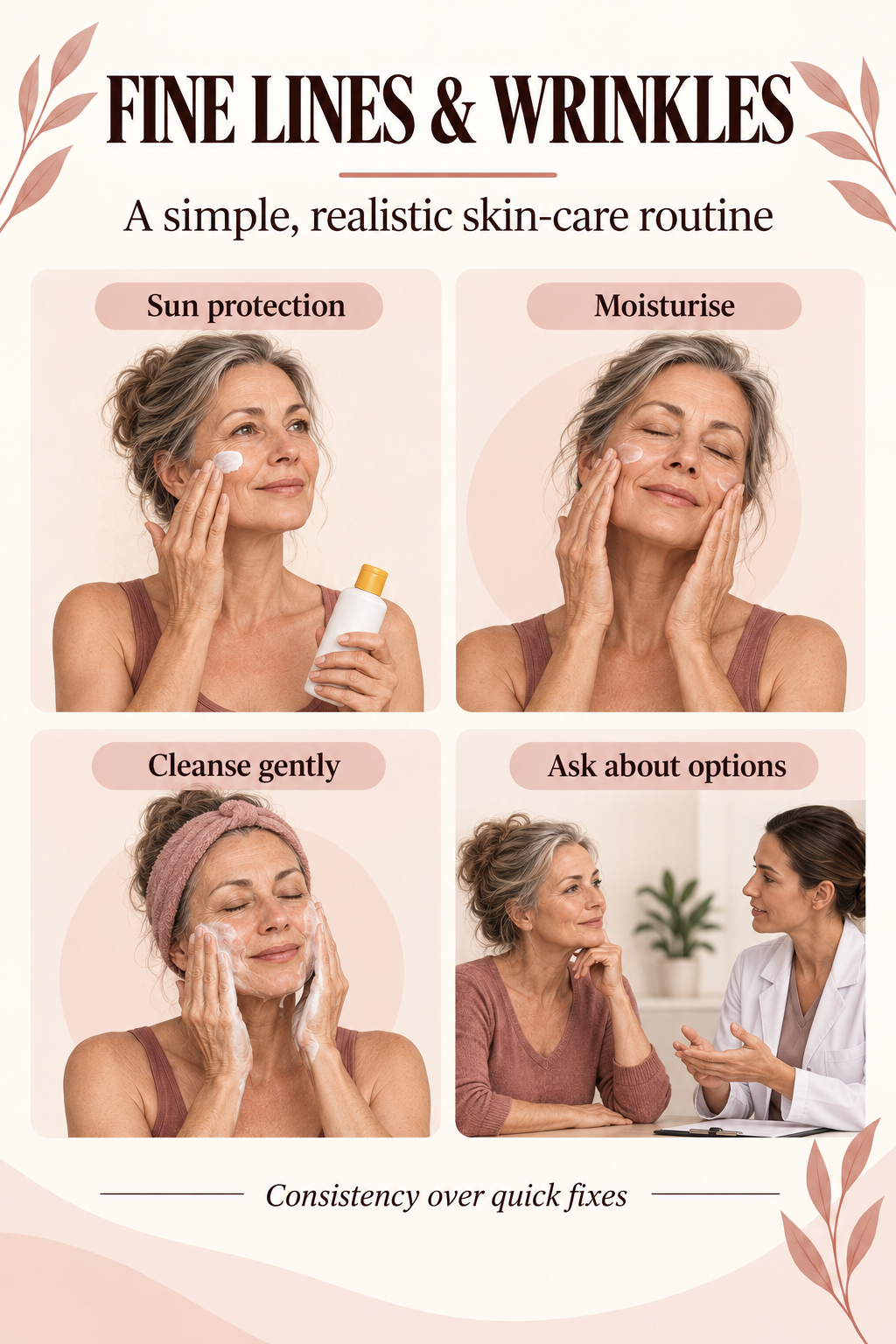
Use a gentle cleanser and a moisturiser suited to your skin. Apply products without aggressive rubbing, particularly around the eyes. A richer texture may suit dry areas, while other parts of the face may feel better with a lighter layer.
For exposed skin, use broad-spectrum SPF 30 or higher according to the label and combine it with sensible shade and protective clothing. Choose a sunscreen you are comfortable applying consistently. An occasional expensive treatment cannot substitute for routine protection from ultraviolet exposure.
Understand what moisturiser does
Hydrated skin can look smoother and feel more supple. That improvement does not mean the product permanently removed a wrinkle, and it may depend on continued use. A simple moisturiser that suits your skin can still be a useful choice without a dramatic anti-ageing claim.
Give a comfortable basic routine time before adding several extras. If makeup collects in dry areas, try a lighter application and allow skin care to settle rather than repeatedly adding coverage. Our natural-looking blush guide follows the same principle of small, well-blended layers.
Consider retinol with care
Retinoid and retinol products are not interchangeable in strength or suitability. Some people experience dryness or irritation. Follow the specific directions and ask a dermatologist or pharmacist if you have sensitive skin, a skin condition or an existing treatment routine.
Do not use retinoids during pregnancy; discuss suitable options with a healthcare professional if pregnant or planning pregnancy. The American Academy of Dermatology explains retinoid and retinol considerations. Adding several exfoliating products at the same time can make it difficult to identify what is irritating your skin.
Evaluate a new product calmly
Introduce one change at a time and keep the rest of your routine steady. Follow the label rather than copying someone else’s frequency. Persistent burning, swelling or a rash is a reason to stop a new product and seek advice, not to keep applying it as proof of commitment.
Take any progress photographs in similar lighting and avoid judging the result every morning. Ask whether the product improves comfort or the specific concern you chose. Packaging, a tingling sensation and a high price are not reliable measures of effectiveness.
Know the limits of home care
Skin-care products cannot duplicate every professional procedure, and procedures themselves have limits and risks. If you are considering one, discuss realistic outcomes, recovery and total costs with a qualified clinician. Declining treatment is also a valid choice.
Frequently asked questions
Can a cream erase all wrinkles?
No. Products may improve hydration or aspects of appearance, but normal expression and age-related changes do not disappear completely with a routine.
Do I need a separate product for every area?
Not necessarily. Start with comfortable basics and add a product only when it serves a clear purpose and is suitable for that area.
Are homemade masks gentler?
Not automatically. Kitchen ingredients can irritate, and they are not a dependable wrinkle treatment. A well-tolerated formulated product is easier to use consistently.
Editorial update: 21 October 2026.