How to Care for Split Ends—and Help Prevent More Damage
Split ends often show up where hair has experienced the most wear: the older lengths and tips. A mask or serum can make them feel smoother, but that is different from permanently repairing a split strand. The useful plan combines removing damaged ends with reducing the wear that follows.
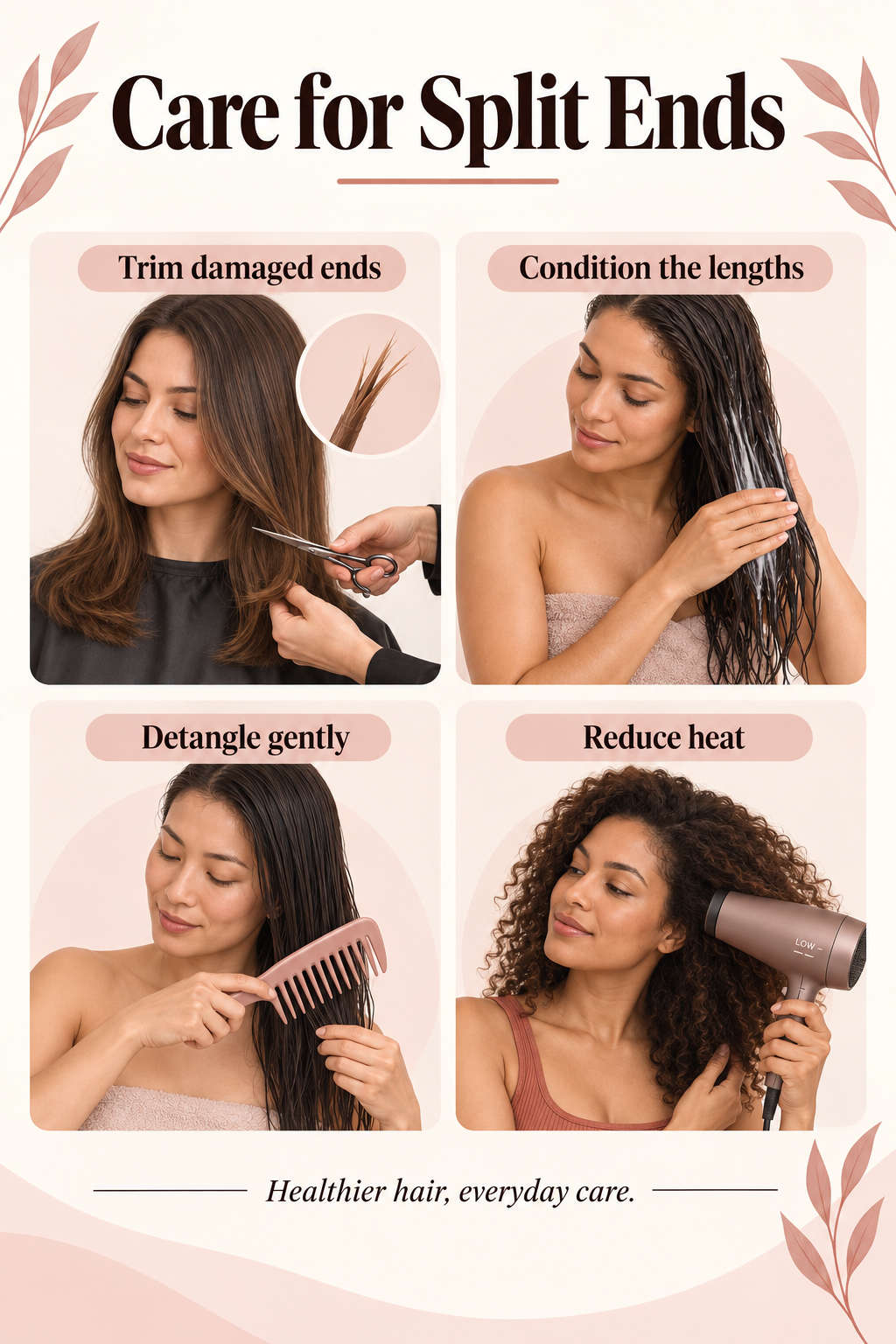
Quick answer: A trim removes existing splits. Conditioner and leave-in products can improve slip and appearance, while gentler detangling and less heat help limit further damage. Choose techniques that suit your hair texture rather than one rule for everyone.
Work out what is bothering you
Look at the ends in good light. Are there visible forks, a rough edge to the haircut, or knots that form in the same area? Flyaways alone do not prove that every strand is split. It helps to distinguish the appearance you dislike from the damage you can actually see.
Tell your stylist what you want to keep as well as what you want removed. “I want to preserve length but remove the roughest ends” starts a clearer conversation than asking for an emergency transformation. Agree on the amount before cutting begins.
Give conditioning a clear job
Use conditioner according to the label, concentrating on the lengths that need it. Detangling is easier when hair has enough slip; adding more product is not automatically better if it leaves fine hair heavy or requires repeated washing.
A small amount of leave-in conditioner or smoothing serum may make the ends easier to manage. Start with less than you think you need and add only if necessary. The AAD’s hair-care advice includes leave-in products to help reduce breakage, split ends and frizz. Cosmetic smoothing should not be described as permanently fusing a split.
Match detangling to your texture
The AAD recommends allowing straight hair to dry a little before gentle combing, while textured hair and tight curls should be combed damp. Use a wide-tooth comb and avoid forcing it through resistance.
- Divide dense hair into manageable sections.
- Support the section above a knot so you are not pulling at the scalp.
- Release tangles near the ends before moving higher.
- Pause and add suitable slip if the tool keeps catching.
Leave enough time for this step. Detangling in a hurry while getting dressed encourages repeated tugging. Keep the tool near your conditioner so it becomes part of the routine rather than a last-minute rescue.
Reduce repeated heat and friction
Blot or wrap hair gently instead of rubbing it vigorously with a towel. When using heat, choose the lowest effective setting and avoid repeated passes over the same ends. Follow the tool and product instructions; heat protectant is not permission to keep increasing the temperature.
Think about the ordinary sources of rubbing too: bag straps, a rough collar, tight elastics or repeatedly twisting the ends around your fingers. A loose style or a softer hair tie may make the day easier without adding another product.
Plan maintenance around your hair
There is no single trimming timetable that suits every haircut and styling routine. Notice when the shape stops sitting well or the ends become difficult to manage, then discuss maintenance with your stylist. Trimming does not change how quickly hair grows from the scalp.
If you colour, bleach or chemically straighten your hair, explain that history before another service. For everyday styling, our frizz guide offers another gentle approach. If your concern is hair coming out rather than frayed ends, read about shedding and breakage.
Frequently asked questions
Can a hair mask repair split ends?
It can improve softness and make damaged lengths look smoother temporarily. Removing a split still requires trimming the affected strand. Judge a mask by manageable hair, not an unrealistic repair promise.
Should I cut individual splits with household scissors?
A professional trim is more predictable, especially if you cannot see the back. Avoid blunt craft scissors and repeated picking at strands, which can turn a small grooming task into more damage.
What if the damage keeps returning?
Review heat, chemical processing and tension. If you also notice thinning, patches, scalp pain or persistent irritation, seek a dermatologist’s advice rather than treating everything as a haircut problem.
Editorial update: 21 October 2026.