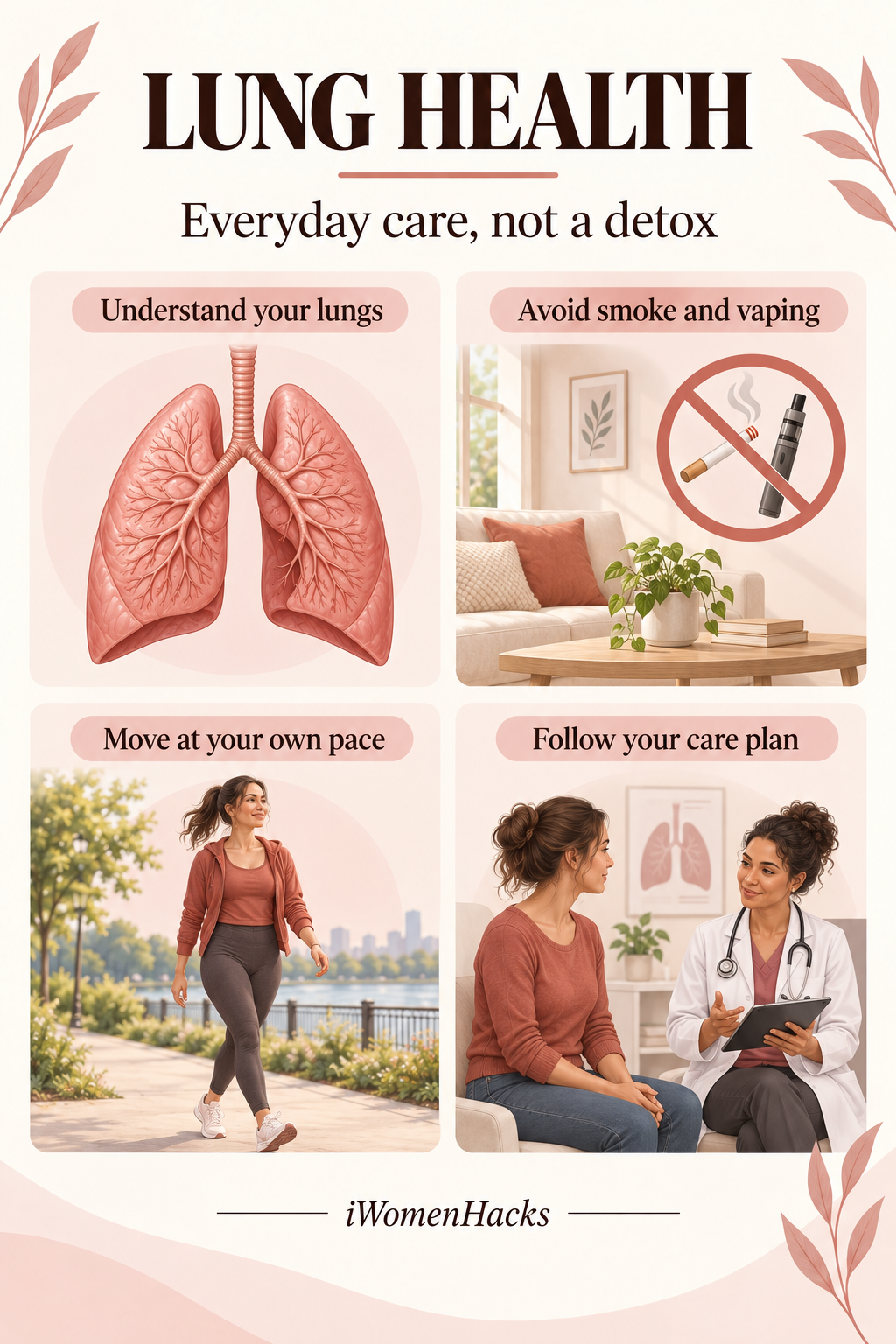
Lung Health: What Helps More Than a “Detox”
Lung health cannot be reset by a tea, a supplement or an inhaled oil. If a product promises to undo years of smoke or pollution exposure in a few days, treat that promise cautiously. A useful plan starts with the air you breathe and any symptoms you already have.
Quick answer: Prioritise stopping smoking, reducing harmful exposures and following prescribed treatment. Do not inhale oils or replace medical care with a cleanse. Severe breathing difficulty or chest pain needs urgent help; new or worsening symptoms should be assessed.
Replace a detox promise with a specific question
Ask what you are hoping to improve. Is it a cough, breathlessness on stairs, worry after years of smoking or simply wanting a healthier routine? These concerns need different next steps. Writing down the actual problem makes it easier to get useful advice.
The American Lung Association cautions against lung-detox products and specifically warns about inhaling oils. Avoiding harmful exposure is more valuable than buying a product labelled as cleansing. Recovery differs between people, and some damage cannot be reversed.
If you smoke, make support easy to reach
Speak with a clinician, pharmacist or stop-smoking service about an approach that fits you. Prepare for the situations where smoking feels automatic: a break at work, after a meal or while socialising. Ask which support and treatment options are appropriate for your health history.
Try writing a practical sentence rather than a broad promise: “I will contact a stop-smoking service this week” is an action you can complete. If a previous attempt did not last, describe what made it difficult. That information can help shape the next plan.
Look at everyday exposure
Notice where smoke, dust or fumes enter your day. Discuss a smoke-free home with the people you live with. For cleaning, follow labels and ventilation advice, and do not mix products. At work, use the exposure controls and protective equipment specified for the job.
Outdoor air quality can also affect plans. When pollution or smoke is high, follow local public-health guidance and your own clinician’s advice, especially if you have a lung condition. A change of route or activity time may be more practical than trying to compensate with a supplement later.
Keep prescribed care organised
If you have asthma or another diagnosed condition, keep your treatment plan accessible. Bring inhalers and a list of medicines to reviews if technique or timing is unclear. Ask what to do when symptoms worsen and when you should seek urgent care.
- Keep a current medicine list.
- Note symptoms that interrupt sleep or usual activities.
- Ask for a demonstration if you are unsure how to use a device.
- Check how and when to arrange the next review.
These organisational steps do not replace treatment; they help you use the plan you were given. Do not stop prescribed medicine because an online product claims to offer a natural alternative.
Choose activity you can sustain
Discuss suitable exercise if you have a lung condition, significant breathlessness or are changing your activity substantially. Start from your present ability. A short, appropriate routine is more useful than pushing through unexplained symptoms to meet a target on a screen.
When exercise is suitable for you, our beginner arm workout provides a simple strength example. It is not a lung treatment, and your individual advice comes first.
Know when to get help
Seek emergency help for severe breathing difficulty, chest pain, fainting or blue or grey lips. Coughing up blood needs prompt medical assessment; a larger amount, or blood with breathlessness or chest pain, is an emergency. A continuing cough, wheezing or new or worsening breathlessness also needs medical advice.
For symptom guidance, see the NHS page on shortness of breath. Do not wait for a cleanse to work before seeking help.
Frequently asked questions
Can a tea clean my lungs?
There is no dependable evidence that a tea removes accumulated lung damage. A pleasant drink and an effective treatment are different claims. Ask for evidence before spending money on a cleanse.
Are essential-oil inhalers a healthier option?
Inhaling oils can be harmful. Do not use an oil-based product as a substitute for prescribed inhalers or a smoking-cessation plan.
What should I do first?
If you have symptoms, arrange appropriate assessment. Otherwise, choose one exposure you can reduce and one concrete support step you can take this week.
Editorial update: 21 October 2026.