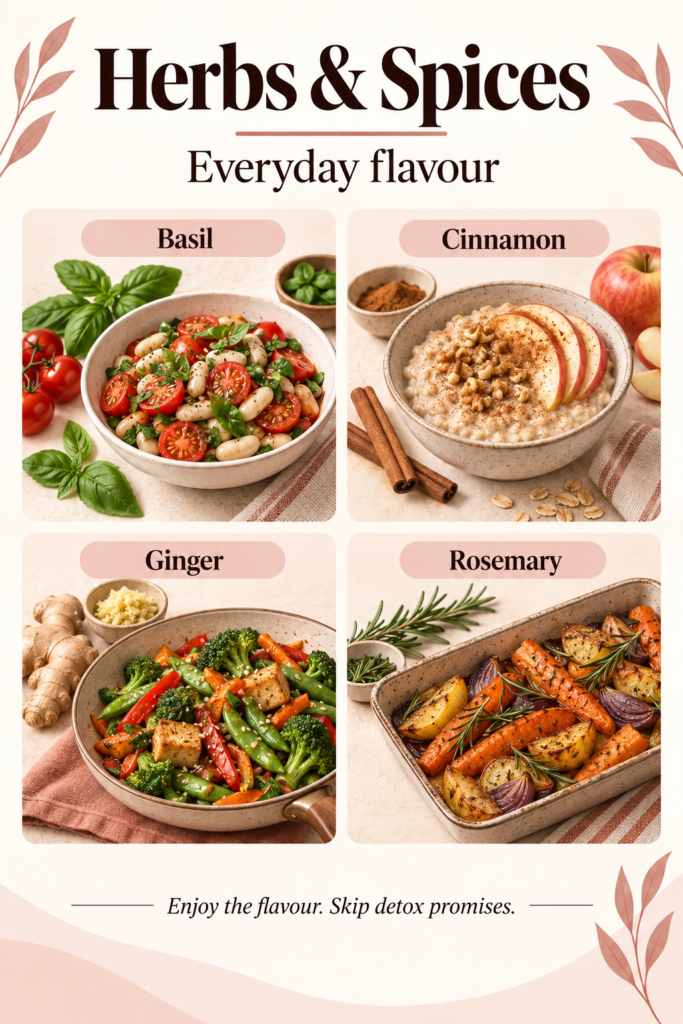
Herbs and Spices for Everyday Meals—not a Detox Cure
Herbs and spices can make familiar food more interesting. They do not need to cleanse your liver, cure an infection or prevent cancer to earn a place in the kitchen. Enjoying their flavour is a useful enough reason to cook with them.
Build meals around flavour
Try one pairing at a time so you can learn what you like:
- Add chopped basil to tomatoes, beans or a simple pasta dish shortly before serving.
- Stir a little cinnamon into porridge, or sprinkle it over sliced apple with yoghurt.
- Use grated ginger in a vegetable stir-fry or a soup you already enjoy.
- Add coriander leaves to a lentil bowl, or use the ground spice in a warm bean dish.
- Finish roasted vegetables with rosemary, or add chopped parsley to cooked grains.
Start with a small amount, taste and adjust. Dried herbs and fresh leaves do not always have the same intensity, so there is no need to use a large spoonful simply because a recipe sounds healthy.
Keep the whole meal in view
A seasoning does not replace the food around it. Think about what would make a meal satisfying: a source of protein, vegetables or fruit, and other foods that suit your needs and preferences. A handful of parsley in a juice is not a substitute for regular meals.
If you want an easy experiment, repeat one familiar meal with two different seasonings on separate days. You can discover a combination you enjoy without buying a cupboard full of ingredients.
Treat supplements as a separate decision
A concentrated extract is different from a culinary pinch of spice. Herbal supplements can interact with medicines and may have other safety concerns; NCCIH explains why “herbal” does not mean risk-free.
Do not swallow essential oils or replace prescribed medicine with herbs. Discuss supplements with a pharmacist or clinician, particularly during pregnancy or when taking regular medication. The most sustainable kitchen habit is one you enjoy repeating—not a regimen built around promises that food cannot reliably deliver.
Three meals to try without a complicated recipe
A quick bean bowl: combine cooked or ready-to-eat beans with chopped tomatoes and a grain you enjoy. Add a little basil or parsley just before serving. Start with a modest amount so the herb complements the meal rather than dominating it.
A warmer breakfast: make your usual porridge, then add chopped apple and a light sprinkle of cinnamon. Taste before adding more. If you prefer yoghurt, use the same flavour combination without treating it as a special health recipe.
An adaptable stir-fry: use vegetables you have, add your preferred protein and stir in a small amount of ginger. Serve with rice or noodles. The exact vegetables are less important than choosing a combination you will happily cook again.
Build a smaller, more useful spice shelf
Choose two seasonings that work in meals you already make. Label any decanted jars clearly and follow storage instructions. Buying a large collection at once can leave you with ingredients you never use and make a simple dinner feel unnecessarily complicated.
Keep a note of successful combinations: the dish, the seasoning and whether you would use more or less next time. If you dislike coriander leaves, try parsley rather than forcing yourself to eat a flavour you dislike. For more on separating food from cleanse promises, read our liver detox myth guide.
Common questions
Are fresh herbs always better than dried?
Not for every dish. Fresh and dried versions taste different and vary in intensity. Use what suits the recipe and your budget, starting with a small amount.
How much spice should I add for health benefits?
This guide offers flavour ideas, not therapeutic doses. Season to taste within your usual dietary needs; do not turn a recipe into a high-dose supplement routine.
Can a herbal capsule replace the ingredient in a meal?
Treat it as a different product. Concentrated supplements may have interactions and safety concerns, so discuss the specific product with a pharmacist or clinician.
Updated October 15, 2026. General information; individual health concerns need advice from a qualified professional.