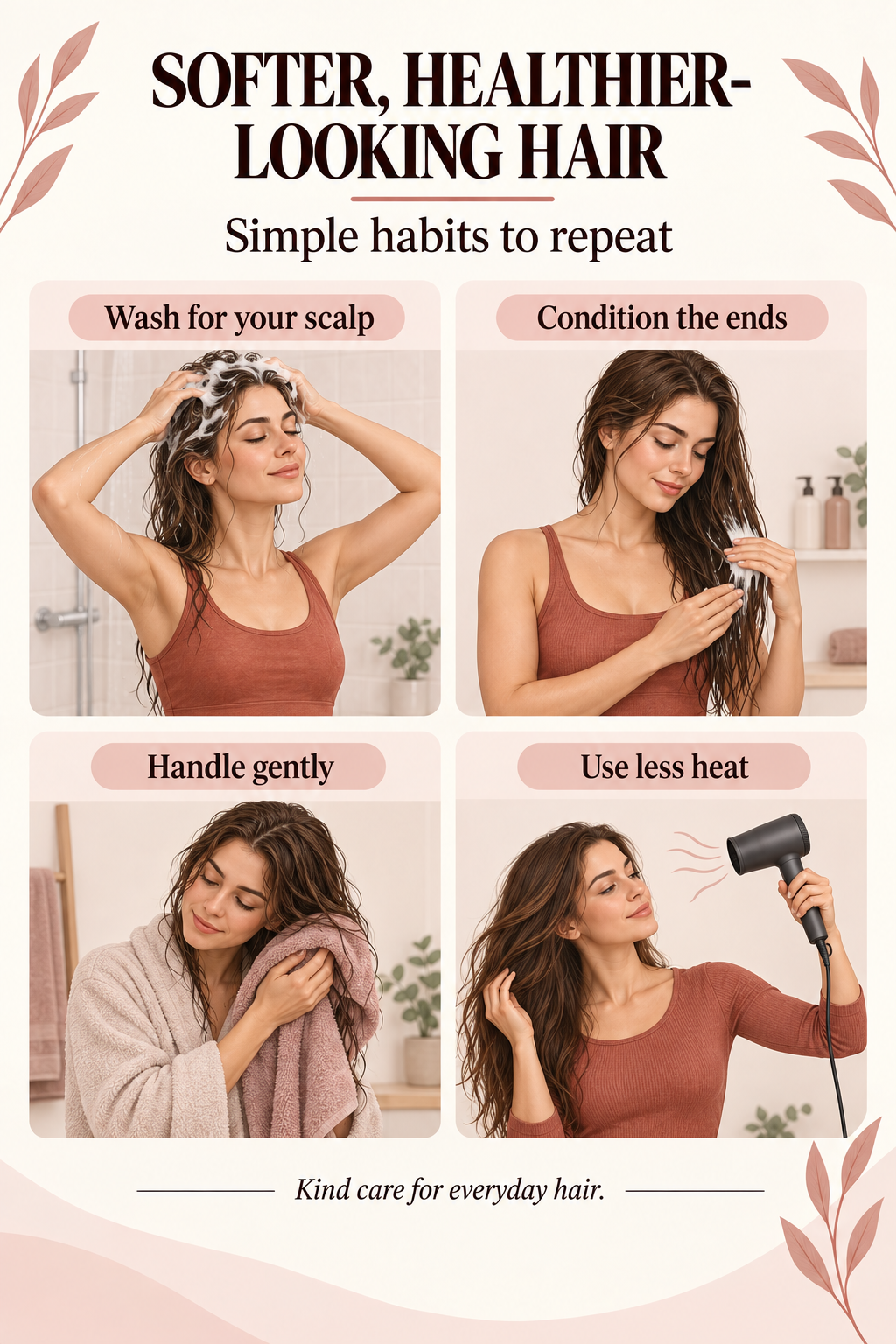
Simple Hair-Care Habits for Softer, Healthier-Looking Hair
Simple hair-care habits work best when they match your texture and the way you style your hair. A routine that leaves one person with light, soft lengths may leave another with dry ends or heavy roots. Start by noticing what your scalp and hair need separately.
Quick answer: Cleanse the scalp as needed, condition the lengths and handle tangles gently. Reduce unnecessary heat and tension. Change one step at a time so you can judge the result without buying a whole new collection.
Choose the problem you want to solve
“Better hair” is a broad goal. Heavy roots, tangled ends and a sore scalp are different concerns, so write down the main one before changing your routine. Think about when it happens: immediately after washing, after several days, or only after a particular styling product.
Keep a short note about what you used and how the hair felt once dry. That is more useful than comparing your everyday hair with a styled advertising photograph. Texture, weather and chemical treatments all affect what a manageable routine looks like.
Give shampoo and conditioner different jobs
Work shampoo gently around the scalp with your fingertips. Avoid scratching or piling the lengths into a rough knot. Use enough water to rinse thoroughly, paying attention to areas where product tends to remain, such as behind the ears.
Apply conditioner where the hair needs softness and slip. For many routines that means focusing on the lengths and ends, but follow the product directions and your texture’s needs. Begin with a modest amount and adjust after you see how it feels. Our hair-care reset guide explains how to approach suspected buildup.
Detangle without racing through knots
Choose a tool that moves comfortably through your hair and work in sections if needed. Start near the ends and move upwards as each section becomes easier. Support the hair above a stubborn knot instead of pulling against the scalp.
The AAD distinguishes straight hair from textured hair when advising about wet combing: straight hair can dry a little first, while textured hair or tight curls are generally combed damp. A single “never comb wet hair” rule does not fit everyone.
Make heat styling a deliberate choice
Plan the style before switching on a tool. If you want a relaxed finish, you may not need repeated passes over every section. Use a suitable heat protectant as directed and the lowest effective setting; protection does not make unlimited heat harmless.
Let standard straighteners touch dry hair, and avoid holding a hot tool against one spot. A lower-heat day can be a comfortable alternative, whether that means air drying, a loose braid or a style that works with your texture.
Notice the small sources of daily wear
- Release hair caught beneath a bag strap rather than pulling it free.
- Choose ties that do not snag, and vary where you secure them.
- Blot or wrap wet hair instead of vigorous towel rubbing.
- Avoid a hairstyle that makes the scalp hurt.
- Arrange a trim when rough ends make the style harder to manage.
For frayed lengths, our split-end guide separates temporary smoothing from removing damaged ends. No conditioner can permanently join every split strand.
Frequently asked questions
How often should I wash my hair?
There is no universal schedule. Adjust to scalp oil, activity, texture and the products you use. Persistent itch, pain or scaling needs assessment rather than simply extending the interval between washes.
Can dry shampoo replace washing?
It can temporarily make roots look less oily, but it does not clean the scalp like washing. Follow its directions, avoid spraying into the face and wash when the scalp needs it.
When is this more than a styling problem?
Seek advice for progressive thinning, sudden patches, scalp inflammation or persistent increased shedding. Our hair-shedding guide explains what to record before an appointment.
Editorial update: 21 October 2026.