Plaque and Tartar: What You Can Remove at Home
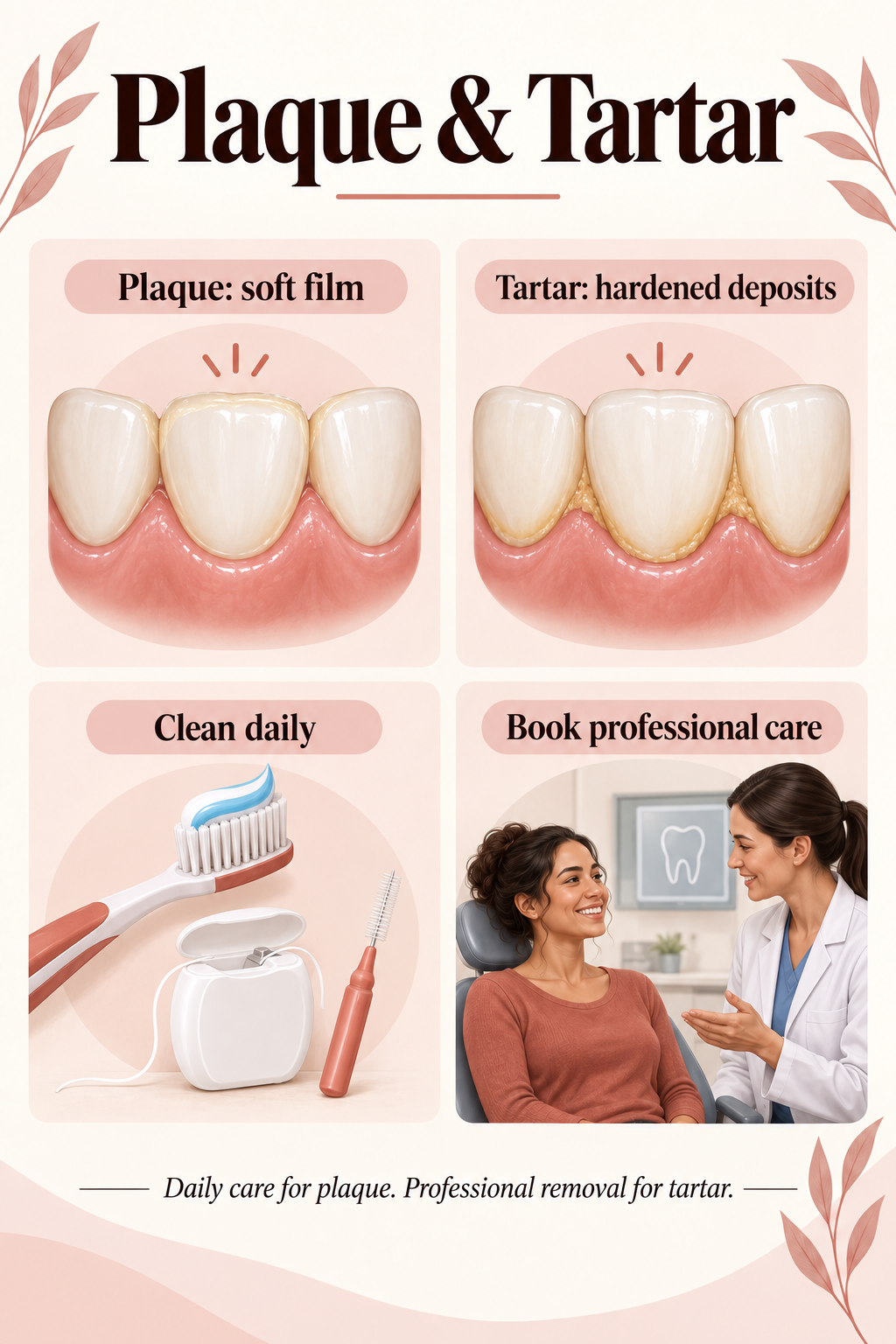
Plaque and tartar are related, but they are not the same thing. Plaque is a soft bacterial film that daily cleaning helps remove. When deposits harden into tartar, brushing harder or applying a kitchen mixture is not the answer.
Quick answer: Daily brushing and cleaning between teeth help remove plaque. Hardened tartar needs professional removal; do not scrape teeth or use acidic kitchen mixtures.
Give daily plaque removal a reliable routine
Brush twice a day with fluoride toothpaste and clean between your teeth with floss or an appropriate interdental brush. Spit after brushing rather than immediately rinsing away the toothpaste. The NHS tooth-cleaning guide explains the technique and why the spaces between teeth matter.
Use a timer if two minutes is hard to judge. Work around the mouth in a consistent order so you do not always rush the same area. Ask your dental team to demonstrate technique if brushing or interdental cleaning is painful or difficult.
Leave hardened deposits to a professional
Tartar requires professional removal, as the American Dental Association explains. Do not scrape it with a metal tool or replace toothpaste with yeast, coarse salt or acidic recipes. A surface that feels rough needs assessment, not increasingly forceful home treatment.
Book an examination and ask whether professional cleaning is needed. Tell the dental team where you notice deposits and whether you have bleeding, tenderness or sensitivity. Your recall interval should reflect your individual oral health rather than a schedule copied from someone else.
Pay attention to your gums
Bleeding, swelling, bad breath and loose teeth can be signs of gum disease. The NHS gum-disease guidance explains when to seek care. Do not assume that bleeding means you should stop all cleaning; ask for advice on cleaning gently and effectively.
Crunchy fruit is food, not a replacement for a toothbrush or a dental appointment. Likewise, mouthwash cannot compensate for deposits that need removal. If odour is your main concern, our bad-breath guide offers a practical next step.
A useful goal is a routine you can repeat comfortably and professional help where it is needed—not finding a recipe that promises to dissolve tartar overnight.
Make your next dental appointment useful
Write down where you notice rough deposits, bleeding or discomfort and how long they have been present. Bring the names of products you use, including any whitening treatments or mouthwash. Ask which size of interdental brush fits the spaces in your mouth and request a demonstration if you are unsure.
Build the routine around a repeatable order rather than extra pressure. Keep your toothbrush and interdental tools easy to reach, and allow enough time to clean without rushing. If a particular area is difficult, ask for an adapted technique rather than avoiding it or repeatedly scraping at it.
Frequently asked questions
Can brushing remove hardened tartar?
No. Brushing helps remove soft plaque, but tartar needs professional removal. More pressure is not a substitute for a dental assessment.
Can a homemade mixture dissolve tartar safely?
Do not rely on kitchen mixtures or scraping tools. Ask a dentist to assess deposits and advise on the appropriate cleaning.
What if my gums bleed?
Arrange dental advice, especially if bleeding persists or comes with swelling or discomfort. Ask how to clean gently and effectively rather than stopping all cleaning.
Editorial review: 21 October 2026.