Yellow Nails: Check the Cause Before Trying to Whiten Them
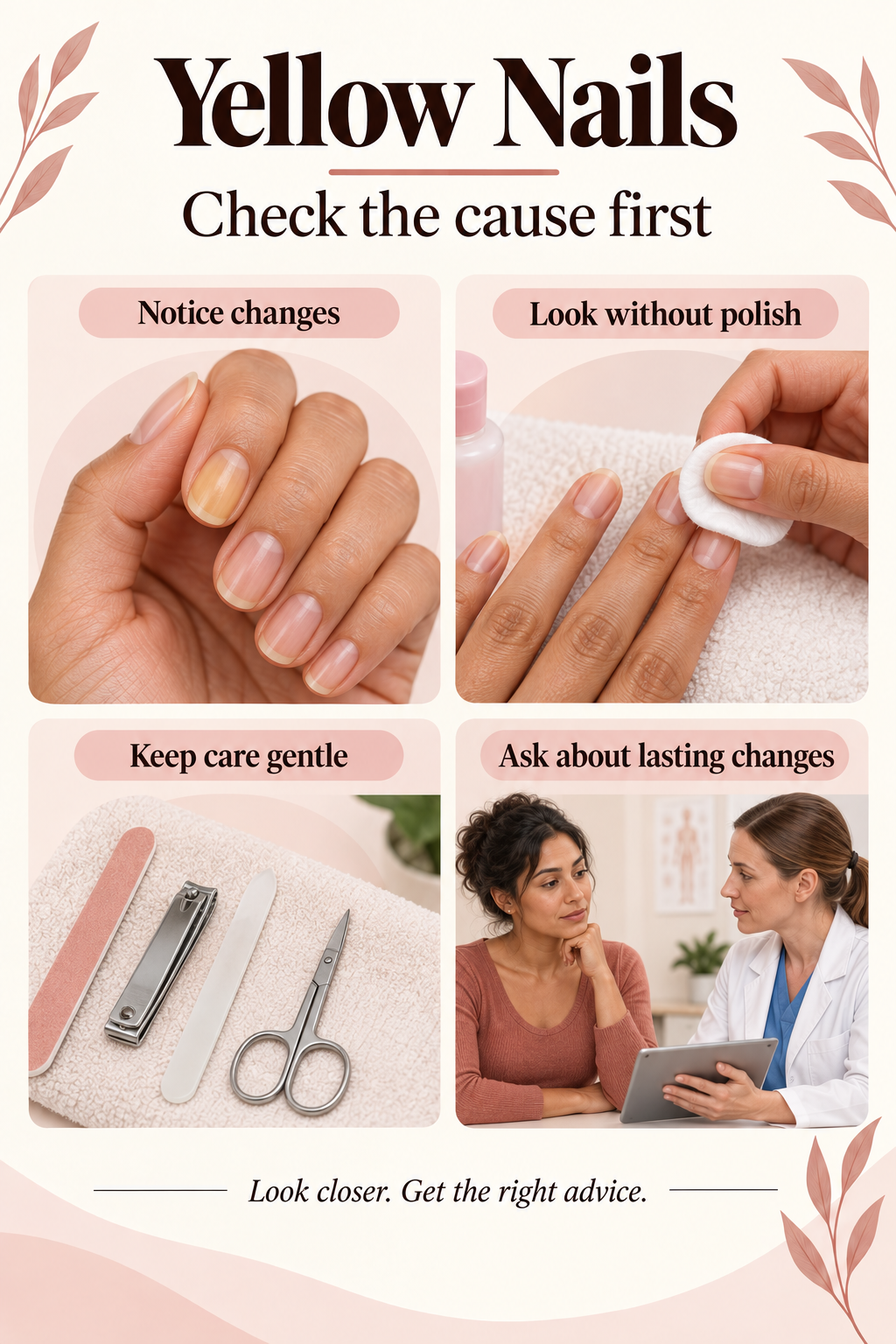
Yellow nails can be a cosmetic stain, but colour alone does not explain the cause. Before trying to whiten a nail, notice its texture, thickness and any discomfort. A careful look and a simple record are more useful than covering the change with another manicure.
Quick answer: Remove polish gently, note when the change appeared and avoid bleaching or deep filing. Thickening, crumbling, lifting or an unexplained persistent change should be assessed. A nail photograph cannot reliably confirm a fungal infection.
Start with a few observations
Check whether the colour affects one nail or several, and whether fingernails, toenails or both are involved. Think back to recent polish, nail enhancements, injuries or pressure from footwear. Do not dig underneath the nail to investigate.
Take a clear photograph without filters, using similar lighting if you compare it later. Note the date and any symptoms. This gives you something specific to discuss, instead of relying on a memory of how yellow the nail looked last week.
Colour and texture tell different stories
Polish may leave colour on a nail, while other nail conditions can alter its shape or texture. Thickening and crumbling can occur with fungal infection, but they are not enough to diagnose it yourself. The NHS explains that testing a nail sample may help confirm an infection before tablet treatment.
- Colour after polish: note the product and how long you wore it.
- A rough or thick edge: avoid aggressive filing and arrange advice if it persists.
- Lifting or discomfort: stop cosmetic experiments.
- Red, warm or swollen surrounding skin: seek medical advice.
Do not use this list as a diagnosis. Its purpose is to help you describe what you have noticed clearly.
Why whitening recipes are a poor first step
A lemon soak, strong peroxide mixture or abrasive toothpaste scrub may irritate the surrounding skin without addressing the reason for the colour. Filing away the surface can also leave less nail to protect the fingertip. Making the nail look paler does not prove that the underlying problem has resolved.
If you have already tried a remedy, write down what it contained and how often you used it. Stop if it causes burning or soreness. Tell the professional assessing the nail about these experiments, including any over-the-counter treatment.
Keep care simple while you arrange advice
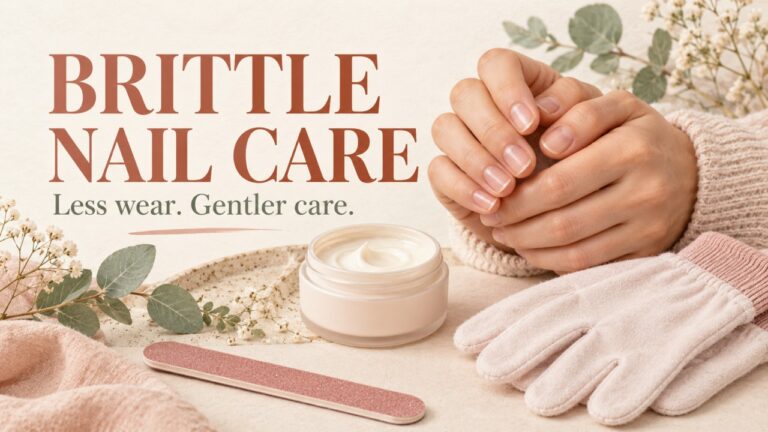
Keep tools clean and for your own use. Choose shoes that do not crowd affected toes, dry your feet carefully and change damp socks. Avoid covering a painful or damaged nail with an artificial enhancement. For hands, our gentle nail-care routine focuses on protecting the nail from further wear.
Before an appointment, ask whether you should remove polish or pause a particular product. Bring a list of medicines and nail treatments, and mention any relevant health conditions. If you have diabetes, poor circulation or a weakened immune system, seek advice promptly about a foot or nail problem.
Ask what improvement should look like
If treatment is recommended, ask how to use it, what side effects to watch for and when to review progress. Nail treatments can require patience; the old discoloured part does not necessarily disappear immediately. The goal may be healthier new growth rather than instant whiteness.
Do not keep adding a second or third remedy because a few days have passed. A clear plan makes it easier to judge whether treatment is helping. For a separate problem with splitting, read our brittle nail guide.
Frequently asked questions
Are yellow nails always fungal?
No. Staining, injury and other conditions can change nail colour. Appearance alone does not reliably identify the cause, so avoid assuming every yellow nail needs the same medicine.
Can I simply paint over the colour?
Covering it makes ongoing observation harder. If the change is unexplained, painful or accompanied by lifting, get advice before another manicure. Ask about compatible cosmetic products if you are already receiving treatment.
When does this need professional attention?
Arrange an assessment for persistent unexplained changes or worsening texture. Seek prompt help for increasing pain, redness or swelling. Follow-up is also important when a recommended treatment has not helped as expected.
Editorial update: 21 October 2026.