A Simple Hair-Care Reset: Clarify, Condition, and Protect Your Scalp
When hair feels dull, heavy, or hard to style, the answer is usually not a dramatic “detox.” It is a simple reset: remove product buildup gently, restore moisture where it is needed, and make your everyday routine easier on the scalp and lengths.
What a hair-care reset can help with
Dry shampoo, styling creams, oils, hard water, and even some conditioners can leave residue behind over time. A reset may help hair feel lighter and make styling products work more predictably. It will not cure hair loss, dandruff, or scalp disease—those need appropriate care from a pharmacist or clinician if they persist.
Start with a gentle clarifying wash
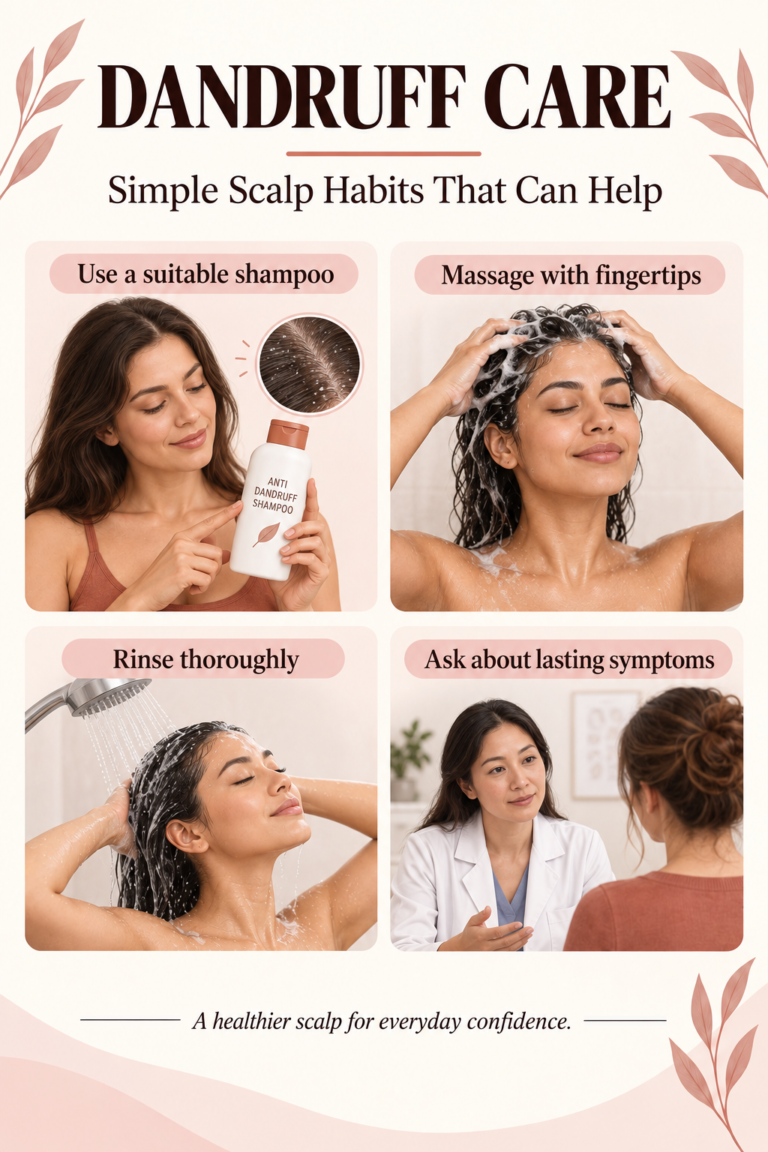
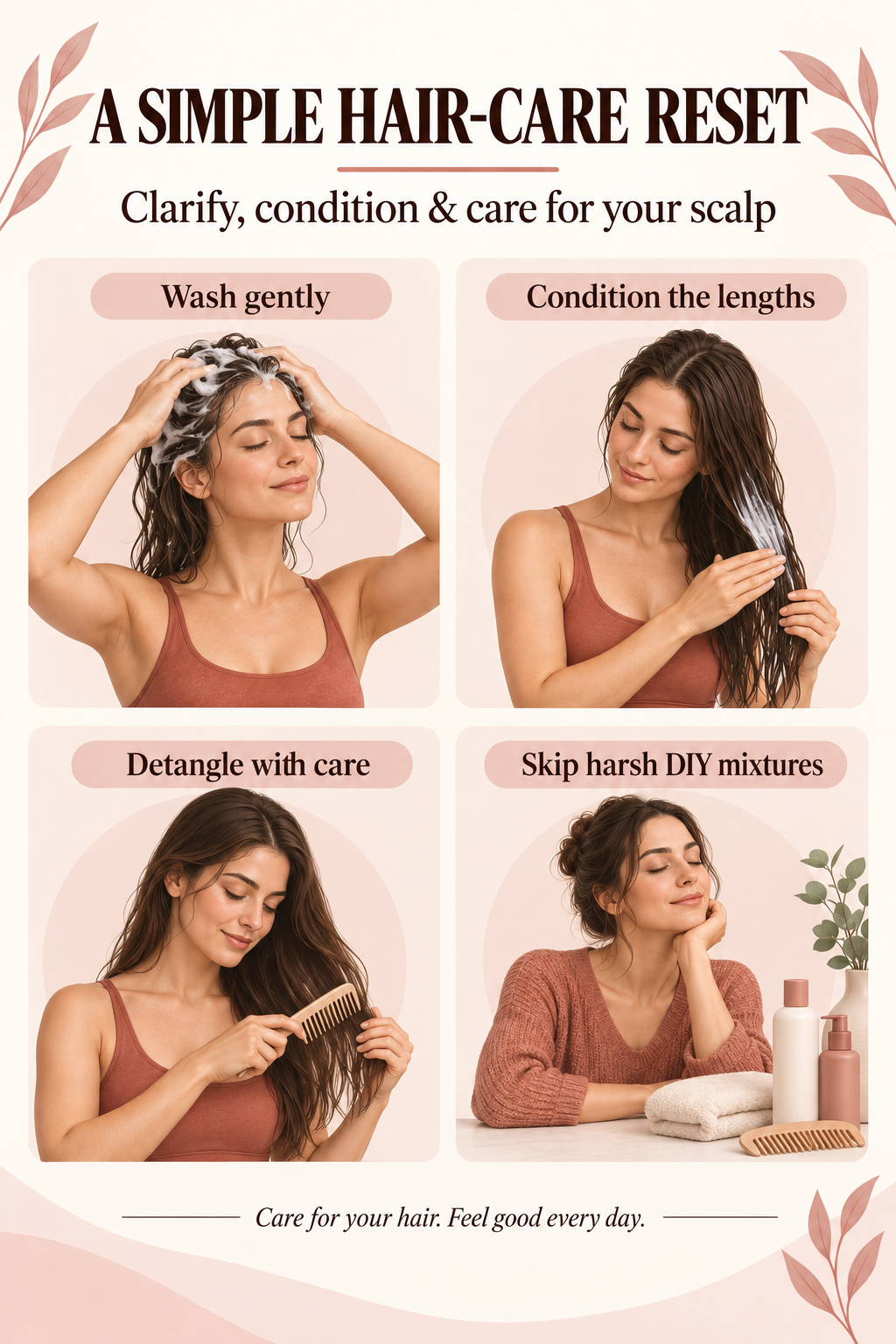
Use a clarifying shampoo occasionally, not every day. For many people, once every two to four weeks is enough. Apply it mainly to the scalp, massage with fingertips rather than nails, then rinse thoroughly. If your hair is colour-treated, very dry, curly, or bleached, choose a gentle formula and follow the label instructions.
Skip harsh DIY mixtures such as undiluted lemon juice, salt scrubs, or baking soda. They can irritate the scalp or leave the hair rough and dry.
Condition the lengths, not the roots
After cleansing, use conditioner from mid-length to ends. Leave it on for the recommended time, then rinse well. If your hair feels rough after styling or heat, a leave-in conditioner or a small amount of silicone-based serum on the ends can reduce friction and make detangling easier.
Make your scalp routine simpler
- Wash often enough for your scalp and lifestyle; there is no single perfect schedule.
- Use lukewarm water instead of very hot water.
- Rinse carefully—leftover shampoo can feel itchy or heavy.
- Clean brushes and combs regularly.
- Avoid piling multiple oils and masks directly onto the scalp.
Protect hair between washes
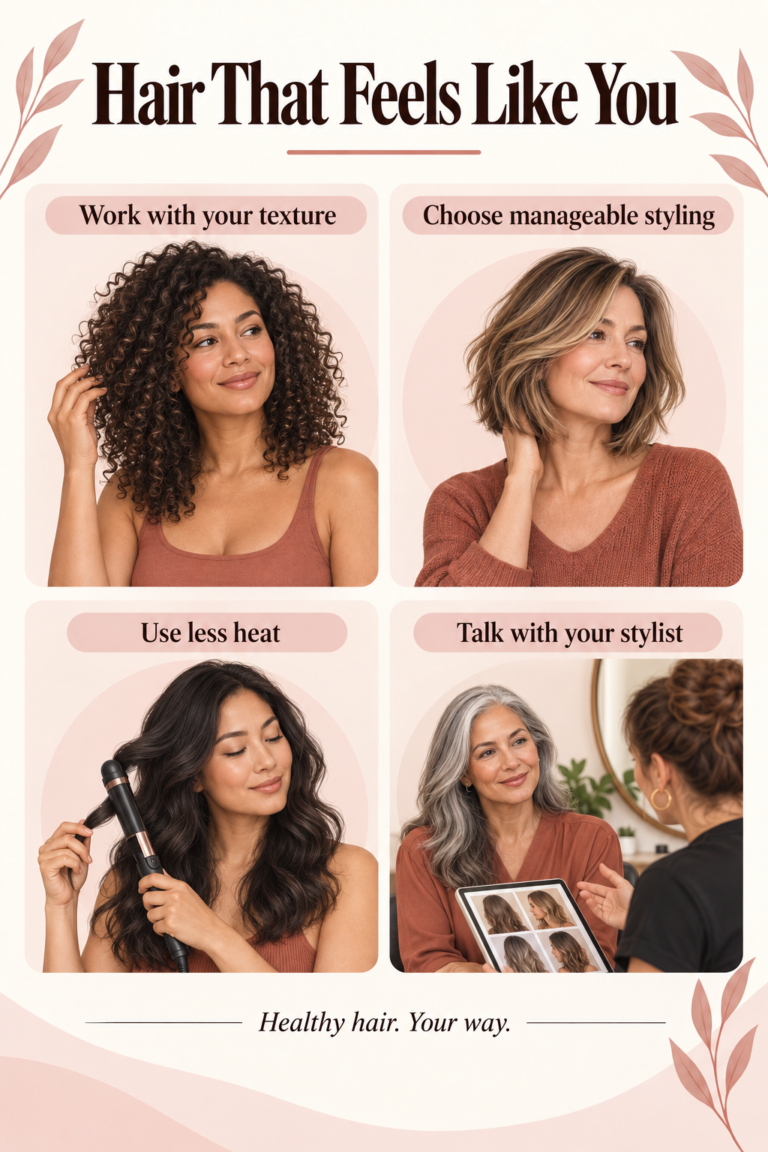
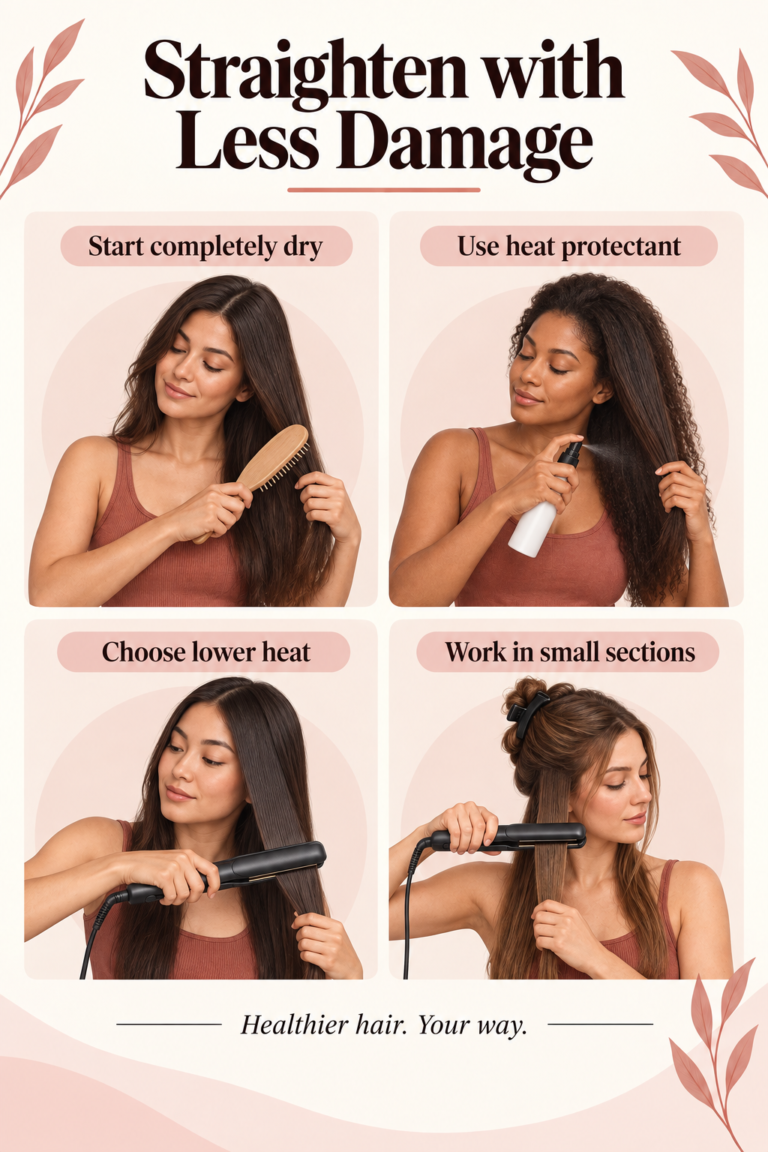
Most visible damage happens through friction, heat, and aggressive brushing. Detangle from the ends upward, use a heat protectant before hot tools, and keep the temperature as low as practical. A loose hairstyle and a satin or smooth pillowcase can also reduce friction for some hair types.
When to get professional advice
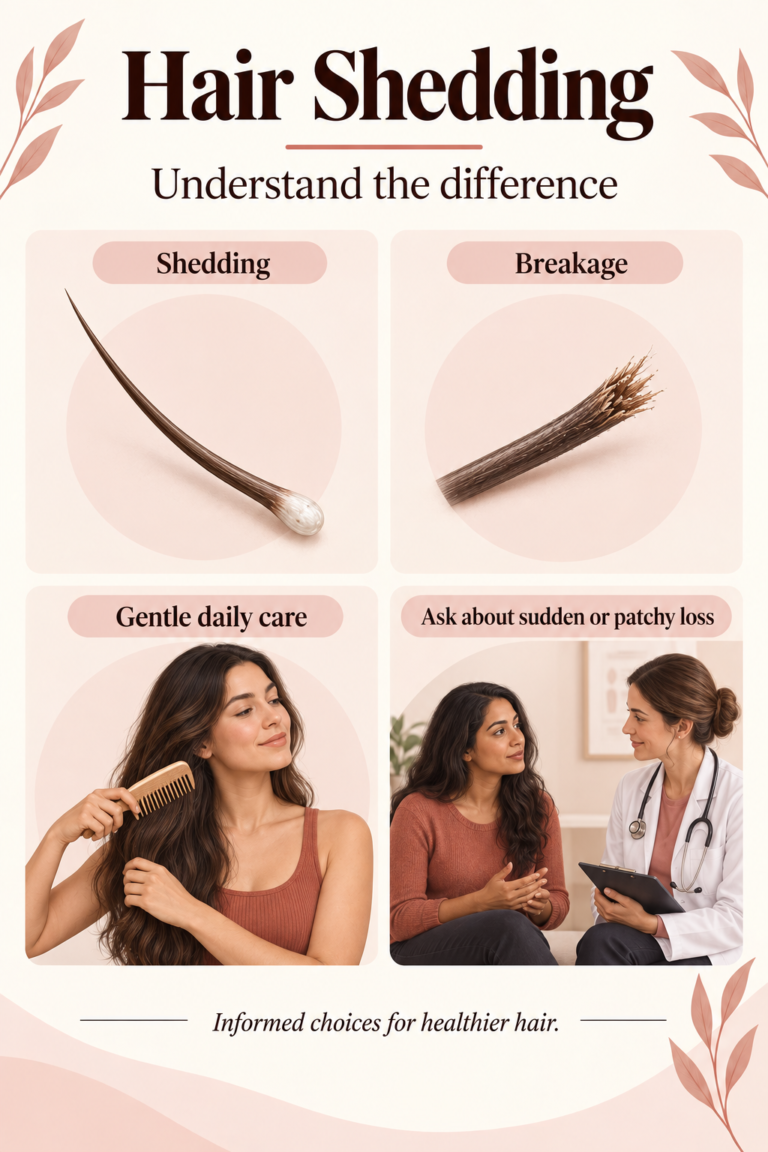
Book an appointment with a dermatologist or qualified clinician if you notice sudden shedding, painful bumps, persistent flakes, redness, or patchy loss. A good routine supports healthy-looking hair, but it cannot replace diagnosis when the scalp is uncomfortable or changes quickly.
The takeaway: a hair-care reset should feel calming, not aggressive. Clarify occasionally, condition consistently, and use fewer products more intentionally.