Dandruff Care: Simple Scalp Habits That Can Help
Dandruff is common, harmless for most people, and often manageable with a consistent scalp-care routine. It usually looks like flakes with itching or mild irritation, and it can come and go. The goal is not a harsh DIY “cure,” but finding a routine that keeps the scalp comfortable.
Start with an anti-dandruff shampoo
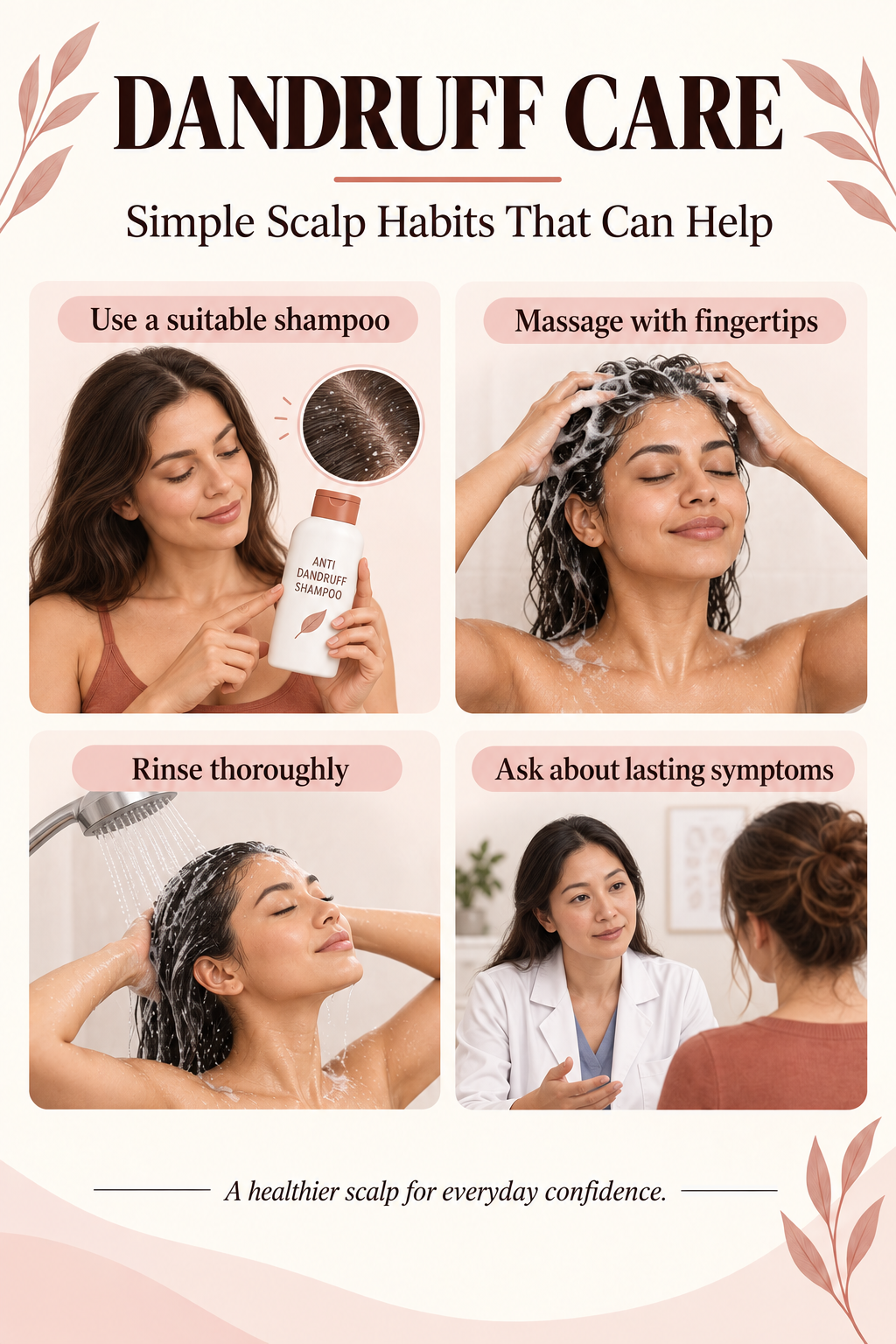
Over-the-counter anti-dandruff shampoos are often the most practical first step. Look for an active ingredient such as zinc pyrithione, ketoconazole, selenium sulfide, salicylic acid or coal tar, depending on what is available where you live. Follow the label carefully; many products need to sit on the scalp for a few minutes before rinsing. It may take a few washes to see a difference.
Use the shampoo on the scalp, not just the hair
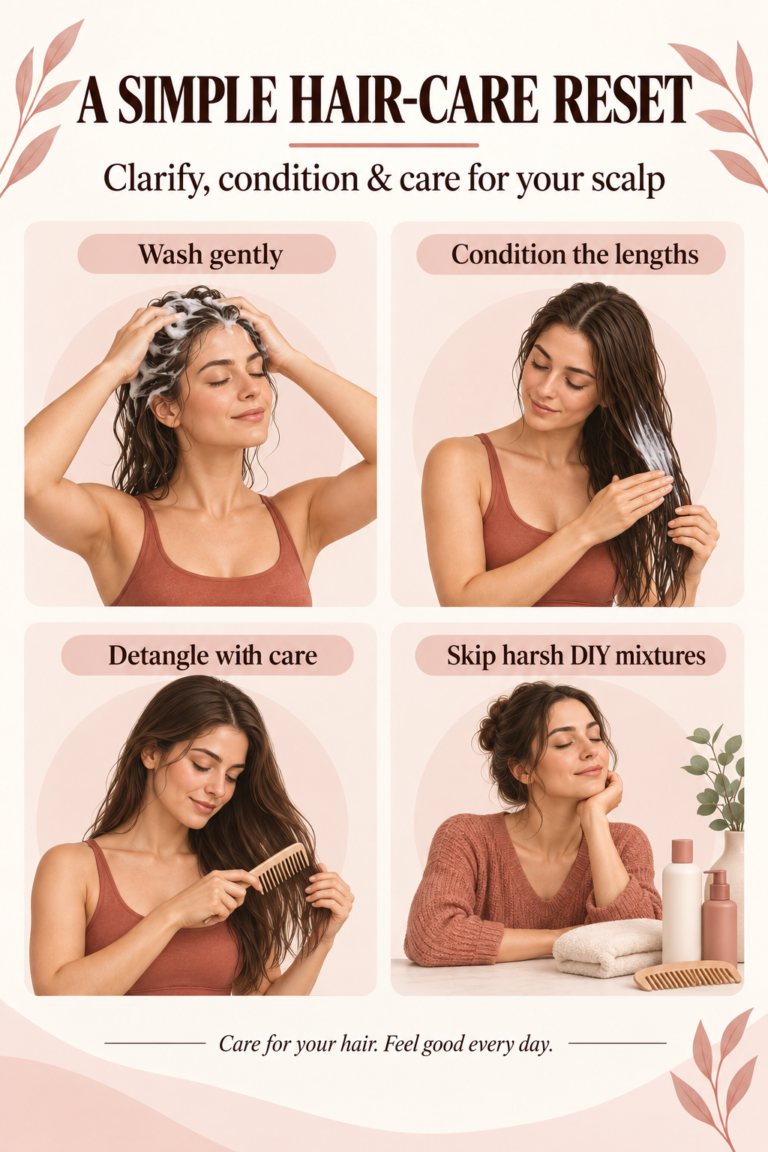
Wet the scalp thoroughly, work the product in gently with your fingertips and rinse well. Avoid scratching with nails, which can irritate the skin. Conditioner can still go on the mid-lengths and ends if your hair feels dry—just keep very rich products away from the scalp if they seem to leave buildup.
Skip harsh kitchen experiments
Lemon juice, baking soda, undiluted vinegar and essential oils can sting or disrupt the scalp barrier, especially when skin is already irritated. “Natural” does not automatically mean gentle or effective. If you use a fragranced or botanical product, stop if it increases itching, burning, redness or flakes.
Small habits that support a comfortable scalp
- Wash regularly enough to remove oil and product buildup.
- Rinse styling products thoroughly and clean brushes or combs often.
- Avoid very hot water if it leaves your scalp tight or itchy.
- Try not to pick at flakes; treat the scalp gently instead.
- Keep track of what helps for a few weeks before switching products again.
When to get professional advice
See a clinician or dermatologist if the scalp is painful, very red, swollen, oozing, or develops thick scale; if you notice patchy hair loss; or if an anti-dandruff routine has not helped after several weeks. Conditions such as psoriasis, eczema or a fungal infection can resemble ordinary dandruff and may need a different treatment.
The takeaway
Consistency beats complicated remedies. Choose an appropriate anti-dandruff shampoo, use it as directed, and seek advice when symptoms are persistent or severe.
Editor’s note: Updated September 2026. This article is general beauty information and is not medical advice.