Chest Exercises for Strength: Realistic Expectations for Your Bust
Chest exercises train the muscles beneath the breasts; they do not directly tighten breast tissue. That distinction matters when a workout is advertised as a breast lift. You can gain useful strength without expecting your bust to take on a particular shape.
Start with a comfortable wall press-up
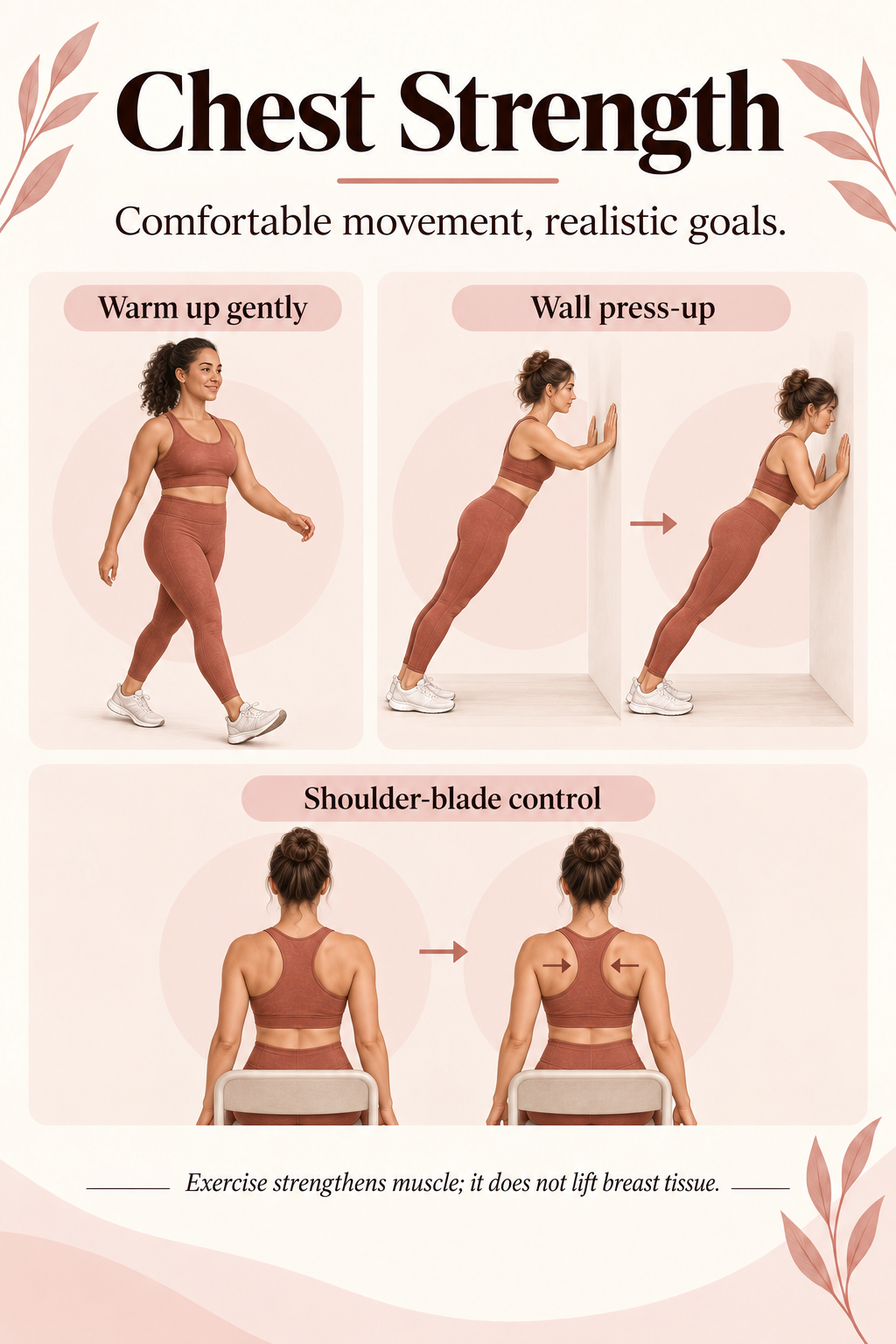
Stand facing a wall with your hands around chest height. Step back enough to create a gentle incline, keeping your body aligned. Bend your elbows to move towards the wall, then press away without locking your joints or holding your breath.
Begin with a small number of controlled repetitions and rest before another set. The NHS strength-exercise guide includes wall press-ups and recommends building up gradually. Use its illustrated instructions if you want a visual reference.
Make the session balanced
Warm up with easy walking and comfortable shoulder movement. After your press-ups, practise gently drawing your shoulder blades together and relaxing them, without forcing your elbows behind you. Finish with easy movement rather than an aggressive stretch.
Choose a level that leaves you able to maintain good control. As the exercise becomes easier, make one change at a time—for example, a few more repetitions—rather than adding several harder exercises in the same week. Our back-strength guide can help you think beyond chest work alone.
Keep comfort ahead of appearance
Wear a supportive bra if that makes movement more comfortable. Stop an exercise that causes pain, and seek individual advice after breast surgery, during recovery from injury or if you have ongoing shoulder symptoms. New breast changes should be assessed rather than treated with a workout.
Firming creams, hot-and-cold showers and forceful massage should not be presented as substitutes for a breast lift. A moisturiser may improve how dry skin feels, but the AAD notes that creams cannot lift sagging skin.
Measure progress by steadier movement and everyday tasks becoming easier. Those are meaningful results even if your bra size and breast shape stay the same.
Try a short practice session
Choose a clear wall and a floor surface where your feet will not slip. Remove anything that could obstruct the movement. After warming up, practise a few easy repetitions to find a comfortable distance from the wall before deciding on a working set.
For a first session, one short set may be enough. Rest, check how you feel and only repeat if the movement remains comfortable and controlled. Keep the session brief enough that you can concentrate on each repetition rather than rushing to reach a number.
Use these technique checks
- Keep your neck in a comfortable line with your body.
- Let your elbows bend smoothly without forcing an extreme position.
- Move your body towards the wall as a unit instead of jutting your head forward.
- Continue breathing throughout the repetition.
- Stop before control turns into momentum or discomfort.
Standing closer to the wall creates a gentler starting point. If your wrists or shoulders still hurt, stop and seek guidance rather than improvising a harder variation. Do not use an unstable table or chair as a replacement surface.
Keep a simple record of your setup and comfortable repetitions. Repeat that level on another day before making it more demanding. Your goal is a routine that fits alongside other activity, not an isolated promise about how one body part should look.
Common questions
Will push-ups lift my breasts?
They strengthen the muscles beneath the breasts. They should not be advertised as a way to lift breast tissue or guarantee a different breast shape.
How do I make wall press-ups easier?
Start closer to the wall and use a smaller comfortable movement. If the exercise remains painful, stop and ask for an individual alternative.
When should I make the exercise harder?
When the current version feels steady and comfortable across sessions. Make one small change at a time and keep recovery between strength sessions.
Updated October 15, 2026. General information; individual health concerns need advice from a qualified professional.